
You know that small, stubborn panic when you wake up and the house feels colder than it should, even though the gas boiler was absolutely fine last night. In the middle of winter heating problems, that “it worked yesterday” feeling is what makes it so unsettling - because it suggests something has changed while you were asleep. You’re not imagining it: overnight is when a lot of boilers quietly trip, lock out, or reveal borderline faults that daytime use doesn’t always trigger.
Maybe you notice it first in the shower: water that goes lukewarm, then cold, then back again like it’s playing games. Or you glance at the thermostat and see it still asking for heat, while the radiators stay politely indifferent. It feels personal, but most of the time it’s a combination of timing, temperature and a boiler that’s trying to protect itself.
The overnight betrayal: why it fails when you’re not watching
Boilers don’t “get moody” for no reason. Overnight is when the conditions around your system swing hardest: outside temperatures drop, the heating demand pattern changes, and the boiler is more likely to cool right down and restart from cold.
That restart matters. A unit that can happily maintain temperature in the evening can struggle when it has to ignite after hours of sitting idle, with colder pipework, lower incoming gas pressure, and a condensate pipe that’s had all night to chill.
You tend to discover it at the worst moment because mornings stack the demand. People wake up, hot taps turn on, heating schedules kick in, and the boiler is asked to do everything at once - quickly - in the coldest part of the day.
What “worked yesterday” usually means (and what it doesn’t)
When a boiler runs for long stretches, it can mask small issues. Warm components behave better than cold ones: fans spin more freely, sensors read more steadily, and marginal gas/air mixes ignite more reliably.
Overnight, the system gets its chance to cool and reset. That’s when borderline parts stop getting a free pass. The boiler then does what it’s designed to do: detect risk, shut down, and flash a fault code that feels like an accusation.
It’s also why the problem can appear to “fix itself” later. Once the day warms up and the boiler has managed a few clean cycles, it may run again… until the next cold, quiet night.
The common overnight culprits (in plain English)
1) Frozen condensate pipe: the classic cold-night shutdown
If you’ve got a condensing boiler (most modern ones are), it produces acidic condensate water that drains away through a pipe. In freezing weather, that pipe can partially or fully freeze, and the boiler will often lock out to prevent condensate backing up internally.
This is one of the most “overnight” faults there is: temperatures dip for hours, the pipe freezes while you’re asleep, and the first morning call for heat triggers the lockout.
Typical signs:
- Boiler shows a lockout/fault after a cold night
- It may fire briefly, then stop
- You’re in a cold snap, especially if the condensate run is external
2) Low system pressure that finally drops below the line
Sealed systems lose pressure slowly - a tiny leak, a weeping valve, a radiator bleed you forgot about. In the evening, you may still be hovering just above the minimum. Overnight, as the system cools and contracts, the pressure can dip that last little bit and trigger a safety shutdown.
Then you top it up in the morning and it “miraculously” works again, which is satisfying… until you realise you’re doing it twice a week.
Watch for:
- Pressure gauge sitting low (often below ~1.0 bar when cold, depending on model)
- You’ve needed to top up more than once recently
- One radiator valve or pipe joint looks slightly stained or damp
3) A sticky diverter valve (hot water vs heating)
Combi boilers have a diverter valve that switches between central heating and hot water. Overnight, when things sit unused, a sticky or partially failing diverter can stay in the wrong position or move sluggishly when the morning demand hits.
It can look like “no heating but hot water works” (or the reverse), which feels baffling until you remember there’s a physical part trying to choose between two jobs.
4) Ignition and flame-sensing issues that show up on cold starts
Ignition components can be temperamental: electrodes, leads, the burner condition, or the flame sensor. When cold, moisture and micro-corrosion matter more, and the boiler may fail to prove flame within the strict time window it allows.
That can create a pattern where it tries to light, clicks, maybe whooshes, then locks out - especially first thing.
5) Fan/air pressure problems that appear when the unit is cold
The fan and air pressure switch (or sensor) are part of the safety chain. In colder, denser air - and after a night of sitting still - a tired fan or borderline air proving can fail checks that it passes later in the day.
It’s not dramatic, but it’s common: everything is technically “fine”, until it has to be fine immediately, from cold.
The morning pile-on: why your schedule makes it worse
Most homes unintentionally create a stress test at 6–8am. The heating timer says “on”, someone runs a shower, the kitchen tap goes on, and the boiler is asked to ramp hard.
If your settings encourage big jumps - for example, a low overnight temperature followed by a sharp morning rise - the boiler has to push higher output quickly. Any weakness in gas supply, combustion, circulation, or drainage is more likely to surface right there.
A gentler ramp can sometimes stop the daily drama. Not as a “fix”, but as a way of keeping a borderline system stable until it’s properly serviced.
A quick, safe triage you can do before you call someone
You don’t need to start dismantling panels to learn something useful. A few checks can turn a vague complaint into a clear description, which helps an engineer diagnose faster (and stops you paying for guesswork).
- Look at the boiler display and write down the fault code exactly.
- Check system pressure (if you have a gauge) while the system is cold.
- Note the weather: did it fail after a freezing night?
- Try a reset once (only once). Repeated resetting can worsen some faults.
- Check if hot water works even when heating doesn’t (or vice versa).
- Listen: does it attempt to ignite? Any repeated clicking, whirring, then shutdown?
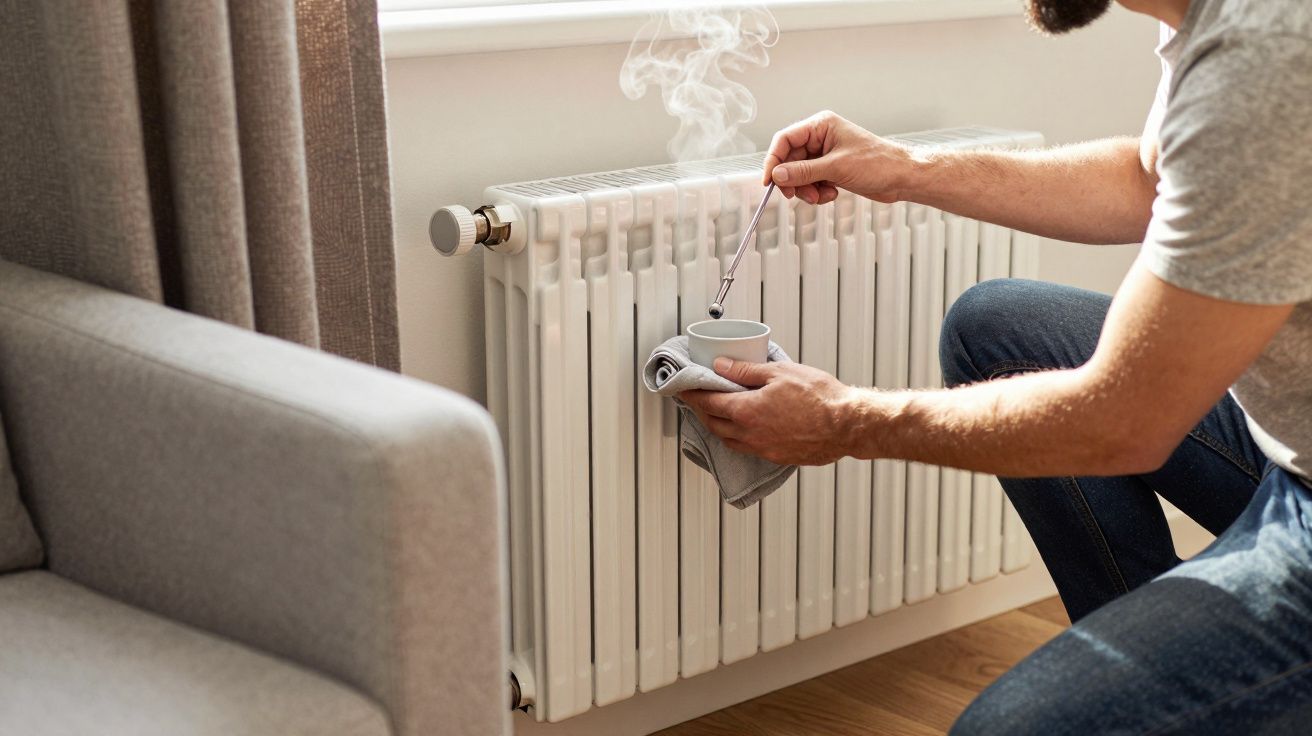
If you suspect a frozen condensate pipe, don’t pour boiling water over plastic pipework. Gentle warming methods are safer, but if you’re unsure, this is the moment to get proper help.
The small habits that prevent repeat winter failures
A lot of overnight boiler failures are not “random”; they’re seasonal, and they repeat. The aim is to remove the conditions that let a small issue become a morning lockout.
A few pragmatic moves:
- Insulate external condensate pipework (and ensure it has a proper fall).
- Keep the heating slightly ticking over in very cold spells instead of letting the system go stone cold for hours.
- Book a service before winter so combustion and safety checks are done when parts are under less stress.
- Don’t ignore pressure drops; topping up endlessly is a symptom, not a solution.
- Bleed radiators only if needed, and recheck pressure afterwards.
When it’s urgent (and when it’s not)
Some boiler faults are inconvenient; others are a safety issue. Treat these as “stop and call” moments:
- You can smell gas or suspect a gas leak (call the gas emergency line immediately)
- Sooting, scorch marks, or a burnt smell around the boiler
- Carbon monoxide alarm sounds
- The boiler keeps shutting down repeatedly after resets
If it’s simply a one-off lockout after a very cold night, it may be something straightforward - but patterns are information. If it happens twice, it’s not bad luck. It’s your system telling you what it struggles with when the temperature drops and the house goes quiet.
FAQ:
- Why does my boiler fail only at night or first thing in the morning? Overnight is colder and the boiler often restarts from cold. Cold starts expose marginal issues (condensate freezing, low pressure, ignition/fan faults) that can be masked when the boiler has been running.
- If I reset it and it works, do I still need an engineer? If it’s a one-off, you can monitor it. If it repeats, a reset is only clearing the symptom; the underlying fault (or risk condition) is still there.
- What’s the most common cause in freezing weather? A frozen condensate pipe on a condensing boiler. It’s a very typical “worked yesterday, dead this morning” winter pattern.
- How much pressure should my sealed system have? Many homes sit around 1.0–1.5 bar when cold, but it varies by system and boiler. If you’re frequently below the manufacturer’s minimum or topping up often, something needs attention.




Comments (0)
No comments yet. Be the first to comment!
Leave a Comment