At some point every winter, a gas boiler turns from “background appliance” into the main character of your morning. You don’t notice it when it’s behaving, but the common faults have a way of showing up at the exact moment you need heat, hot water, or both. Knowing the quieter warning signs matters because the earlier you spot a problem, the more likely it is to be a small fix rather than a cancelled day and an emergency call-out.
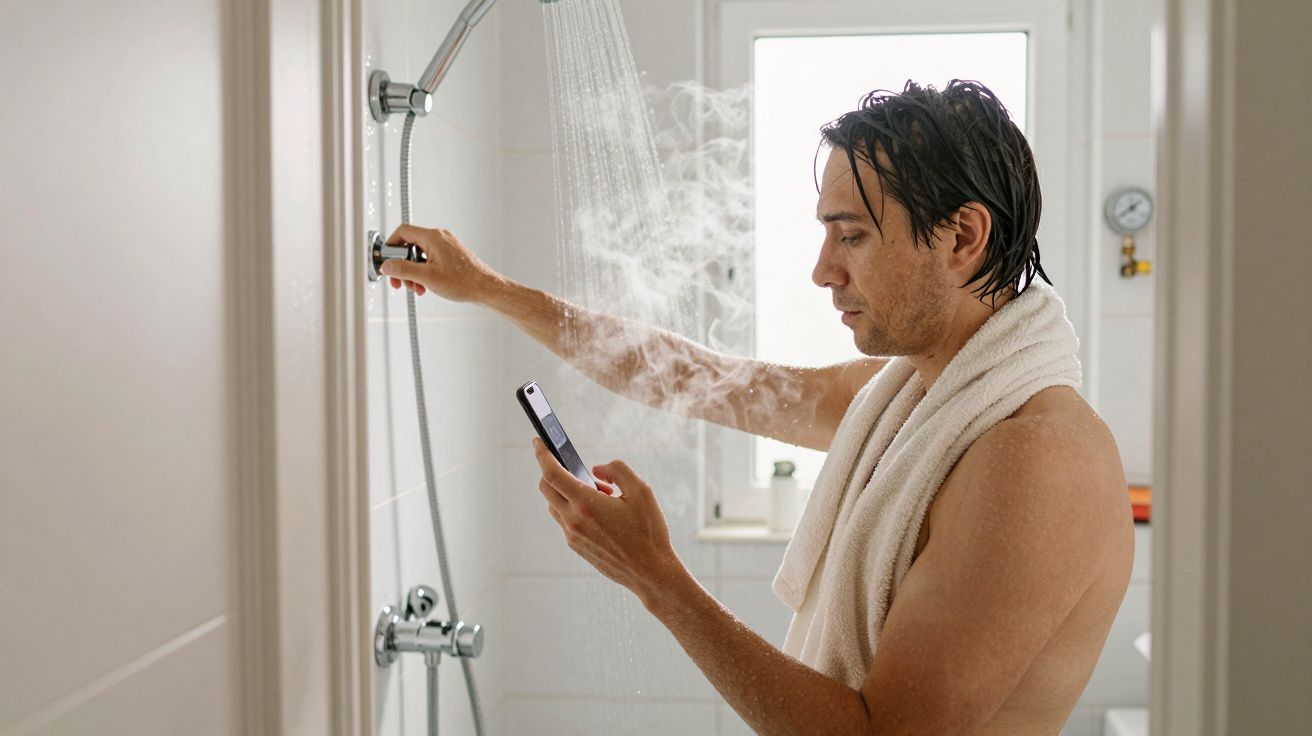
It rarely fails with a dramatic bang. More often it fades: a little slower to heat up, a little noisier at night, a little more temperamental when the weather turns. And because it happens gradually, you adjust without realising-until one day you’re standing in a lukewarm shower doing maths you didn’t plan to do.
The “it’s probably fine” phase (when it usually isn’t)
Boilers don’t just die; they start negotiating. They give you heat, but only if you reset them. They give you hot water, but only if no one else runs a tap. They work perfectly all week, then throw a tantrum on Sunday evening like they’ve got opinions about your plans.
That’s why the best signals are the subtle ones: changes in sound, behaviour, and consistency. You’re not looking for a single smoking gun. You’re looking for a pattern that didn’t exist last month.
1) It’s making new noises you can’t unhear
A healthy boiler isn’t silent, but it’s predictable. The sound should be a steady hum, the occasional click, and a controlled whoosh when it fires up. When the soundtrack changes, pay attention.
Common “quietly failing” noises include:
- Kettling (a rumbling or boiling-kettle sound), often linked to limescale on the heat exchanger restricting water flow.
- Banging or thuds when the heating comes on, sometimes caused by air, pressure issues, or a struggling pump.
- High-pitched whistling, which can point to restricted flow or a component under stress.
- Frequent clicking like it’s repeatedly trying to ignite.
One new noise once can be nothing. A new noise that shows up daily is your boiler telling you it’s working harder than it should.
2) Hot water goes moody: fine, then suddenly not
A quietly failing boiler often keeps up appearances-until you ask for something consistent. You’ll get hot water, but it may:
- run hot–cold–hot in waves,
- take longer to reach temperature,
- drop off when another tap is used,
- or struggle only at certain times (mornings, evenings) when demand is higher.
People tend to blame the shower or the “plumbing being old”. Sometimes that’s true. But if the pattern is new, your boiler may be losing efficiency or having trouble modulating properly.
3) Your radiators heat unevenly (and you start rearranging your life around it)
When a boiler is on the way out, the heating system can become oddly inconsistent. The house warms up, but not evenly. The upstairs feels fine while downstairs stays stubborn. One radiator is scorching and another stays tepid.
To be clear: uneven radiators can be caused by system issues rather than the boiler itself (sludge, trapped air, balancing). But that’s exactly the point-these are common faults that show the whole setup is under strain, and your boiler ends up compensating.
Clues it’s more than “just bleeding the rads”:
- you’re bleeding radiators often, not once a season,
- the boiler pressure keeps dipping afterwards,
- the heating takes noticeably longer to recover after being off.
4) You’re topping up the pressure more than you used to
Most combi boilers have a pressure gauge, and most homeowners only look at it when something goes wrong. But pressure creeping down repeatedly is one of the clearest “quiet failure” signs because it suggests a leak somewhere-sometimes obvious, sometimes not.
If you’re re-pressurising every few days or every week, don’t normalise it. Pressure loss can come from:
- a small leak on pipework or a radiator valve,
- a failing expansion vessel,
- a pressure relief valve discharging,
- or internal leaks that leave no puddle where you can see it.
A one-off drop after bleeding a radiator is normal. A routine habit of topping up isn’t.
5) The pilot/ignition behaviour looks… hesitant
Modern boilers don’t have the old-style constantly burning pilot light, but ignition issues still happen. The “hesitation” shows up as:
- the boiler trying to fire up, stopping, then trying again,
- more frequent lockouts,
- or a delay between you turning on a tap and the boiler actually responding.
This is where people get stuck in the reset loop: press the button, it behaves, you move on. It’s tempting to treat it like a glitch. But repeated ignition trouble can be a sign that parts are aging or combustion is becoming less reliable-something you want checked, not guessed at.
6) The flue plume looks different (and yes, you should notice)
In cold weather, some visible vapour from the flue can be normal-especially with high-efficiency condensing boilers. What you don’t want is a sudden, sustained change that looks out of character for your home.
Red flags include:
- very heavy plume that doesn’t ease once running,
- odd smells outside near the flue,
- staining, or signs of scorching around the flue terminal.
If you ever suspect fumes indoors, treat it as urgent: turn the boiler off, ventilate, and get advice immediately. Carbon monoxide alarms should be standard, but they’re not a substitute for acting on anything that feels wrong.
7) Your energy bills creep up while your comfort creeps down
This one is sneaky because it looks like “life being expensive”. But if your usage hasn’t changed and the house feels cooler, your boiler may be losing efficiency.
People describe it as having to nudge the thermostat higher, or leaving the heating on longer “just to take the edge off”. That gradual shift is exactly how a failing boiler hides: by making you do the work it used to do effortlessly.
A useful gut-check: if you’re thinking about buying thicker slippers, ask yourself what changed first-the weather, or the performance.
The quick checks you can do without poking anything dangerous
You don’t need to dismantle anything to be observant. A few safe, simple habits can tell you a lot:
- Look at the pressure gauge once a week for a month and note if it drops.
- Time your hot water: how long from tap-on to properly hot?
- Listen: does the boiler fire once and settle, or keep cycling?
- Check radiator patterns: which rooms lag, and is it consistent?
If anything feels off, the goal isn’t to diagnose it yourself. It’s to give a qualified engineer clear symptoms, which speeds up the fix and reduces the chance of paying for guesswork.
When “leave it for now” becomes the expensive option
Boilers often give you a long runway. That’s comforting-until it isn’t. The common story is that people wait because it still sort of works, and then it fails during the first cold snap when engineers are booked solid and parts are slower to source.
A good rule of thumb: if you’re resetting, repressurising, or apologising to your household about hot water more than once, you’re already past the “monitor it” stage.
FAQ:
- How do I know if my boiler is actually failing or it’s just my radiators? If radiators are uneven but hot water is stable, it may be system-related (air, sludge, balancing). If you also have pressure drops, lockouts, or inconsistent hot water, the boiler is more likely involved.
- Is it normal to keep topping up boiler pressure? No-occasional top-ups after maintenance can happen, but repeated pressure loss usually indicates a fault or leak that should be investigated.
- What’s the most common “quiet failure” sign? Inconsistent hot water and frequent need to reset the boiler are two of the most common early patterns people notice.
- Should I replace the boiler as soon as it starts making noise? Not automatically. New noises are a prompt to get it checked-many issues are repairable if caught early, especially before they cause wider damage.
- Do I need a carbon monoxide alarm if my boiler seems fine? Yes. Fit one near the boiler (and ideally near bedrooms too) and test it regularly; it’s a basic safety backstop, not an optional extra.





Comments (0)
No comments yet. Be the first to comment!
Leave a Comment