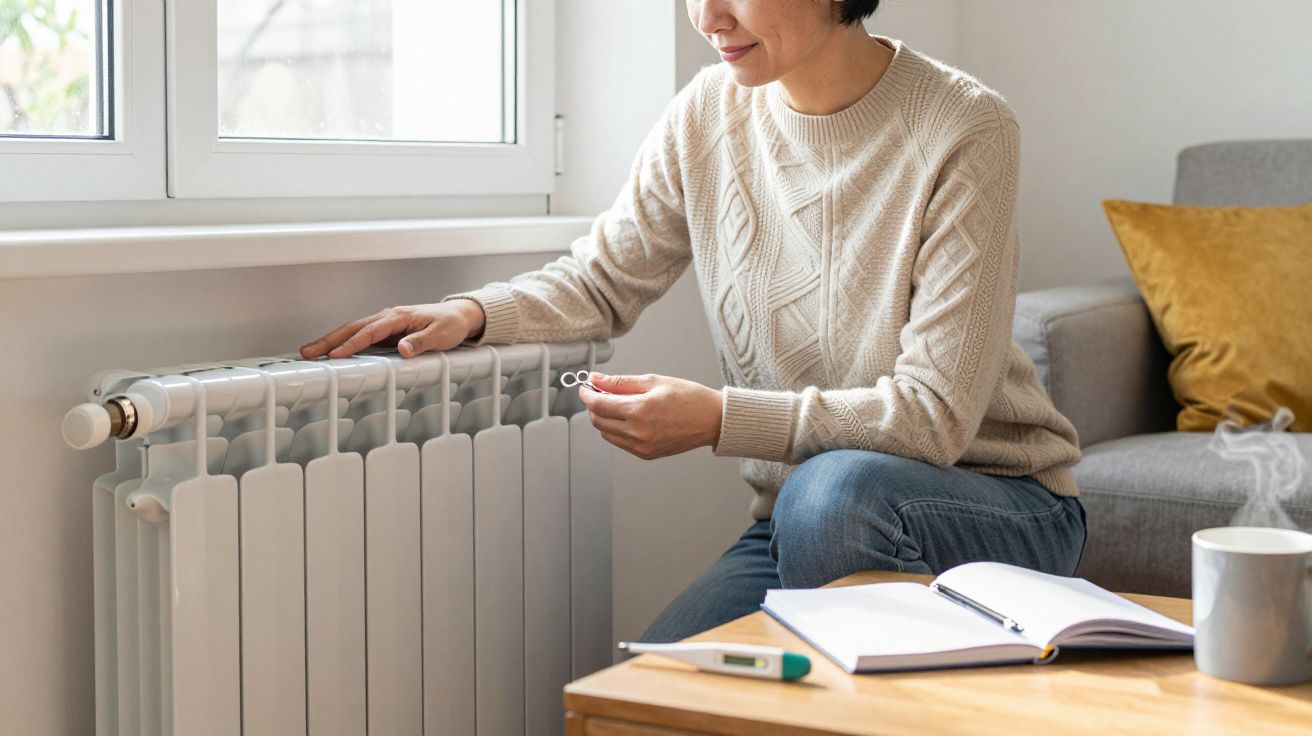
You don’t wake up one morning to a house that suddenly “has no heating”. Indoor temperature control usually starts drifting weeks earlier, and the early warning signs are the part most people ignore because nothing has fully failed yet. It’s the slightly clammy bedroom, the room that never quite catches up, the boiler that sounds a touch more annoyed than usual.
Comfort is a slow negotiation between your home, your heating system, and the weather outside. When that negotiation starts going wrong, it rarely announces itself with a dramatic bang. It shows up as little compromises you begin making without noticing-an extra jumper here, a hotter shower there, a growing reluctance to turn the thermostat down at night.
The “still working” phase is where most costs begin
There’s a frustrating middle stage where everything technically runs. The radiators get warm, the display lights up, the app says you’re at 20°C, and yet you’re not comfortable. That gap-between what the system thinks it’s doing and what you feel-often means the system is working harder for less result.
And that’s why paying attention early matters. A breakdown is obvious and urgent. A gradual loss of performance quietly inflates bills, stresses components, and turns your home into a place you manage rather than enjoy.
What early warning signs look like in real homes
Most people expect “warning signs” to be error codes and loud clunks. In practice, the clues are behavioural and uneven, the kind you can explain away until you can’t.
Here are the ones that tend to show up first:
- Rooms heating at different speeds, especially if one always lags behind.
- Radiators warm at the bottom but cooler at the top, or needing frequent bleeding.
- Hot-and-cold cycles: the house overshoots, then feels chilly again 20 minutes later.
- A thermostat that feels “wrong” compared with how the room actually feels.
- More condensation on windows in mornings, even when you think you’ve been heating “normally”.
- Noisy pipework or radiators (ticking, gurgling, banging), particularly after the heating kicks in.
- Hot water that takes longer to arrive, or runs lukewarm when two taps are used.
None of these guarantees a serious fault on its own. The pattern is what matters: small changes stacking up, week by week, until your baseline comfort shifts.
The comfort-killers you can’t see: airflow, sensors, and small settings
Indoor temperature control isn’t just the boiler. It’s also the accuracy of a sensor, the placement of a thermostat, and whether warm air can circulate properly.
A few common “invisible” issues:
- Thermostats in the wrong spot (near a draughty door, in direct sun, above a radiator, or in a hallway that doesn’t reflect living spaces). The system behaves perfectly-for the wrong temperature.
- TRVs and furniture blocking heat. A radiator behind a sofa is basically heating the sofa first.
- Sticking radiator valves after summer. They can look fine while quietly restricting flow.
- Tiny programming mismatches: a schedule that suits last year’s routine, not this year’s one, leaving you cold at the wrong times and overheating when you don’t need it.
If your comfort changes but your “set temperature” hasn’t, it’s usually one of these hidden variables shifting.
A quick home check you can do before you call anyone
You don’t need to become a heating engineer to catch problems early. You just need a repeatable five-minute routine that turns “it feels off” into “here’s what’s happening”.
- Check one reliable thermometer in the room you care about most (not just the thermostat reading).
- Walk the radiators: are they heating evenly, and do any feel noticeably weaker than the others?
- Listen at start-up: gurgling suggests air; banging can suggest expansion issues, pressure problems, or pipework movement.
- Look at boiler pressure (if you have a combi): if it’s repeatedly dropping, that’s a sign, not a quirk.
- Note timing: how long from “on” to “comfortable” compared with last month?
Write it down once or twice. Patterns beat vague frustration every time.
“The biggest money-waster is a system that’s technically running but compensating for a small fault,” a heating engineer told me. “People get used to discomfort and only ring when it stops entirely.”
When the fix is simple-and when it’s a warning flare
Some comfort issues are genuinely DIY-level: bleeding a radiator properly, freeing a stuck pin on a TRV, moving a thermostat away from a heat source, or adjusting a schedule that no longer matches your day. Others are the early edge of a bigger problem.
Treat these as “call someone” signs rather than weekend tinkering:
- Repeated pressure loss (especially if you’re topping up often).
- Persistent cold radiators despite bleeding, suggesting balancing issues, sludge, or circulation problems.
- Hot water swings or unreliable temperature at taps.
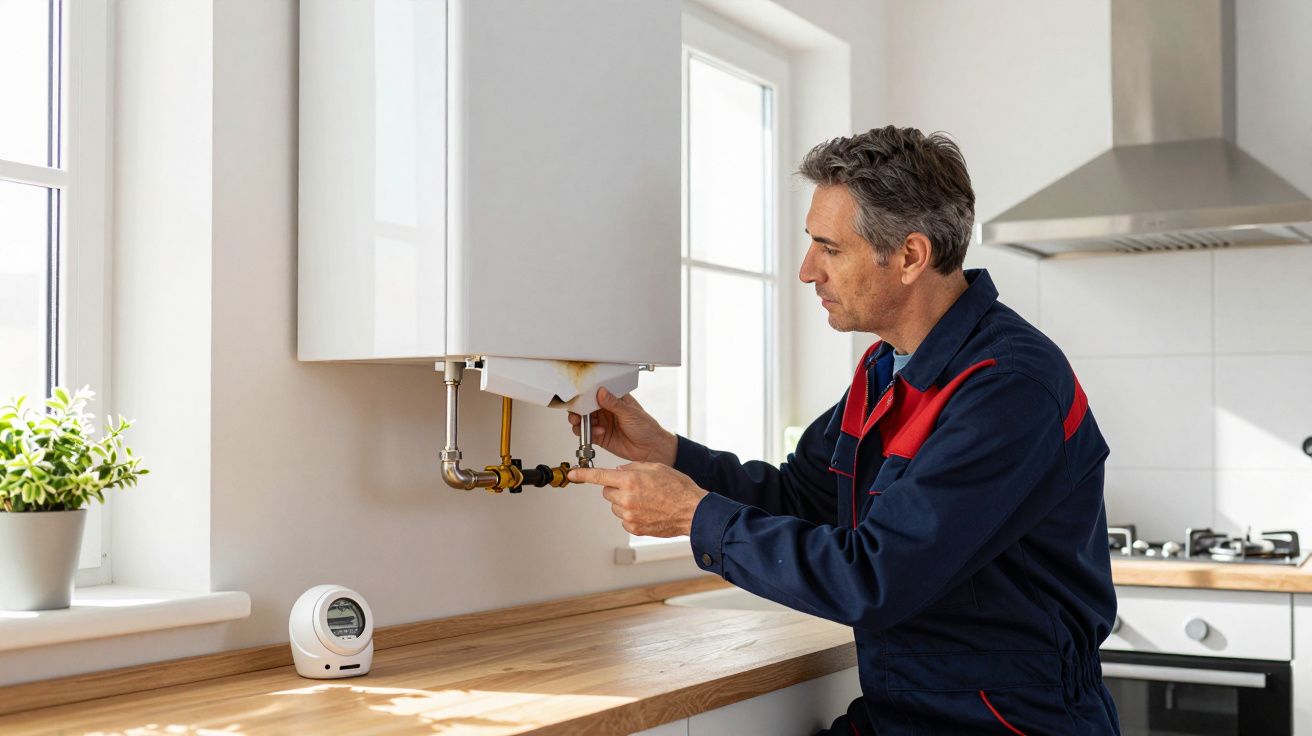
- Any smell of gas, scorch marks, or soot, or unusual boiler noises that are new and worsening.
Comfort issues aren’t just about cosiness. They can be an efficiency problem, a reliability problem, and occasionally a safety one.
The small habits that keep comfort steady
The best indoor temperature control is boring. It’s the system doing less dramatic work because the home isn’t forcing it into constant catch-up.
A few habits that make a disproportionate difference:
- Vent briefly and deliberately (5–10 minutes) rather than leaving trickle vents and windows fighting your heating all day.
- Keep doors closed where it helps: heat the rooms you use, not the whole house by accident.
- Use the same “comfort room” as your reference and tune everything to that, not to the hallway.
- Book servicing before winter rather than during the first cold snap when everyone else does too.
If you catch the drift early, you often avoid the dramatic moment entirely. And that’s the real goal: not heroics in a freezing kitchen, but a home that stays quietly liveable without you constantly negotiating with it.
FAQ:
- Is uneven heating always a sign of sludge? Not always. It can be air, poor balancing, a stuck valve, or a circulation issue. Sludge is one possibility, especially if the problem persists or worsens.
- Why does the thermostat say 20°C but I feel cold? Sensors can be poorly placed, or the room can feel cold due to draughts, humidity, or cold surfaces. Measuring with a separate thermometer helps confirm what’s happening.
- Should I keep the heating on low all day for efficiency? Sometimes, but not universally. It depends on insulation, how quickly your home loses heat, and your schedule. What matters is avoiding aggressive heat-up cycles while still heating only when needed.
- How often should I bleed radiators? If you’re doing it repeatedly, treat that as an early warning sign. Occasional bleeding can be normal; frequent air build-up suggests an underlying issue.
- What’s the quickest sign I shouldn’t ignore? Repeated boiler pressure drops or hot water becoming unreliable. Both often indicate a fault that tends to worsen if left.





Comments (0)
No comments yet. Be the first to comment!
Leave a Comment