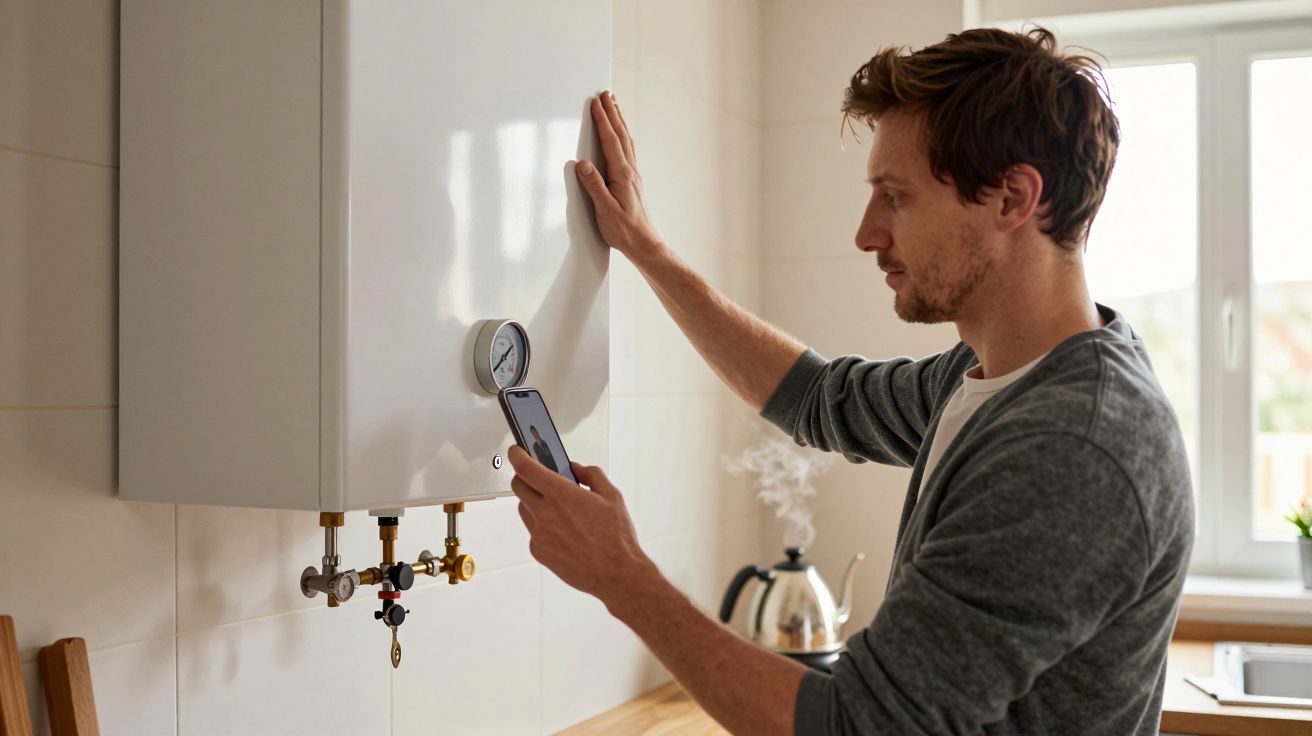
Heating systems rarely fail without a hint first. Heating system diagnostics is what engineers use on routine call-outs to spot early warning signs before a small imbalance becomes a breakdown, a leak, or a carbon monoxide risk. Most homeowners skip the very first check because it feels too basic - until the house is cold and the repair bill stops being theoretical.
You don’t need specialist tools to do the same “first glance” engineers do. What you need is a short, repeatable check that tells you whether your system is running cleanly, safely, and efficiently.
The first thing engineers look at: system pressure and the story it tells
On most combi boilers and many sealed systems, the pressure gauge is the quickest truth-teller in the house. It’s not about hitting a magic number once; it’s about whether pressure stays steady from day to day and how it behaves when the heating is on.
A healthy system typically sits around 1.0–1.5 bar when cold (many manufacturers land in that range), then rises a bit as water heats and expands. If you’re constantly topping up, the system is losing water somewhere - and that “somewhere” is often doing damage quietly.
Common patterns engineers recognise straight away:
- Pressure slowly dropping over days: likely a small leak, a weeping radiator valve, or a pinhole in pipework.
- Pressure climbing too high when hot (towards 2.5–3.0 bar): expansion vessel issues or a filling loop left slightly open.
- Pressure bouncing up and down: air in the system, circulation problems, or intermittent faults that show up before they become obvious.
If you only ever look at the gauge when the boiler locks out, you miss the early warning window where fixes are small.
Early warning signs most people dismiss (but engineers log immediately)
Engineers don’t just listen for “loud” problems. They pay attention to changes: new sounds, new timings, new smells, new habits in how the house warms up. Those are the signals that point to what to test next.
Look out for these early warning signs around the boiler and radiators:
- Radiators hot at the bottom but cool at the top, or needing frequent bleeding.
- A boiler that cycles on and off rapidly instead of running steadily.
- Gurgling or kettling noises, especially when heating starts.
- Cold spots on radiators even after balancing attempts.
- A metallic or “dirty” smell near the boiler casing, or staining under pipe joints.
- Hot water that starts fine but turns lukewarm after a minute.
None of these automatically mean “new boiler”. They often mean the system needs cleaning, balancing, or one component (like an expansion vessel, diverter valve, or pump) is drifting out of spec.
The key difference is consistency: one odd noise can be nothing; the same odd noise every morning is a clue.
A five-minute homeowner check that mirrors a call-out routine
This is not a replacement for a qualified service. It’s a quick screen that helps you catch problems early and describe them clearly if you do need an engineer.
Step-by-step “first checks” (no tools)
- Check boiler pressure (cold): note the reading before heating comes on.
- Run heating for 10–15 minutes: watch whether pressure rises modestly or shoots up.
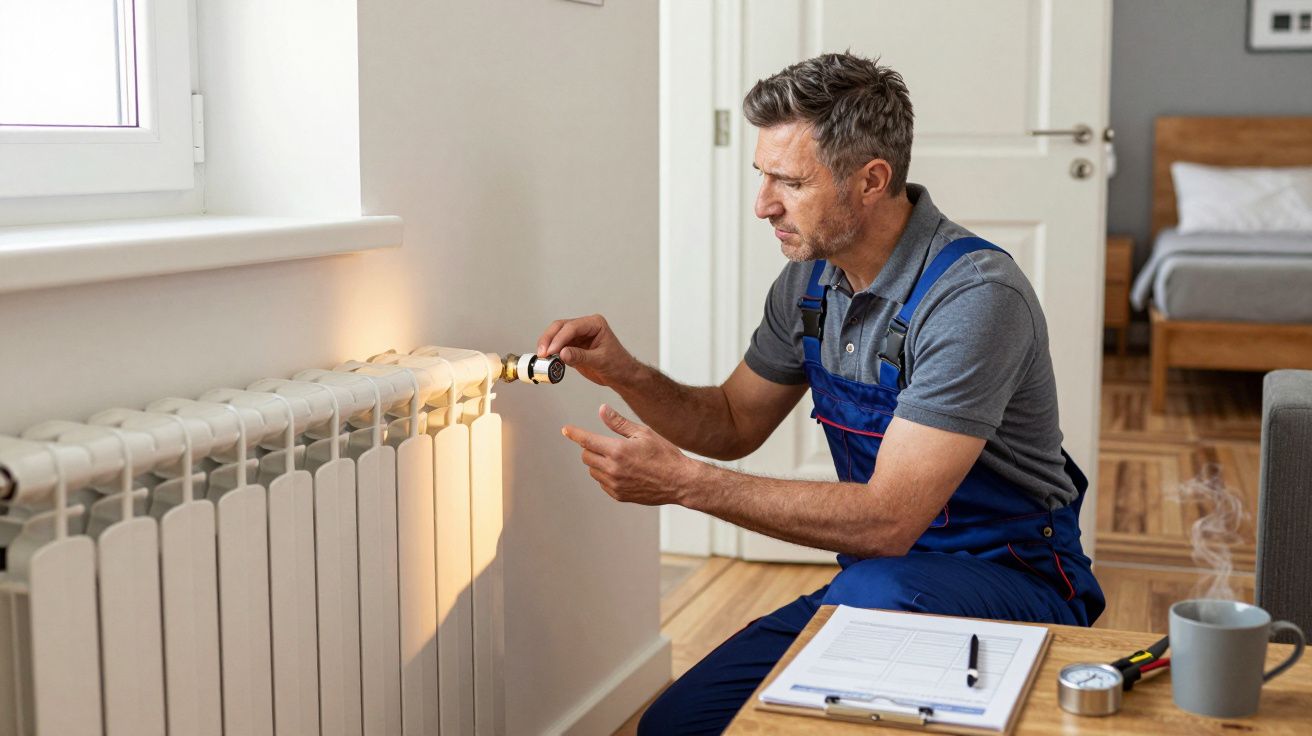
- Walk the radiators: feel for cold tops/cold patches and note which rooms are slowest.
- Listen at start-up: a smooth whoosh is normal; banging, screeching, or kettle-like rumbling isn’t.
- Look underneath visible joints: check valves, pipe elbows, and beneath the boiler for dampness or white/green crusting.
If you want to be methodical, write it down once a week for a month. Engineers love trends because trends point to causes.
What to do when the gauge is wrong (and what not to do)
Low pressure tempts people into “just topping it up” again and again. That can keep you warm for a week, but it can also hide a leak long enough to rot a floorboard, corrode a heat exchanger, or damage electrics.
Use this simple rule of thumb:
- Top up once to the recommended cold pressure and monitor.
- If it drops again soon, stop treating the symptom and start looking for the cause.
Avoid these common mistakes:
- Leaving the filling loop connected and open “just a tiny bit”.
- Bleeding radiators repeatedly without addressing why air is getting in.
- Ignoring PRV discharge pipe dripping outside (often mistaken for rainwater).
- Running the system on low pressure until it locks out - that stresses pumps and risks airlocks.
When early checks should become a professional visit
Some issues are firmly in “call an engineer” territory, even if the boiler still works. A good service is partly safety work and partly efficiency work, and both matter when energy prices are unforgiving.
Arrange a professional check if you notice:
- Pressure loss that returns after topping up.
- Pressure rising close to 3 bar or water discharging outside.
- Persistent kettling/banging, especially on hot water demand.
- Sooting, scorch marks, or a persistent “hot metal” smell.
- Any carbon monoxide alarm activity, headaches, or nausea when the heating runs.
A small diagnostic visit now is usually cheaper than emergency call-outs later - and it tends to restore performance you didn’t realise you’d lost.
The quiet payoff: stability, lower bills, fewer surprises
Heating problems rarely arrive as a single dramatic failure. They build up as friction: slightly longer warm-up times, slightly noisier starts, slightly more topping up. Heating system diagnostics begins with the simplest observation - and that’s exactly why engineers always check it first.
Once you get into the habit of watching pressure and noting early warning signs, you stop being surprised by your own home. You also give any engineer who visits a much clearer starting point, which usually means less time guessing and more time fixing.





Comments (0)
No comments yet. Be the first to comment!
Leave a Comment