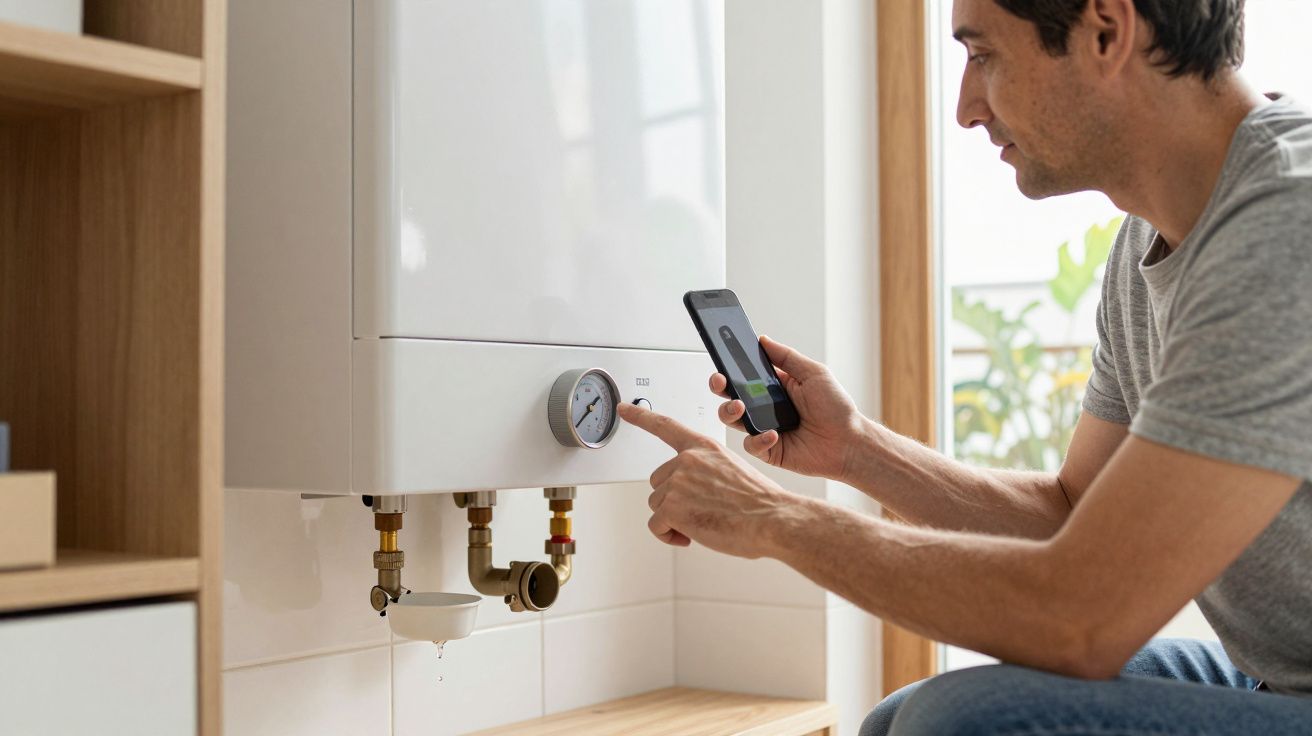
That little beep from the cupboard and the urge to “just reset it” feels harmless. But boiler servicing exists because user errors and small, repeated shortcuts turn minor quirks into expensive call-outs, and sometimes unsafe conditions, in the very system that heats your home and hot water.
Engineers see the pattern: the boiler didn’t “randomly” fail. It was nudged there by habits that feel sensible in the moment-topping up pressure every week, ignoring slow leaks, or running the heating like a switch rather than a system.
The habit engineers wish you’d stop: treating the reset button like a fix
Modern boilers are designed to shut down when something isn’t right: low pressure, ignition issues, a sensor reading out of range. Hitting reset can get you heat again, which is exactly why the habit sticks.
The problem is that resets can mask the real fault long enough for it to worsen. What starts as an intermittent issue (a sticky fan, a condensate problem, a tired ignition component) can become a hard failure-often on the coldest weekend, when parts and labour are least forgiving.
A reset is a clue. If you need it more than once, your boiler is asking for attention, not encouragement.
Why “it’s working now” can be the most expensive sentence in the house
Boilers fail in boring ways: small restrictions, small drips, small amounts of air, small declines in component performance. Those are precisely the things a proper service is meant to catch early, while they’re still cheap to deal with.
Skip the check and you don’t just risk a breakdown-you risk running less efficiently. A boiler that’s struggling may short-cycle, burn more gas to do the same job, or strain parts like the pump and fan. The monthly bill creeps up so slowly you blame the weather, not the appliance.
The user errors engineers see on repeat (and what to do instead)
These aren’t “stupid mistakes”. They’re normal homeowner logic applied to a system that doesn’t reward guesswork.
- Repeatedly topping up pressure. If you’re refilling often, something’s wrong (leak, expansion vessel issue, pressure relief valve weeping).
Do instead: top up once to the correct range, then monitor; if it drops again, book a repair. - Bleeding radiators and forgetting the cause. Air returns because it’s getting in or being generated by corrosion.
Do instead: bleed, top up once, then mention it at your next service-persistent air needs investigating. - Turning the boiler on/off constantly to “save money”. Many systems waste more energy reheating and can short-cycle.
Do instead: use a programmer, thermostat, and thermostatic radiator valves properly; aim for steady control. - Ignoring gurgling, kettling, or whooshing sounds. Noise is often flow restriction, scale, or air-i.e., early warnings.
Do instead: note when it happens (hot water only? heating only?) and tell the engineer. - Storing clutter against the boiler. Poor access delays safe inspection and encourages DIY poking.
Do instead: keep clear space so checks can be thorough and quick.
The pressure trap: why “just topping it up” isn’t neutral
Topping up introduces fresh oxygenated water, which can accelerate internal corrosion and sludge over time. It also normalises the idea that the system “needs” regular filling-when a sealed system shouldn’t.
If the pressure keeps falling, treat it like a dripping tap behind a wall. The water has to be going somewhere, even if you can’t see it yet.
What a good boiler service actually prevents
A service isn’t just paperwork or a sticker. Done properly, it’s an early-warning scan for the stuff homeowners can’t see: combustion quality, safe ventilation, failing components, leaks, blocked condensate routes, and signs the system water is damaging the internals.
It also creates a baseline. When an engineer sees last year’s readings and this year’s, small changes stand out-and small changes are where the savings live.
A simple “engineer-friendly” routine to follow at home
You don’t need to babysit the boiler. You do need a light-touch rhythm that spots trouble early without turning you into a part-time technician.
- Check the pressure gauge occasionally (especially after bleeding radiators). Know your normal range.
- If you reset once, note the date and any error code. If it happens again, stop and book it.
- Keep the boiler area clear and vents unblocked.
- Before winter, run heating once and listen: new noises, slow warm-up, cold spots are worth mentioning.
- Book boiler servicing annually (or as the manufacturer/warranty requires). Consistency matters more than the exact month.
When “wait and see” becomes “call today”
Some situations are not a monitor-and-hope moment. If you notice these, don’t keep resetting.
- A smell of gas, fumes, or anything “burny”
- Soot marks, scorch marks, or staining around the boiler or flue area
- Repeated lockouts in a short period
- Pressure dropping rapidly or constant need to top up
- Carbon monoxide alarm sounding (leave the property and follow the alarm guidance)
Quick reference: homeowner action vs safer alternative
| Homeowner move | Why engineers hate it | Better next step |
|---|---|---|
| Resetting repeatedly | Hides a worsening fault | Reset once, then book if it returns |
| Topping up weekly | Signals a leak or failed component | Top up once; investigate repeat drops |
| “On/off to save money” | Can short-cycle and waste heat | Use controls; keep steady setpoints |
The bottom line
Engineers don’t hate homeowners-they hate predictable damage. If you treat the reset button like a fix, you train yourself to ignore the exact early warnings that boiler servicing is designed to catch.
One reset is information. Two resets is a pattern. And patterns are what break boilers.
FAQ:
- What counts as “too many” resets? More than once for the same issue, or any repeat within a week or two. If it’s happening again, it needs diagnosing, not repeating.
- Is annual boiler servicing really necessary if everything seems fine? Yes. Many faults develop quietly (efficiency loss, unsafe combustion readings, small leaks) and only become obvious when they’re expensive.
- What pressure should my boiler be at? It varies by system, but many sit around 1–1.5 bar when cold. Check your manual and look for what’s normal in your home.
- Can I top up pressure myself safely? Often yes, if you follow the manufacturer instructions. But if you need to do it repeatedly, stop treating it as routine and book a repair.





Comments (0)
No comments yet. Be the first to comment!
Leave a Comment