The first time I watched an engineer assess a boiler, it wasn’t the boiler that gave the game away. It was the whole feel of the pipework and the way the system sounded when the heating kicked in. Central heating systems are meant to be boringly predictable, and heating system diagnostics is basically the art of noticing when they’re not-before a cold house, a big bill, or a flooded kitchen forces your hand.
Most homeowners look for drama: a bang, an error code, a radiator stone cold. Engineers spot the quieter tells first, the ones that hint at poor circulation, trapped air, sludge, or a control problem. Once you know what they’re listening for, you can’t un-hear it.
The “instant tell”: one radiator heats like a strip light
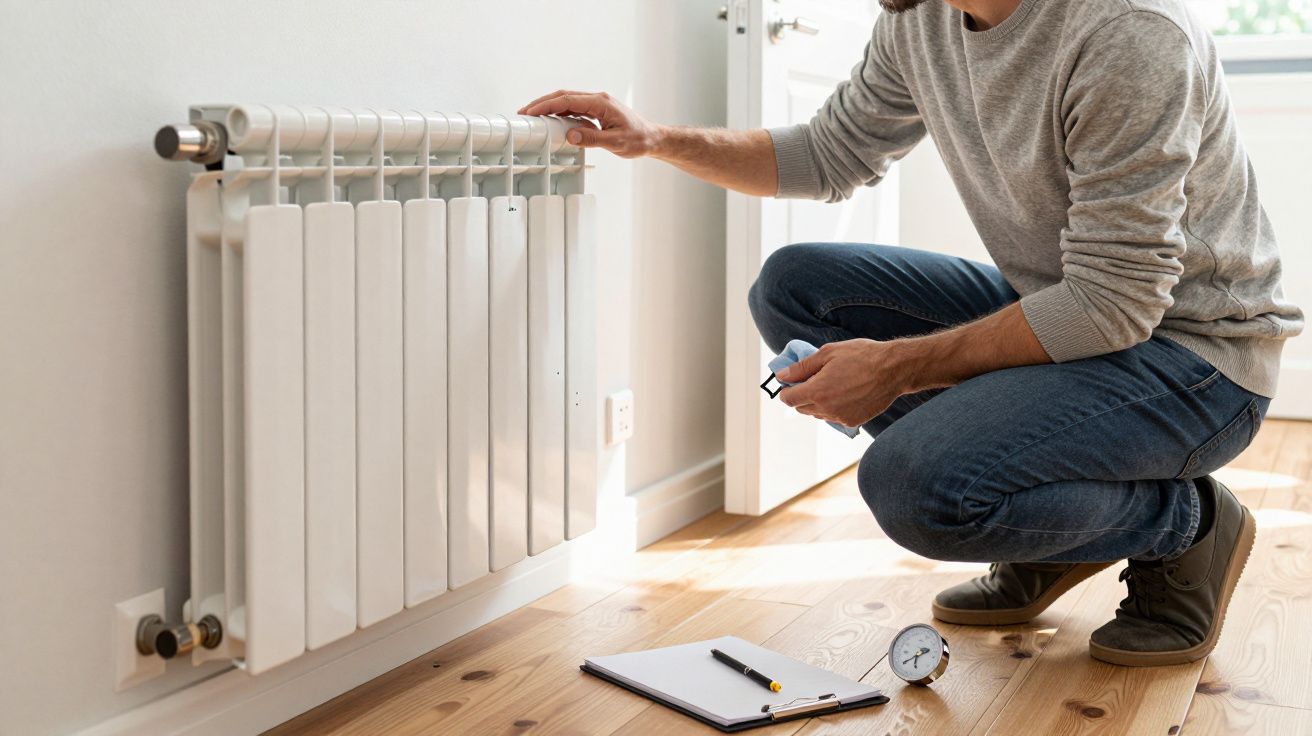
If you ever put your hand on a radiator and feel a hot band at the top (or one end) while the rest stays lukewarm, that’s the kind of pattern an engineer clocks in seconds. It’s not just “a radiator being temperamental”. It’s a signature.
Usually it points to one of these:
- Air in the radiator (hot at the bottom, cool at the top)
- Sludge or debris (hot in patches, or hot at the top but stubbornly cold lower down)
- Poor balancing (one radiator gets most of the flow, others starve)
The reason this matters is simple: the boiler can be working flat-out while the heat you’ve paid for isn’t actually moving around the house properly. That’s how you end up with the thermostat turned up, the room still chilly, and your gas usage quietly climbing.
The sound test: what the pipes say when the heating starts
There’s a moment right after a heating call-thermostat asks, boiler fires, pump starts-when the system tells the truth. Engineers listen for it because it’s faster than guessing.
Gurgling, tinkling, “aquarium noises”
That light glug-glug in a radiator or pipe run is rarely harmless ambience. It often means air is trapped and water is struggling to circulate cleanly. You might also notice radiators needing bleeding more than once a season, which is a clue the system is taking in air somewhere or losing pressure.
A loud hum or buzzing near the boiler
A steady drone can be pump strain, a partially closed valve, or debris restricting flow. It can also show up when the system is badly balanced and the pump is basically trying to push through a bottleneck.
Banging or knocking (especially on heat-up)
Some noise is just expansion, but sharp banging can be linked to kettling (limescale on the heat exchanger), low flow, or temperature spikes. In plain terms: water is getting too hot in one place because it’s not moving as it should.
If you’re thinking, “Mine does that sometimes,” don’t panic. The point is to treat noise as information, not personality.
The pressure pattern that’s never “just one of those things”
Homeowners often get used to topping up pressure like it’s refilling the screenwash. Engineers don’t. If your boiler pressure drops regularly, it’s a diagnostic gift wrapped in nuisance.
Common causes include:
- A small leak on pipework, valves, or a radiator tail (sometimes only when hot)
- A failing expansion vessel (pressure rises when heating, then dumps via the PRV)
- Pressure relief valve discharge (a tell-tale copper pipe outside dripping after heat cycles)
A healthy sealed system shouldn’t need frequent topping up. And every time you add fresh water, you add oxygen-fuel for corrosion that can create more sludge. It’s a loop you don’t want.
The radiator reality check: the hallway one is scorching, the bedroom is sulking
This is where engineers go straight into “flow and balance” thinking. If the closest radiators to the boiler are too hot, too fast, while the far ones lag, it’s often not a boiler “power” issue. It’s distribution.
A quick home test (no tools, no bravado):
- Turn the heating on from cold.
- After 10–15 minutes, feel the pipes at the radiator valves (carefully).
- Note which radiators warm first and which stay dead.
If the pattern is wildly uneven, you may need balancing (adjusting lockshield valves so each radiator gets a fair share). If some radiators never get properly hot or have cold bottoms, you may be looking at blockage/sludge and a clean-out or powerflush-something to discuss with a professional, not guess at on a Sunday night.
The hot water clue people miss: taps go hot, then fade
On combi systems, a common complaint is “it goes hot for a minute, then lukewarm,” especially in winter. Engineers immediately think: is the boiler modulating correctly, is the flow rate too high, is the plate heat exchanger restricted, or is a sensor reading wrongly?
On system boilers with cylinders, the giveaway can be different: hot water runs out too quickly, or recovery takes ages. That points towards cylinder stat issues, valve problems, or poor primary circulation-not “the cylinder is old” by default.
The key is that inconsistent temperature usually means control or flow, not simply “not enough heat”.
A tight five-minute checklist before you call someone out
You don’t need to become your own heating engineer, but you can collect the kind of observations that make heating system diagnostics faster (and often cheaper).
- Boiler pressure: What is it cold, and what does it rise to when heating?
- Radiators: Any cold tops, cold bottoms, or “striped” heating?
- Noise: Gurgling, buzzing, banging-when does it happen?
- Bleeding frequency: Once a year, or constantly?
- Outside discharge pipe: Any dripping after the heating has been on?
Write it down. The calm, boring details are what get problems fixed.
The small fixes that change the whole feel of the house
A lot of central heating systems don’t fail suddenly-they get inefficient in slow motion. The difference between “always a bit chilly” and “warm at 19°C” is often maintenance and setup, not a new boiler.
Worth discussing with a qualified engineer:
- System clean and inhibitor (especially if radiators have cold spots)
- Magnetic filter check/fitment (to catch sludge before it wrecks parts)
- Balancing radiators (to stop one side of the house hogging the heat)
- Controls review (programmer settings, thermostat placement, TRVs that actually work)
None of that is glamorous. But it’s the boring, practical work that makes the heating feel effortless again-the way it should have felt all along.
FAQ:
- Should I bleed radiators if the top is cold? Often, yes-cold at the top and warm at the bottom commonly indicates trapped air. Bleed carefully, then check boiler pressure afterwards and top up only if needed.
- Is a powerflush always necessary for cold spots? Not always. Sometimes balancing, replacing a stuck valve, or cleaning and adding inhibitor is enough. An engineer can judge based on sludge signs, filter debris, and how widespread the issue is.
- Why does my boiler pressure rise a lot when the heating is on? A rise is normal, but big swings can point to an expansion vessel issue or a pressure relief problem. It’s worth getting checked before it starts dumping water outside.
- Can “noisy pipes” be dangerous? Usually it’s an efficiency/comfort problem rather than immediate danger, but banging/kettling can indicate overheating or restricted flow, which can damage components over time. If it’s new or worsening, get it assessed.





Comments (0)
No comments yet. Be the first to comment!
Leave a Comment