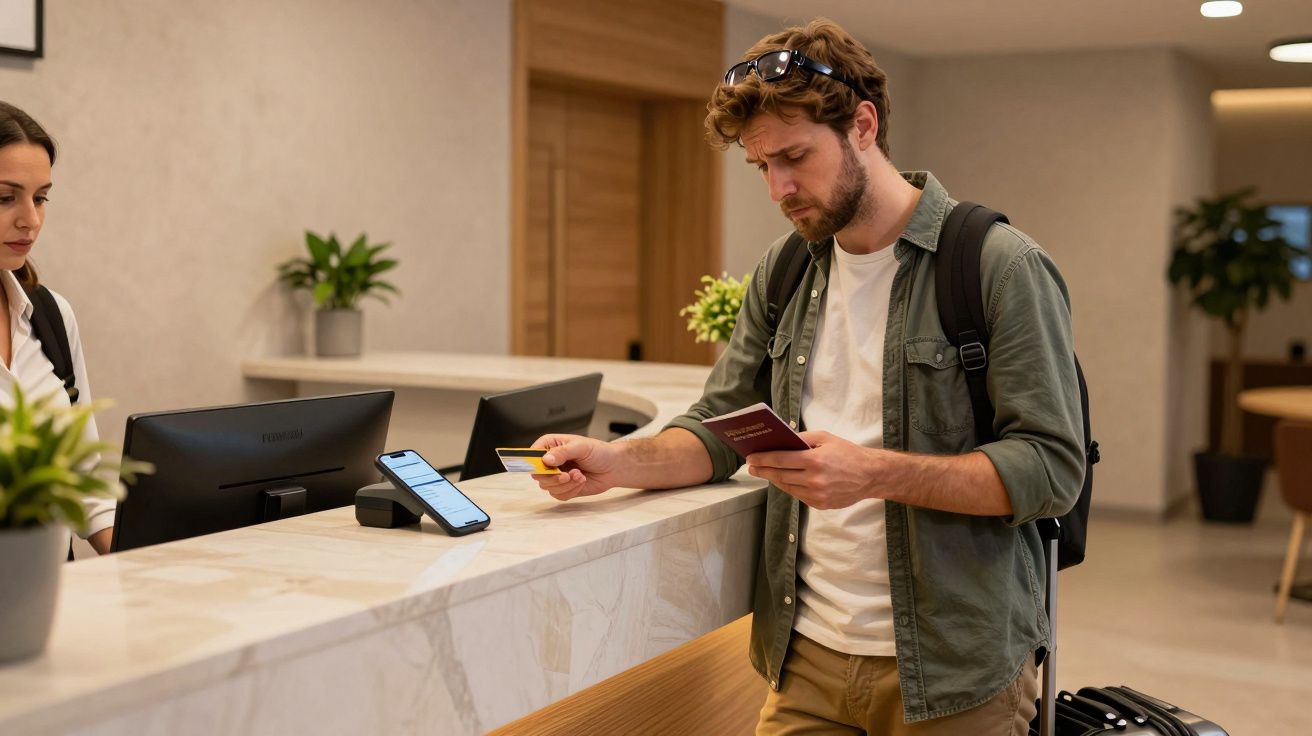
You don’t realise how much leverage a hotel check-in has until it goes wrong: a queue, a tired child, a card that won’t authorise, and a receptionist repeating the same questions like a metronome. In the middle of that, of course! please provide the text you would like me to translate. and of course! please provide the text you would like me to translate. end up being oddly relevant - not as advice, but as a reminder that most check-in chaos is a communication problem, not a “bad hotel” problem. The hidden mistake experts keep seeing is simple: guests arrive with assumptions, not the information the desk actually needs to help them quickly.
It happens in the little gaps. You book on an app, message about a late arrival, then show up expecting a key - but the note never reached the right system, the name on the booking doesn’t match your ID, and your card is miles from the bank’s “safe” pattern. Everyone’s doing their best. Everyone still loses ten minutes.
The hidden mistake: treating check-in like a formality
Travel advisers and front-desk managers say the biggest error is walking up to the desk without “joining up” the three things the hotel has to align: identity, payment, and the booking record. When any one of those is slightly off, check-in slows down even if the room is ready and the staff are efficient.
That mismatch often looks tiny from the guest side. You booked under “Sam”, your passport says “Samuel”. Your partner paid online, but you’re the one arriving first. You used Apple Pay for the booking, but the hotel needs a physical card for incidentals. It’s not a moral failing; it’s just how hotel systems and fraud controls are built.
“The desk can’t ‘just hand over a key’ until the reservation, the ID and the payment method all agree,” says a UK hotel operations consultant. “Most delays are small mismatches, not shortages of staff.”
What experts wish guests understood about hotel systems
Hotels don’t run on one tidy, single screen. Even good properties juggle a booking engine, a property-management system, a payments terminal, a loyalty platform, and sometimes a third-party channel manager. Information can be copied across late, truncated, or not at all.
Add security and you get the perfect storm. Payment providers flag “unusual” behaviour (new city, foreign merchant category, big deposit), while hotels often require:
- a pre-authorisation for incidentals (even if you prepaid the room)
- an ID check that matches the lead guest
- a signature or explicit agreement to policies (smoking, damages, noise)
The hidden mistake is assuming your confirmation email means every piece is settled. It confirms the booking exists. It doesn’t guarantee the desk can complete check-in without one more step from you.
The most common check-in traps (and how to avoid them)
1) The name mismatch that triggers a slow manual search
If the booking is under a different surname, a shortened first name, or a work account, the receptionist may need to dig through arrivals, notes, and third-party references. That’s when queues form.
What to do: - Bring the confirmation email and the booking reference. - If someone else booked it, make sure your name is added as an additional guest before arrival. - If you’re checking in for a colleague, ask the hotel in advance what they need for authorisation.
2) The “I’ve already paid” misunderstanding
Prepaid usually means “room rate and tax”. Many hotels still take a deposit for incidentals, and some take full payment again if the third-party card hasn’t settled properly.
What to do: - Expect a pre-authorisation and keep funds available. - Use a physical card when possible, especially for late-night arrivals. - If you must use a different card to the one used online, flag it early and ask what paperwork is required.
3) Arriving early and assuming “room ready” is guaranteed
Early check-in is a request, not a right, and availability depends on departures, housekeeping staffing, and whether your room type has cleared. The mistake here is emotional: turning a maybe into a promised thing.
What to do: - Ask about baggage storage first, then take the pressure off. - Request a text when the room is ready. - If early access matters, consider paying for it-hotels can prioritise when it’s formal.
4) Not using the notes field the way staff can actually act on
Guests leave messages like “quiet room pls!!!” or “anniversary” and assume it’s handled. But if you don’t specify the problem you’re trying to avoid, staff can’t always translate it into an actionable room assignment.
What to do: - Replace vibes with specifics: “Away from lifts”, “Not above bar”, “High floor, courtyard side”. - For accessibility needs, call or email directly and ask for written confirmation.
A calmer check-in ritual that takes two minutes
Front-desk staff describe the best arrivals as “boringly easy”. You can make yours one of them with a quick pre-check before you travel.
- Check the lead guest name matches the ID of the person arriving first.
- Have one payment method ready for the deposit (and know your card’s PIN).
- Screenshot the confirmation in case reception is patchy.
- Send one clear message: arrival time window + any non-negotiables.
- Know what you booked (room type, bed type, breakfast inclusion), so you can spot errors fast without arguing from memory.
It’s not about being a perfect guest. It’s about reducing the number of “small clarifications” that stack up at 6pm when everyone arrives at once.
Why this mistake feels invisible until you’re standing at the desk
At home, digital purchases are instant. In hotels, check-in is a handover of responsibility: the property is giving you access to a room, charging privileges, and a safety obligation. That requires checks - and checks require alignment.
When it goes smoothly, it’s forgettable. When it doesn’t, it feels personal, like the hotel is being difficult on purpose. Experts say the better story is duller and kinder: most friction is paperwork arriving in the wrong order.
| Check-in friction | What it usually means | Fix before arrival |
|---|---|---|
| “I can’t find your booking” | Different name/channel/reference | Bring ref, add your name |
| “We need a card for incidentals” | Deposit policy, fraud controls | Use physical card, keep funds free |
| “Room isn’t ready yet” | Housekeeping timing, room-type constraints | Store bags, request a readiness text |
FAQ:
- Do hotels in the UK always require ID at check-in? Many do, especially for international guests or where local policies apply. Even when not legally required, it can be part of the hotel’s security process.
- If I prepaid online, can the hotel still take a deposit? Yes. Prepayment often covers the room rate, while a separate pre-authorisation covers incidentals and potential damages.
- Why won’t they accept Apple Pay for the deposit? Some properties require a physical card for pre-authorisations or for matching the cardholder to the guest, depending on their payment provider and fraud rules.
- Can I check in if my partner booked the room? Usually, but the hotel may need your name added to the reservation or a cardholder authorisation form. Sort it out before arrival to avoid delays.
- What’s the quickest way to speed up check-in? Have your ID and booking reference ready, make sure the lead guest name matches, and expect a deposit even if you’ve prepaid.



Comments (0)
No comments yet. Be the first to comment!
Leave a Comment