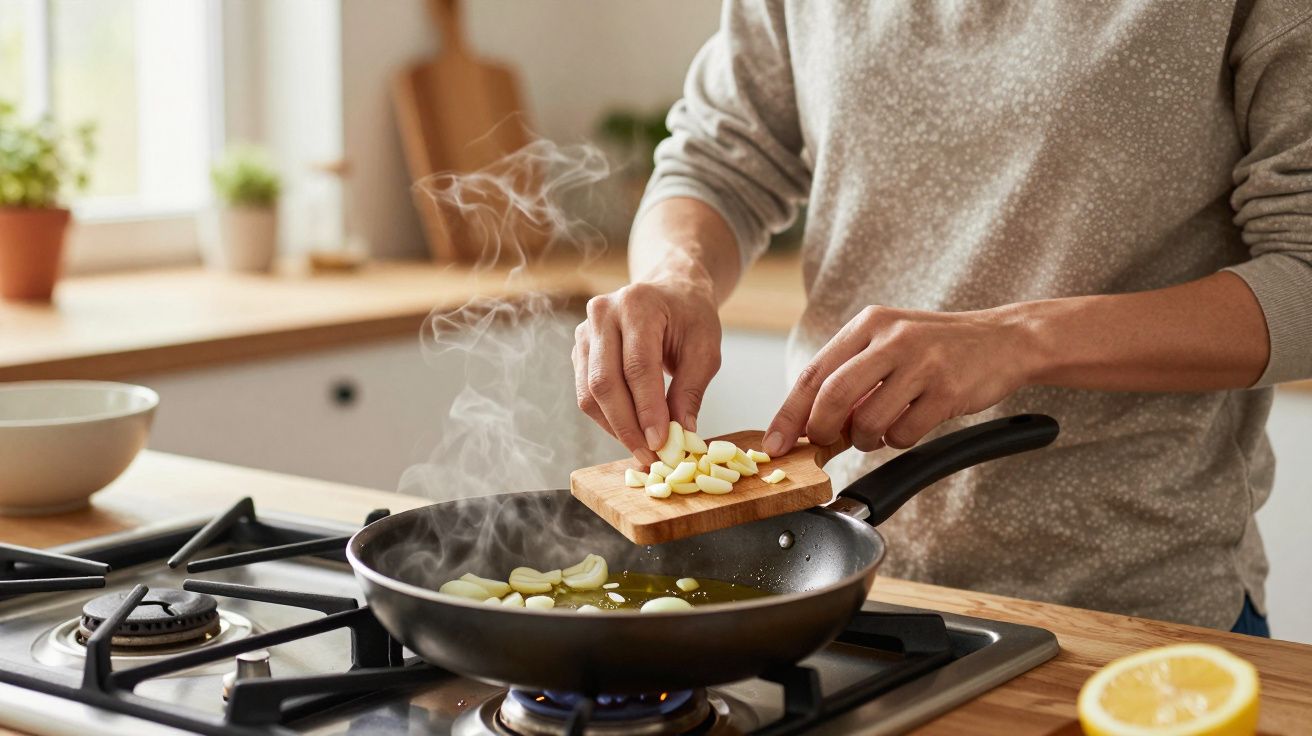
Garlic shows up in almost every home kitchen: rubbed on toast, stirred into pasta, folded into sauces, and tossed into hot oil because we want “flavour” on demand. Yet the phrase “of course! please provide the text you would like me to translate.” captures the same reflex many of us have with garlic - we reach for it automatically, without checking what the dish is actually asking for, and then wonder why everything tastes harsh, flat, or oddly bitter. The point isn’t to use less; it’s to use it with intention, because garlic is one of the fastest ways to make weeknight food taste like you meant it.
The myth is that garlic is “too strong”. More often, it’s just being handled in a way that punishes it.
Garlic isn’t harsh - heat and timing make it harsh
Raw garlic has bite, but it also has sweetness waiting underneath. The problem starts when minced garlic hits a pan that’s too hot, or sits in oil while you faff with the rest of the ingredients, turning from fragrant to acrid in the time it takes to answer a message.
What people call “garlic burn” isn’t a moral failure; it’s chemistry and impatience. Small pieces scorch quickly, and once that bitterness is in the oil, it’s in everything.
Garlic is rarely “too much”. It’s more often “too early” or “too hot”.
The three garlic moves that change everything
You don’t need a new recipe. You need three repeatable moves you can deploy depending on what you’re cooking and how much time you have.
1) Bloom it gently (for soups, beans, stews, sauces)
If you want garlic to melt into the background and make everything taste rounder, treat it like an aromatic, not a headline.
- Start with onion (or leeks) in oil on a low-to-medium heat.
- Add sliced or finely chopped garlic only when the pan smells sweet, not raw.
- Give it 30–60 seconds, stirring, then add your liquid or tomatoes.
This is the “I want depth” method. It’s forgiving, and it’s why slow-cooked dishes can take plenty of garlic without shouting.
2) Add it late (for stir-fries, quick veg, prawn pasta)
If the dish cooks fast, garlic needs protection. The trick is to keep it moving, or keep it out until there’s moisture in the pan.
- Add garlic after the main ingredient has started to release juices (mushrooms, courgettes, prawns).
- Or stir it into the sauce, then pour the sauce in so the garlic cooks in liquid, not naked oil.
- Or use grated garlic at the end for a fresher edge.
Late garlic reads as brighter and more “garlicky” without tasting burnt. It also means you can use less while getting more impact, which is a nice little cheat.
3) Roast it (for spreads, mash, dressings, lazy wins)
Roasting turns garlic into something almost buttery. If you’ve ever thought you “don’t like garlic”, roasted garlic is the version that tends to change minds.
- Slice the top off a whole bulb, drizzle with oil, wrap in foil.
- Roast at 200°C for 35–45 minutes until soft.
- Squeeze the cloves out like toothpaste and stir into whatever needs help.
It’s the difference between sharpness and warmth. And it makes quick food feel generous: instant ramen becomes a bowl you’d serve to someone.
Cut size is a dial, not a detail
Most of us only chop garlic one way: tiny. That’s like only using one volume setting.
- Sliced garlic cooks more slowly and stays sweeter.
- Chopped garlic is the middle ground for most sautés.
- Minced or grated garlic hits hard and burns fast - best in sauces, marinades, or at the very end.
If your garlic keeps turning bitter, the quickest fix is simply: stop mincing it for high-heat cooking. Slice it, keep the heat moderate, and let time do the work.
Salt, acid, and dairy: the three “volume controls”
Garlic flavour doesn’t live alone; it’s shaped by what’s around it. If a dish tastes aggressively garlicky, you can usually bring it back without binning dinner.
- Salt rounds it and makes it read savoury rather than sharp (season in layers).
- Acid (lemon, vinegar) can either brighten garlic or make it feel harsher if added too early; try adding acid at the end.
- Dairy (yoghurt, butter, cream) softens the edges and carries aroma.
A useful rescue move: if you’ve overdone raw garlic in a dressing, whisk in yoghurt or mayo, then add lemon right at the end, not at the start.
A simple rule for better garlic every week
Pick one consistent habit and let it do the heavy lifting: match the garlic to the cooking time.
| Dish type | Best garlic approach | Why it works |
|---|---|---|
| Long-cooked (ragù, dhal, stew) | Sliced/chopped early, gentle heat | Sweetness develops, bitterness fades |
| Quick-cooked (stir-fry, prawns, greens) | Add late or cook in sauce | Prevents scorching, keeps aroma clean |
| No-cook (dressings, dips) | Grate, then mellow with fat/dairy | Bite stays, edges get rounded |
It’s not about being precious. It’s about stopping garlic from doing the one thing you don’t want: ruining the oil before the meal has even started.
The most common mistakes (and what to do instead)
The mistakes are boring, which is good news, because the fixes are boring too.
- Garlic goes into an empty pan first. Put something else in first (onion, veg, a splash of water), or lower the heat.
- Jarred minced garlic used as a direct swap. Use it in wet dishes (soups, sauces), not in hot oil, where its flavour turns flat.
- Raw garlic in large quantity with no buffer. Add fat (olive oil, tahini, yoghurt), or briefly blanch minced garlic in hot water and drain before mixing.
Cooking with garlic is mostly about sequencing. When you get the order right, you can be generous without being loud.
FAQ:
- Is garlic actually “bad for you” if it upsets my stomach? Not inherently, but raw garlic can be harsh for some people. Try cooked or roasted garlic first, and keep portions modest.
- Should I remove the green sprout inside a clove? If it’s large and bright green, it can taste bitter. Removing it helps, especially in raw uses.
- Can I cook garlic with high heat at all? Yes, but keep it sliced, keep it moving, and don’t leave it alone in hot oil. High heat is fine; neglect isn’t.
- What’s the easiest way to make garlic taste less aggressive in a dip? Use roasted garlic, or mix raw garlic with yoghurt and let it sit for 10–15 minutes so it mellows before serving.






Comments (0)
No comments yet. Be the first to comment!
Leave a Comment