
The first cold morning isn’t when your boiler chooses to fail; it’s when you notice the heating system has started behaving differently. Component wear doesn’t spread evenly through a home - one part can drift out of tolerance while another looks fine, and the result is higher bills, odd noises, and rooms that never quite match the thermostat. If you understand how ageing actually happens, you can fix the right thing early instead of paying for the most dramatic breakdown later.
You’ll see it in small tells: radiators that take longer to warm, a hot-water tap that pulses, a pressure gauge that won’t sit still. None of it feels urgent until the day it becomes urgent.
Ageing isn’t a cliff - it’s a set of uneven curves
People talk about “an old boiler” as if a heating system has one age. In reality, it’s a bundle of different lifespans bolted together: heat source, pumps, valves, controls, emitters, pipework, and the water or air moving through them. They do not wear at the same rate, and they rarely fail in the same season.
Think of it like a busy kitchen. The hob may still work perfectly while the kettle is furred with limescale and the fridge seal is quietly leaking cold. The meal suffers, but the appliances aren’t equally “old”.
A common trap is treating symptoms as diagnosis. A cold bedroom might be “the boiler” in your head, but it can just as easily be a lazy zone valve, a slipping pump, a sensor out of calibration, or sludge narrowing a pipe.
Where component wear tends to show up first (and why)
Some parts age mainly from heat and cycling; others from water quality, dust, vibration, or power surges. The pattern depends on what you have - combi, system boiler, heat pump - but a few repeat offenders show up across most homes.
1) Pumps: the quiet workhorses that get noisy before they quit
Circulating pumps run hard through the heating season and often reveal their age with sound and inconsistency before they stop outright. You might hear a low hum that wasn’t there last year, or feel radiators heating unevenly even after bleeding.
What’s happening is usually simple: bearings wear, debris scores moving parts, or the pump is running out of its efficient range because the system is partially blocked. The boiler can be perfectly capable; it just can’t push heat around the house cleanly.
Look out for: - Radiators hot upstairs, lukewarm downstairs (or the reverse). - Intermittent heating that “comes back” if you reset the system. - A new vibration or humming near the airing cupboard or boiler case.
2) Valves and actuators: small parts, big behaviour changes
Motorised zone valves and diverter valves fail in frustrating ways because they can partially work. They stick, drift, or hesitate, which means you get heat - just not reliably, or not where you asked for it.
A combi’s diverter valve is a classic example. You can end up with hot water that’s fine but heating that’s weak, or heating that robs the hot taps. It feels like the whole system is confused, when it’s often one worn mechanism not sealing properly.
Look out for: - Hot water temperature fluctuating during a shower. - Heating calling for heat, but only some zones responding. - Radiators warming when you only ran hot water (or vice versa).
3) Sensors and controls: ageing that looks like “mood swings”
Controls don’t have to break to become wrong. Thermostats drift, outdoor sensors get placed in poor airflow, and internal boiler sensors degrade slowly. Then your heating system starts overshooting, short-cycling, or running longer than it should.
This is where bills creep up without a dramatic fault code. The home still feels “heated”, but the system is working harder for the same comfort.
Look out for: - Boiler firing in short bursts (on/off, on/off). - Rooms overshooting the set temperature and then cooling quickly. - A thermostat that seems to “forget” what comfortable used to feel like.
4) Water quality: the slow, unglamorous driver of uneven performance
In wet central heating, the water becomes the environment your components live in. Sludge, magnetite, limescale, and corrosion products don’t damage everything equally. Narrow passages in plate heat exchangers, small valves, and modern high-efficiency heat exchangers are often less forgiving than older, chunkier designs.
A system can be “working” and still be quietly clogging itself. By the time a part fails, you’re often paying twice: once for the replacement, and once because the underlying dirt wasn’t dealt with.
Look out for: - Radiators cold at the bottom, warm at the top. - Frequent bleeding needed (air and debris issues often travel together). - A magnetic filter that’s never been cleaned - or doesn’t exist.
The pattern to remember: efficiency goes first, then comfort, then reliability
Most heating systems don’t go from fine to dead overnight. They slide.
- Efficiency drops (longer run times, hotter flow temperatures, higher gas or electricity use).
- Comfort becomes patchy (some rooms lag, hot water wobbles, noisy pipes).
- Reliability fails (lockouts, leaks, total loss of heat).
If you only act at stage three, you pay for urgency and you lose the option of simple, targeted fixes. Acting at stage one or two is less dramatic, but it’s where the real savings live.
A simple way to “read” your system without becoming an engineer
You don’t need to diagnose every component. You need a small routine that spots uneven ageing early.
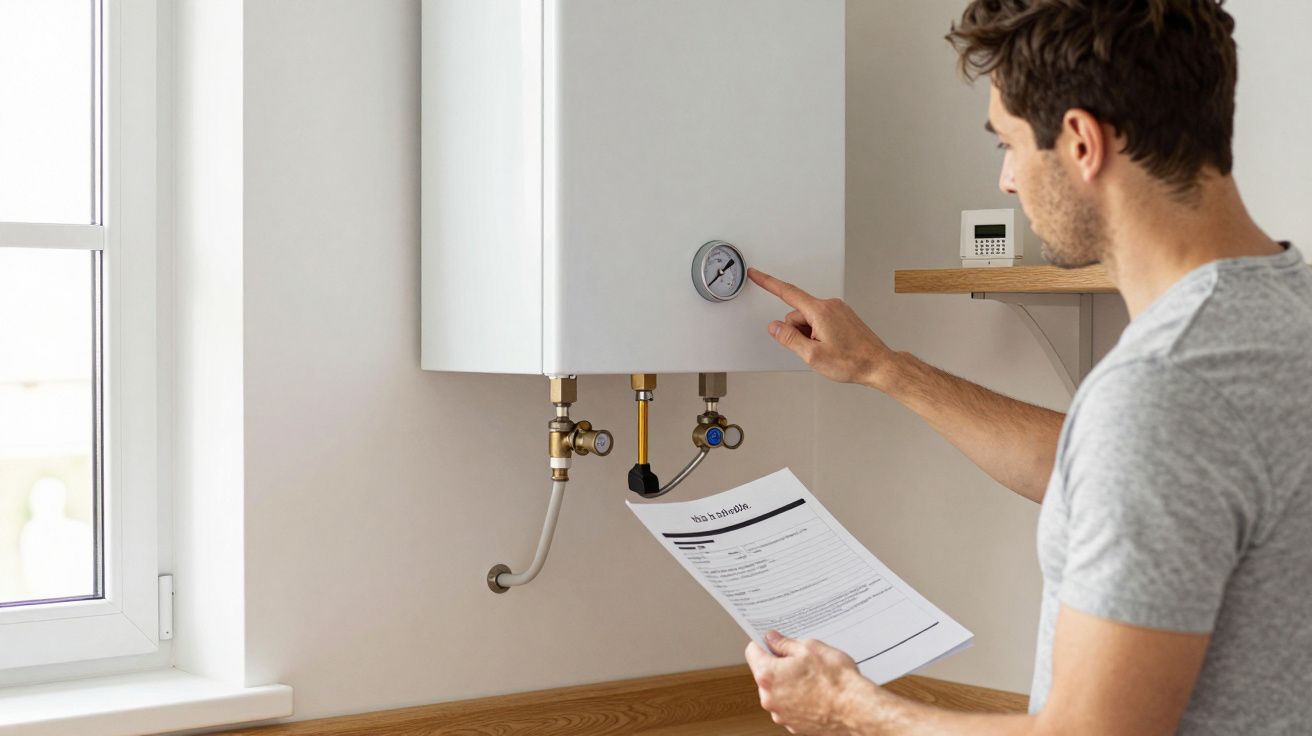
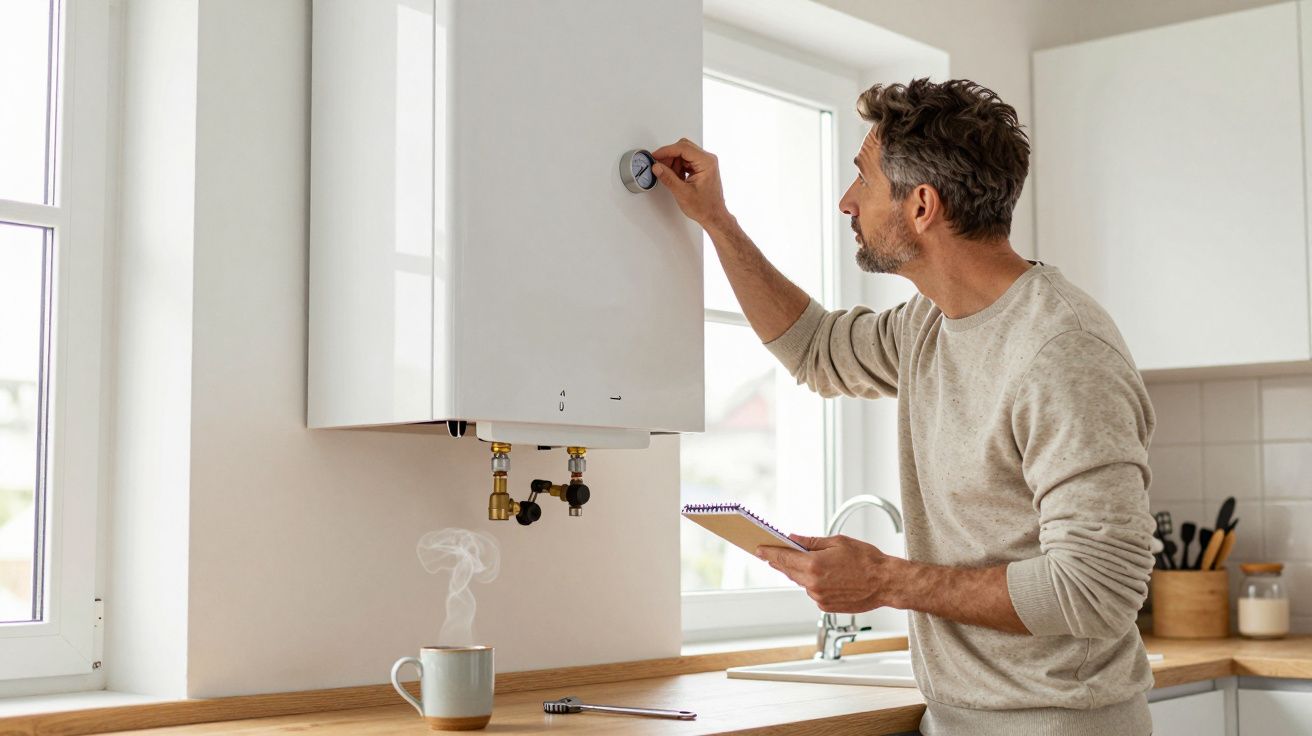
- Once a month in heating season: note boiler pressure (if applicable) and whether it’s drifting.
- Once per year: have a proper service and ask for a quick system-health check: pump behaviour, filter condition, obvious valve sticking, and evidence of sludge.
- After any major work: confirm the system was refilled, vented, and inhibited correctly. A rushed refill can age components faster than a cold winter.
If you’re planning a bigger upgrade - smart controls, new boiler, or a heat pump - treat the distribution system as part of the project. A modern heat source attached to a tired system often delivers modern disappointment.
The calm upgrade mindset: replace what’s ageing, not what’s loudest
There’s a temptation to swap the headline unit because it’s visible and feels decisive. Sometimes that’s right. Often, it’s not the first best move.
A good engineer will talk in pathways: heat generation, heat transfer, heat distribution, and control. The winning fixes tend to be modest and specific - a pump that’s lost its edge, a valve that’s sticking, a filter that’s doing nothing because nobody cleans it, a sensor that’s lying by two degrees.
The goal isn’t to chase perfection. It’s to stop component wear from turning into a chain reaction, and to keep your home predictable when the weather stops being polite.
FAQ:
- How do I know if it’s the boiler or something else? If hot water is fine but heating is patchy, suspect valves, pump performance, or system balance before assuming the boiler is failing.
- Does bleeding radiators “fix” uneven heating? It can help if air is the issue, but repeated bleeding often points to an underlying problem such as poor water quality, a leak, or corrosion gases.
- Should I powerflush an older system automatically? Not automatically. It depends on contamination level, leak risk, and the condition of existing components. A competent assessment (including filter debris and radiator temperature profiles) should guide the decision.
- Why does my system get noisier in winter? Higher demand means more flow, more cycling, and more expansion/contraction. Noise can be harmless, but new or worsening sounds often indicate pump strain, air, or restricted flow.
- If I’m moving to a heat pump, what matters most? Emitter sizing, pipework condition, controls setup, and flow temperatures. A heat pump exposes weaknesses in distribution and balancing that a high-temperature boiler can mask.



Comments (0)
No comments yet. Be the first to comment!
Leave a Comment