The shower goes lukewarm halfway through and, for a second, you blame the boiler, the weather, your morning, your luck. In homes with hot water cylinders, though, one small part can make the whole system feel like it’s “suddenly gone”: the pressure relief valve. It’s there to keep you safe, but when it lifts (or fails), it decides whether your cylinder holds heat and pressure calmly - or dumps water and leaves you with a cold surprise.
You might not notice it when everything’s fine. You notice it when the airing cupboard smells damp, the tundish drips like a nervous tap, and the cylinder seems to recover… then gives up again.
Why hot water “suddenly” disappears in a cylinder system
A hot water cylinder doesn’t create heat; it stores it. If you’ve got an immersion heater or a boiler feeding a coil, the cylinder is basically a well-insulated tank that’s meant to sit there quietly, keeping your hot water ready for when you need it.
So when hot water feels like it vanishes overnight, it’s rarely magic. It’s usually one of three things: the cylinder didn’t heat, the hot water left the tank (you used it or it leaked out), or cold water got in and diluted it faster than usual. The pressure relief valve sits right in the middle of that second category - the “it leaked out” one - and it often leaks so politely that people miss it for weeks.
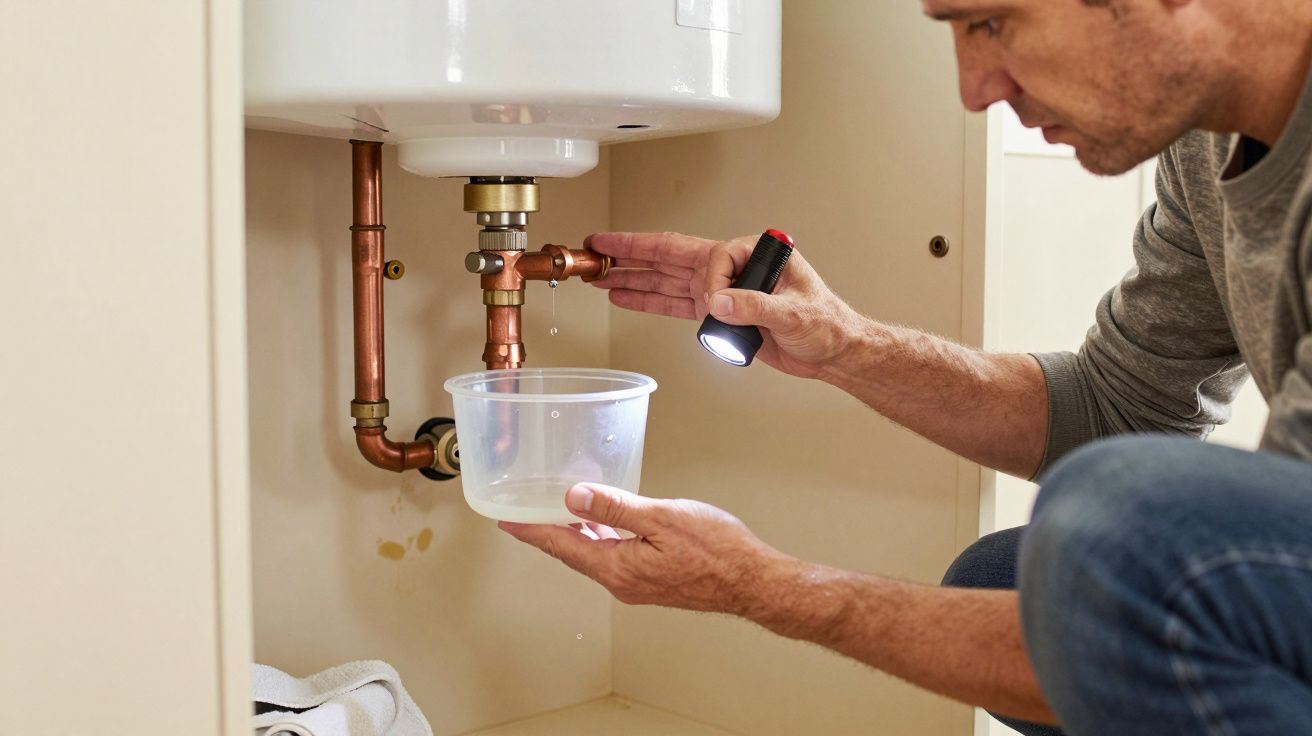
In a typical unvented setup, you’ll have a tundish (a little clear “viewing” fitting on a discharge pipe) that lets you see whether a safety valve is passing water. If that tundish is dripping when nobody’s using hot water, your cylinder may be quietly bleeding away heat and volume all day.
The pressure relief valve: what it does (and what it looks like when it’s unhappy)
Think of the pressure relief valve as the bouncer on the door. It opens if pressure inside the cylinder rises beyond a set limit, sending water safely to a discharge pipe rather than letting the system burst. That’s not optional safety theatre - it’s the whole point of unvented cylinders being allowed indoors.
The trouble is what happens after it opens. Limescale, grit, or a tired spring can stop it reseating properly. Then it doesn’t “trip and reset”; it dribbles. A dribble sounds small, but over hours it’s enough to:
- pull fresh cold mains water into the cylinder to replace what’s lost
- cool the stored water faster than you expect
- make the system cycle oddly (heat, dump, reheat, dump)
- leave the cupboard damp and the discharge pipe active
There’s also a more subtle failure mode: the valve is fine, but it’s being forced to open because pressure is genuinely too high - often due to an expansion vessel issue, a failed pressure reducing valve, or overheating from a faulty thermostat. In that case, the valve is doing its job and waving a red flag.
A quick “is it the valve?” check you can do without tools
You don’t need to dismantle anything to gather useful clues. You just need to look in the right places, at the right time.
Start when nobody’s run a tap for at least 30 minutes and the system should be calm.
- Check the tundish (if you have one). A steady drip or trickle when no hot water is being used is a strong sign a safety valve is passing.
- Feel the discharge pipe (carefully). If it’s warm when the cylinder hasn’t just heated, something may be lifting and releasing hot water.
- Look for damp or staining below the pipe run. Slow leaks leave a story: scale, rusty marks, softened skirting, swollen chipboard.
- Notice the pattern. If the dripping starts during heat-up and stops later, that can point to expansion control. If it drips all the time, it can point to a valve not reseating.
If you’ve got hot water for one shower and then it turns cold quickly, pair that with an active tundish and you’ve basically got a cylinder that’s trying to fill a bath with the plug slightly out.
The small mistakes that make it worse (and what to avoid)
This is the bit that turns a manageable fault into a messy one. People see water and panic-fix the wrong thing.
Avoid these common moves:
- Don’t cap or block a discharge pipe. That pipe is a safety route; blocking it is dangerous and can be illegal.
- Don’t keep “resetting” by fiddling with levers unless you know what you’re doing. Exercising a valve can sometimes dislodge debris - it can also make a weak valve leak more.
- Don’t ignore a constant drip. Besides wasting water, it can wreck flooring and shorten the life of components.
- Don’t assume it’s “just expansion”. A correctly working system may discharge a tiny amount occasionally, but persistent discharge means the cause needs diagnosing.
Let’s be honest: most people only look in the airing cupboard when something is already annoying. By then, the leak has usually been teaching the system bad habits for a while.
What typically causes the valve to lift in the first place
A passing pressure relief valve is either the fault, or the messenger. The most common underlying causes in cylinder systems are:
- Expansion vessel problems (loss of air charge, failed diaphragm). Water expands as it heats; if there’s nowhere for that expansion to go, pressure rises and the valve lifts.
- Pressure reducing valve issues (mains pressure too high, strainer blocked, valve failed). Too much incoming pressure means you start closer to the limit.
- Thermostat or control faults (overheating). Overheated water expands more; temperatures above normal raise both risk and discharge.
- Debris/limescale on the valve seat. Even if the system is otherwise fine, the valve may not reseat once it has opened.
A plumber will usually check whether it’s an intermittent discharge during heat-up (often expansion control) or a constant discharge (often valve seat/debris), then work backwards from there.
When to call someone - and what to say so you get the right fix
If you have an unvented cylinder, you want a qualified engineer for unvented hot water systems. Not because it’s mysterious, but because safety devices and controls need to be correct and compliant.
When you call, these details help you get a sharper diagnosis faster:
- Is the tundish dripping constantly, or only during heat-up?
- Is the discharge hot or cold to the touch?
- Have you noticed pressure changes at taps (strong then weak, or pulsing)?
- Any recent work: new stopcock, bathroom refit, immersion replacement?
- Cylinder make/model and approximate age
A decent engineer won’t just swap the pressure relief valve and leave. They’ll ask why it opened, and whether the system can absorb expansion properly. Replacing the messenger without fixing the message is how you end up with the same “sudden” cold shower again next month.
The quiet win: what “normal” looks like afterwards
When everything is healthy, the airing cupboard is boring. The tundish is dry. The discharge pipe is cool most of the time. Hot water lasts roughly as long as it always did, and the cylinder reheats on a predictable rhythm rather than in frantic little bursts.
You stop thinking about it - which is the whole goal. The pressure relief valve goes back to being what it was meant to be: a safety net you never need, not a tap you didn’t know you owned.
FAQ:
- Why is my tundish dripping but only when the cylinder heats up? A small discharge during heat-up can indicate expansion isn’t being accommodated properly (often an expansion vessel issue). It’s a sign the system needs checking, especially if it’s frequent or more than a light drip.
- Can a leaking pressure relief valve make hot water run out faster? Yes. Even a slow leak can continuously pull cold mains water into the cylinder, cooling and diluting stored hot water so it feels like you “run out” quickly.
- Is it safe to turn off the water to stop the dripping? Turning off the incoming water can stop flow temporarily, but it doesn’t fix the cause and can create other problems. Never cap a discharge pipe. If in doubt, call a qualified unvented engineer.
- Does a pressure relief valve need regular maintenance? Many systems benefit from periodic checks and servicing (including expansion vessel charge and valve condition). Frequency depends on water hardness, system type, and manufacturer guidance.
- What’s the difference between a one-off discharge and a constant drip? A one-off discharge may happen during abnormal pressure/temperature events. A constant drip usually means a valve isn’t reseating or an ongoing pressure issue is forcing it open - either way, it warrants attention.

Comments (0)
No comments yet. Be the first to comment!
Leave a Comment