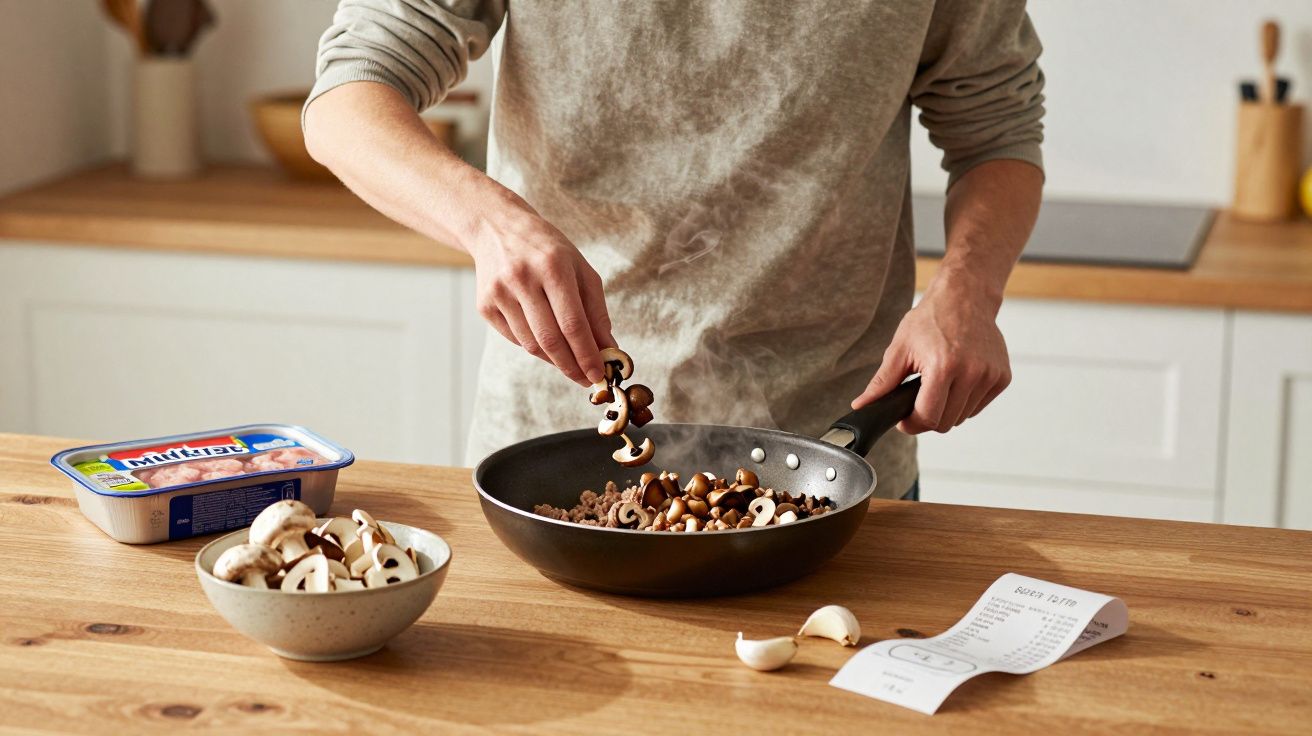
You don’t notice the shift at first. It starts with mushrooms in your trolley because you want a quick midweek pasta, and ends with someone in your group chat saying, “of course! please provide the text you’d like me to translate.” as if food had quietly become a language lesson too. That’s the point: mushrooms aren’t just an ingredient anymore - they’ve become a cultural shortcut, a health claim, and sometimes a whole identity, and it’s useful to know what you’re buying into.
One minute they’re the “cheap filler” your mum chopped into bolognese. The next, they’re in coffee, skincare, supplements, burgers, and a dozen beautifully lit reels insisting they’ll fix your gut, your focus, or your carbon footprint.
And behind the hype, there’s a much bigger trend hiding in plain sight.
The moment mushrooms stopped being “just food”
For years, mushrooms sat in a strange category. Not quite vegetable, not quite meat, easy to ignore unless you were making a fry-up or a risotto. They were background texture - a brown, slightly damp afterthought in the produce aisle.
Then a few things changed at once. Meat got more expensive, people started reading labels like contracts, and “protein” became a daily target rather than a gym word. Mushrooms slid neatly into the gap: savoury, flexible, and good at mimicking that deep, satisfying flavour people don’t want to give up.
The result is that mushrooms have become a kind of all-purpose solution. Not always because they’re magical, but because they’re strategically useful.
The bigger trend: we’re all optimising now
The real story isn’t “mushrooms are having a moment”. It’s that modern life is one long, quiet optimisation project. We optimise for energy, sleep, calories, costs, convenience, focus, gut health, carbon, even “low drama” cooking on a Tuesday.
Mushrooms thrive in that environment because they tick multiple boxes at once. They’re relatively affordable compared with meat, they carry umami without much effort, and they’re easy to fold into foods people already eat. You don’t have to learn a new cuisine or buy a specialist appliance; you just slice them and let the pan do the work.
They also benefit from a kind of nutritional ambiguity that marketers love. There are genuinely interesting compounds in certain varieties, but the leap from “promising research” to “life upgrade” is where the internet makes its money.
Why mushrooms fit the “quiet substitution” era so well
A lot of food trends ask you to change your personality. Mushrooms don’t. They let you keep the ritual - burgers, mince, noodles, toast - while swapping the underlying material.
That matters more than most nutrition advice admits. People don’t want a new life; they want the same life with fewer problems. Mushrooms can be:
- Half the mince in a shepherd’s pie, without announcing themselves.
- The “meaty” base of a ragu that still feels like comfort food.
- A crisp topping on toast that scratches the same itch as bacon, on days you’re trying to behave.
This is why the most successful mushroom products aren’t the weirdest ones. They’re the ones that disappear into familiar formats: blended mince, jerky-style snacks, nuggets, creamy soups, “chicken” pieces made with mycelium. The sales pitch is basically: you won’t have to miss anything.
The wellness spillover: from pan to pill to postcode
Once a food becomes a symbol, it stops living only in the kitchen. It turns up in powders, tinctures, gummies - and suddenly you’re not choosing dinner, you’re choosing a version of yourself.
That’s where mushrooms get tangled with the broader wellness economy. Functional mushrooms (lion’s mane, reishi, cordyceps, chaga) are often discussed as if they’re a simple upgrade: take this, feel better, become sharper, age slower, cope more calmly. Some people do feel benefits, some don’t, and many are reacting to placebo, caffeine pairing, or just the fact they’ve started paying attention to their routines.
But the bigger point is social: “I’m into mushrooms” has become a shorthand for “I take care of myself”. It’s the same logic that made electrolyte sachets and gut-health yoghurts feel like personality traits. You see it in who stocks them, who posts them, and how quickly they move from niche to normal.
In the UK, you can feel that shift by postcode. Once something is in the big supermarkets, then in the meal deals, then in a friend’s office drawer, it’s no longer a trend - it’s a behaviour.
The climate angle (and why it’s not the whole story)
Mushrooms also ride the sustainability wave, and not unfairly. They can be grown with relatively low land use compared with livestock, and there’s genuine innovation happening in mycelium-based materials and proteins.
Still, this is where people get too tidy. A lower-impact ingredient doesn’t automatically make a low-impact diet. Packaging, processing, waste, and what mushrooms replace in your actual week matter more than one heroic swap.
So the most realistic climate story looks like this: mushrooms are useful because they make reduction easier. They help people cut some meat without feeling deprived, and that’s how change tends to happen - not with purity, but with repeatable habits.
What to do with this information (without becoming insufferable)
If you’re cooking with mushrooms, you don’t need a manifesto. You just need a few small choices that align with what you actually want: cheaper meals, more flavour, less meat, more variety, or simply fewer stressful dinners.
A practical way to use mushrooms as part of the bigger trend - without getting pulled into hype - looks like:
- Use them as a flavour tool, not a moral statement. Brown mushrooms, chestnut, portobello: high reward, low effort.
- Blend, don’t replace, if you’re reducing meat. Half mince + finely chopped mushrooms keeps texture familiar.
- Be cautious with “functional” claims. If a powder promises everything, it’s selling you certainty, not nutrition.
- Buy the format you’ll actually use. Fresh if you cook often, frozen if you forget things exist, dried if you want pantry umami.
The funny part is that this is exactly how trends become permanent. Not through dramatic conversions, but through small edits you repeat until they stop feeling like edits.
The real reason mushrooms are everywhere
Mushrooms fit because they match the mood of the decade: stressed, busy, budget-aware, health-curious, slightly suspicious of big promises, and still hungry for comfort. They’re one of the few ingredients that can be both pragmatic and aspirational, depending on the story wrapped around them.
So yes, you can sauté them with butter and garlic and call it dinner. You can also see them for what they’ve become: a quiet, versatile tool in a world that keeps asking you to improve yourself - ideally without making a fuss.
And that’s the bigger trend nobody expected: not mushroom mania, but the way everyday food has become the easiest place to practice reinvention.





Comments (0)
No comments yet. Be the first to comment!
Leave a Comment