
You don’t notice an expansion vessel when it’s doing its job. It sits on the heating system like a quiet shock absorber, taking up the extra volume as water heats and expands, and giving system stability a fighting chance when pressure would otherwise spike. Ignore it for long enough, and the whole setup starts behaving like it’s got a temperament: noisy, jumpy, and always one cold morning away from a lockout.
I first learnt this the boring way - not from a dramatic bang, but from a routine call-out that kept repeating. The homeowner had been topping up the pressure “every few days”, like watering a plant. The boiler would run, then sulk. Radiators were half warm. A little drip appeared at the pressure relief pipe outside, then disappeared again. Nothing felt urgent, which is exactly how these faults get you.
The small red tank that decides whether your boiler can relax
In a sealed central heating system, water expands as it heats. The expansion vessel is the buffer: a tank split by a rubber diaphragm, with air (or nitrogen) on one side and system water on the other. As the water expands, it pushes against that air cushion instead of forcing pressure through every joint and valve.
When the vessel loses its air charge - or the diaphragm fails - that cushion vanishes. The system still heats, but the pressure rises fast, then dumps through the pressure relief valve (PRV). Once it cools, the pressure drops low. The boiler sees danger at both ends, and it protects itself by stopping. The house experiences this as “it’s always going wrong”.
How one ignored fault turns into five “mystery problems”
The expansion vessel is rarely the only thing you end up paying for, because pressure swings are not polite. They travel.
You’ll see a pattern like this:
- Pressure climbs towards 3 bar when the heating is on, then water discharges from the PRV pipe outside.
- Pressure drops when cold, often below 1 bar, and the boiler throws a low-pressure fault.
- Radiators need bleeding more often, but bleeding makes the pressure worse.
- The filling loop becomes a habit, not a tool, and fresh oxygenated water keeps being added.
- Valves start to seep. The weakest seal in the system becomes the “problem”, even though it’s only reacting.
This is how system stability erodes: not by one dramatic failure, but by repeated stress. A PRV that’s lifted a few times can start weeping permanently. A pump that’s been cavitating through air pockets gets louder. Corrosion speeds up when you keep topping up with fresh water, and sludge begins to settle where flow is already marginal.
You don’t just lose pressure. You lose trust in the whole system.
The tell-tale signs you can spot without tools
Most people only look at the pressure gauge when the boiler stops. The better trick is to look when everything seems “fine”.
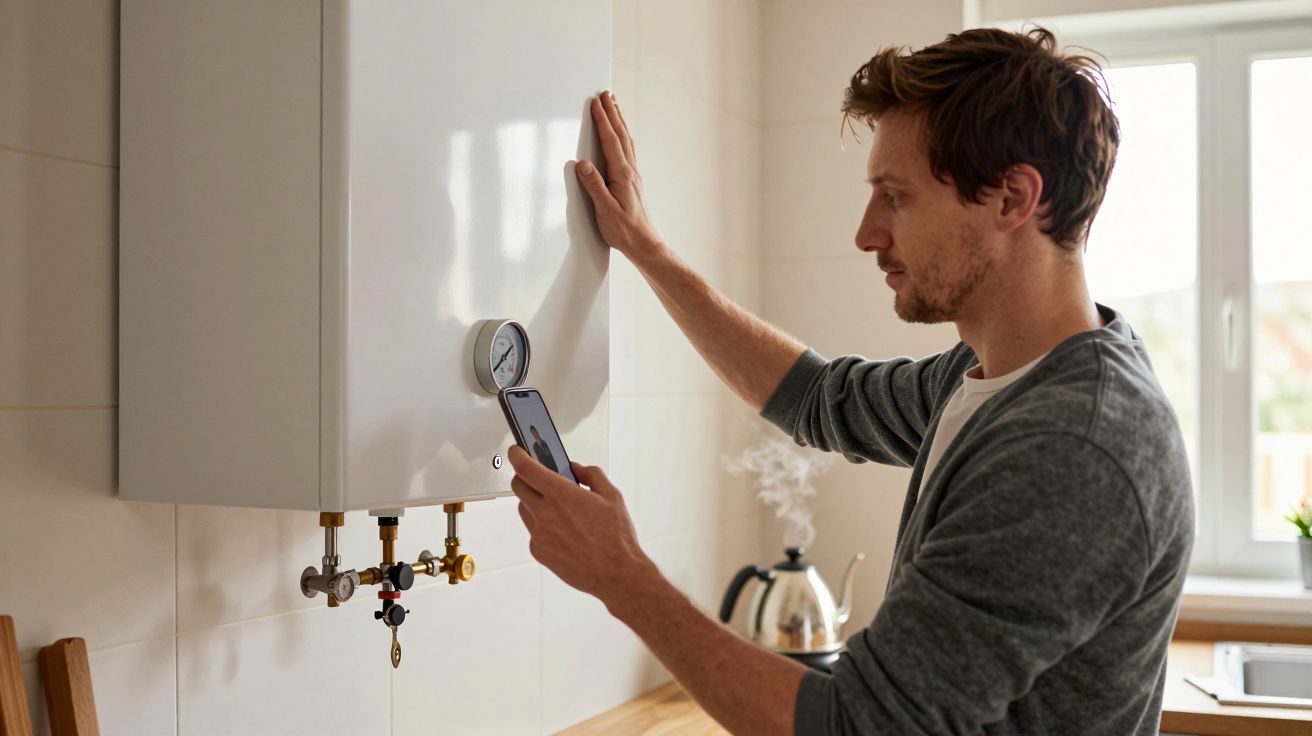
Check it cold, then again when the heating has been on for 30–60 minutes. If the rise is steep - say from 1.2 bar cold to 2.8 bar hot - the expansion space isn’t doing its job. In a healthy setup, pressure rises a bit, but it shouldn’t lurch.
A few other clues show up in ordinary life:
- A regular need to top up pressure, with no obvious leaks on radiators or visible pipework.
- Gurgling radiators after topping up (fresh water brings in dissolved air, which later comes out).
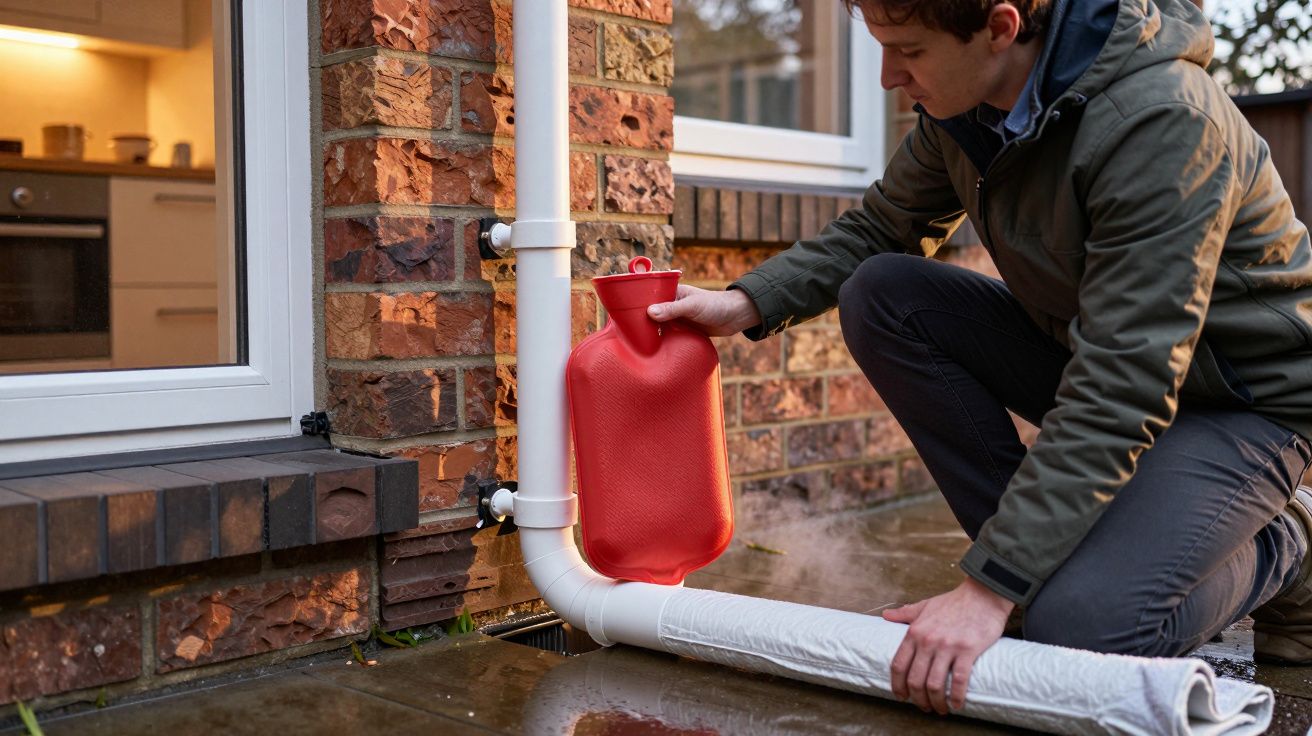
- The PRV copper pipe outside occasionally damp or leaving a white streak on the wall below.
- Boiler lockouts that cluster after hot water use or long heating cycles.
None of this proves the vessel on its own, but together it points in a direction people tend to ignore because the heating still “sort of works”.
What an engineer actually checks (and why topping up makes it worse)
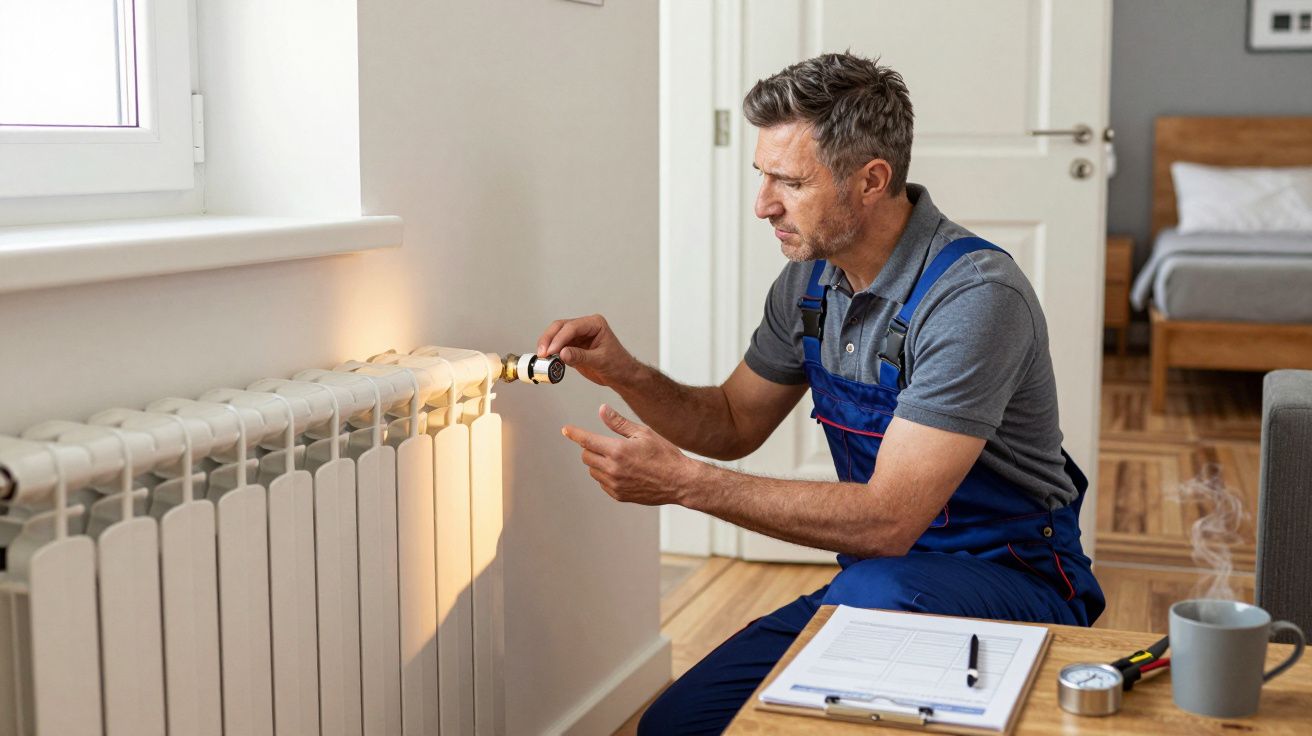
An engineer will typically isolate and depressurise the system to test the expansion vessel’s air charge at the Schrader valve (it looks like a car tyre valve). If the air side is low, it can sometimes be recharged to the correct pressure. If water comes out of that valve, the diaphragm has failed and the vessel usually needs replacement (or, in some cases, an external vessel can be fitted).
The part homeowners often miss is the damage done in the meantime. Every top-up adds oxygen, and oxygen is fuel for internal corrosion. So the “quick fix” becomes a slow accelerant: more air, more sludge, more sticking valves, more heat exchanger stress.
If you’re using the filling loop weekly, you’re not maintaining the system. You’re masking a fault that is actively reducing system stability.
A simple “don’t make it worse” checklist
- Don’t keep bleeding radiators as a ritual; bleed only if there’s clear air, then restore pressure once.
- Don’t leave the filling loop connected and open “just a bit”.
- Note your cold pressure and hot pressure for a day or two - write it down, like a symptom log.
- If the PRV pipe outside is dripping, don’t ignore it because “it stops after a while”.
The quiet cost: comfort drops before anything breaks
There’s a reason people live with this for months. The house doesn’t go cold all at once. It gets inconsistent.
Some rooms lag because air and sludge affect circulation. The boiler cycles oddly because it’s reacting to pressure and temperature instability. You start nudging the thermostat, then blaming the radiators, then blaming the boiler. It can feel like the system is ageing overnight, when in reality it’s being stressed twice a day, every day, by one missing cushion.
Fixing the expansion vessel early is rarely glamorous, but it can stop a cascade: fewer pressure dumps, a PRV that survives, less oxygen ingress, calmer pump operation, and a system that holds its settings instead of fighting them.
| Symptom | Likely link | Why it matters |
|---|---|---|
| Big pressure jump when heating is on | Expansion vessel not absorbing expansion | PRV lifts; system becomes unstable |
| Regular need to top up | Loss via PRV or underlying leak | Fresh water adds oxygen and speeds corrosion |
| Drips from outside copper pipe | PRV discharging or passing | Can become permanent after repeated lifts |
FAQ:
- How do I know if it’s the expansion vessel or just a leak? A leak usually drops pressure cold and hot. A failed expansion vessel often shows as a big rise when hot and a low-pressure fault when cold, sometimes with water discharging from the PRV pipe.
- Is it safe to keep topping up the boiler pressure? It’ll get you through the day, but frequent topping up introduces oxygen and can accelerate corrosion and sludge. Treat it as a stopgap, not a routine.
- Can an expansion vessel be recharged instead of replaced? Sometimes, if the diaphragm is intact and it’s simply lost its air charge. If water comes out of the air valve, the diaphragm has failed and replacement is likely.
- What pressure should my system be at? Many homes sit around 1.0–1.5 bar cold, but the correct value depends on the property and boiler. The key warning sign is an excessive rise when hot, not the exact number.
- What’s the fastest way this fault damages other parts? Repeated PRV lifting can make the valve weep permanently, and constant top-ups add oxygen that drives corrosion, sludge, and sticking components.



Comments (0)
No comments yet. Be the first to comment!
Leave a Comment