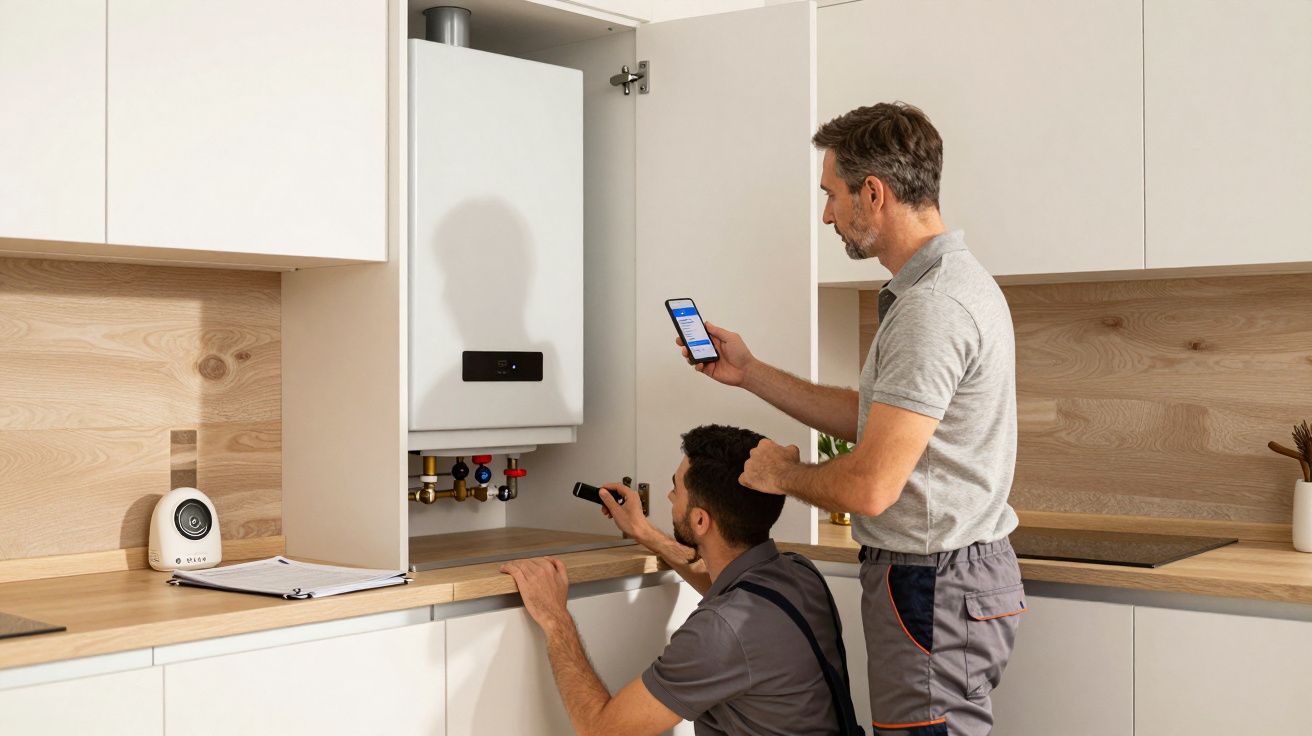
You only notice gas safety inspections when something feels “off”: a faint whiff near the boiler cupboard, a flame that looks more yellow than blue, a tenant texting to say the hot water’s gone again. Then inspection day arrives, and suddenly you’re googling the gas safe register at speed, trying to work out what counts as compliant, what counts as risky, and what counts as a problem you should have dealt with months ago.
Most homes and rentals look safe at a glance. The boiler fires, the hob lights, the radiators warm up. That’s the trap: gas problems often sit quietly behind “working”, right up until an engineer opens the casing and starts asking questions you can’t answer.
The neat lie: “It’s been fine for years”
Gas appliances don’t tend to fail in a dramatic, Hollywood way. They drift. A seal dries. A flue joint loosens by a few millimetres. Ventilation gets blocked by that storage box you swore was temporary. An old cooker keeps lighting, but the combustion is no longer clean.
You can live with that drift for ages because the house still functions. And because modern life teaches us that if something turns on, it’s basically fine.
Inspection day is when “basically” gets tested.
What an inspection actually reveals (that you can’t see)
A proper check isn’t a quick glance and a sticker. It’s a series of small, unglamorous tests that tell the truth about how the appliance is burning gas and where the by-products are going.
An engineer may look at:
- Flue condition and route: is it intact, correctly terminated, and not leaking into the property?
- Ventilation: does the room have enough air for safe combustion, or have vents been covered/removed?
- Gas tightness: is the system sound, or is it losing pressure in a way that signals a leak?
- Appliance condition: signs of scorching, soot, heat damage, or poor maintenance.
- Combustion readings (where applicable): are the levels within safe limits?
None of this is meant to catch you out. It’s meant to catch the kind of fault that can lead to carbon monoxide risk, recurring breakdowns, or a very expensive emergency call-out on the coldest weekend of the year.
The day-before panic list (and why it backfires)
There’s a familiar pre-inspection scramble. It looks responsible on the surface, but it often creates the exact delays people dread.
You:
- Clear the cupboard around the boiler, and discover scorch marks you’ve never noticed.
- Dig out a “certificate” from three tenants ago, and realise it’s the wrong address.
- Message your usual handyman, and remember he’s not on the gas safe register.
- Find the cooker’s manual but can’t find the service record, because nobody ever kept one.
The backfire is simple: paper confusion and access issues waste the engineer’s time, and time pressure makes everything feel more stressful than it needs to be. A calm inspection is usually a quicker one.
The boring rule that matters: use the right engineer
If there’s one part worth being fussy about, it’s this. For gas work in the UK, you want someone appropriately qualified and registered. The gas safe register exists so you can check the engineer is legally allowed to do the work and is qualified for the specific appliance type.
That second bit is the part people miss. Someone can be registered but not qualified for every category of gas appliance. The register listing shows what they’re covered for, and it takes minutes to verify.
If you’re a landlord, this isn’t just about peace of mind; it’s about meeting your legal duties. If you’re a homeowner, it’s about not accidentally paying twice: once for the wrong person, then again for the repair and the correct certification.
A quick, realistic “are we ready?” check
Before the visit, aim for practical, not perfect:
- Ensure clear access to the boiler, meter, and any gas fires or hobs.
- Locate basic records: last service invoice, any previous safety record, appliance make/model.
- List symptoms you’ve ignored because they were intermittent (smell, soot marks, pilot issues, noisy ignition).
- Check alarms: if you have a carbon monoxide alarm, test it; if you don’t, consider fitting one in the right location.
This isn’t about putting on a show. It’s about making it easy for the engineer to do a thorough job.
The outcomes people fear - and what they actually mean
When an engineer flags something, it can feel like failure. In reality, it’s a category decision designed to keep people safe.
You might hear terms like:
- Not to Current Standards (NCS): not ideal, not necessarily dangerous, but improvements recommended.
- At Risk (AR): a fault exists that could become dangerous; the engineer may ask to turn it off.
- Immediately Dangerous (ID): there’s a serious risk; it should be made safe straight away.
If you’re told something is AR or ID, it doesn’t mean your home was a ticking bomb yesterday. It means the inspection did what it’s supposed to do: catch a problem before it catches you.
Why it’s always “fine” until it isn’t
Gas safety is a bit like stress in the body: you can function for a long time while things quietly deteriorate in the background. You don’t get an alarm bell for incomplete combustion. You don’t see carbon monoxide. You don’t notice a flue problem until condensation marks appear, or until someone starts getting headaches and can’t work out why.
That’s why the safest homes aren’t the ones that feel newest. They’re the ones where someone kept up a simple rhythm: check, service, fix, repeat.
The simple system that stops the drama next year
You don’t need a spreadsheet that looks like a small business. You need a tiny routine you can stick to.
- Pick a month you’ll always do it (many choose early autumn, before heating season).
- Book ahead, especially if you’re managing multiple properties or a busy household.
- Keep a single folder (digital or paper) with: invoices, safety records, appliance details, and any notes about recurring issues.
- Don’t ignore “small” signs: yellow flames, soot, persistent condensation near flues, pilot lights that won’t stay lit.
The goal isn’t to pass inspection day. The goal is to make inspection day unremarkable.
The quiet relief of being able to say: “Yes, we’re covered”
There’s a specific calm that comes from knowing you’ve done the right checks, with the right person, at the right time. Not because you love admin, but because you like your home being the kind of safe you don’t have to think about.
The best time to find out something’s wrong with a gas appliance is when an engineer is already there, tools out, daylight left. The worst time is when it’s freezing, everyone’s ill, and the only available slot costs more than you want to admit.
Inspection day doesn’t have to be a reckoning. With a little planning, it becomes what it was meant to be all along: a routine confirmation that “looks safe” actually is.





Comments (0)
No comments yet. Be the first to comment!
Leave a Comment