
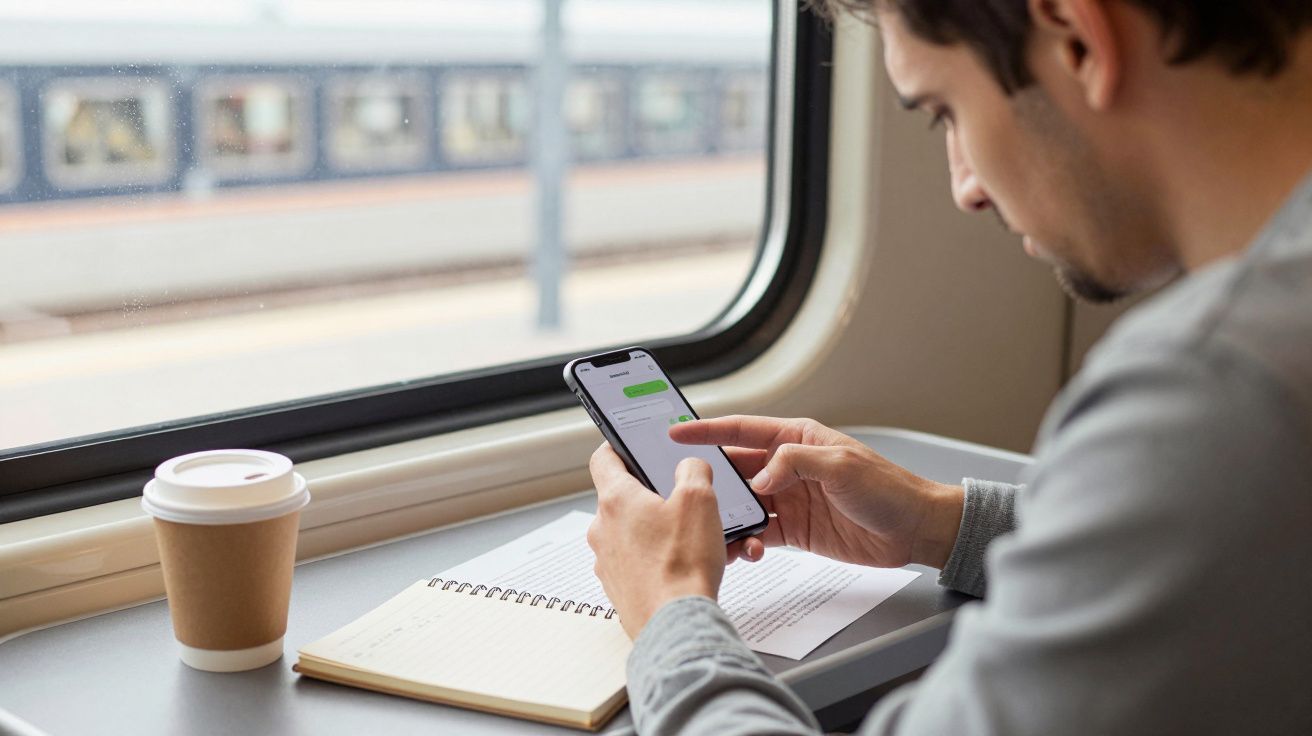
A late-night motorway stop, a quick lunch between meetings, a coffee when your train’s delayed: that’s where mcdonald's tends to show its best side. It’s the sort of place where the script is familiar enough that even a stray pop-up line - “of course! please provide the text you would like me to translate.” - feels like just another piece of modern friction you learn to ignore. For many people, that predictability is the point: you’re buying time, certainty, and a meal that won’t surprise you.
But the same machine that runs smoothly in normal circumstances can wobble when conditions change. Demand spikes, staffing gaps, delivery delays, menu complexity, app glitches, and local regulation can all turn “reliable” into “why is this taking so long?” without warning.
The promise: a system designed to be boring
McDonald’s is built around repeatability. The menu is engineered for speed, the kitchen for flow, the training for consistency, and the brand for familiarity across towns, airports, and retail parks.
That’s not an accident; it’s the product. You’re not meant to study the options like a small-plates restaurant. You’re meant to recognise, choose, pay, and move on-often in under ten minutes.
In calm conditions, the system shines because every part supports the same goal: minimise variance. The fewer surprises inside the operation, the fewer surprises on your tray.
When conditions change, the bottlenecks appear
A McDonald’s restaurant doesn’t “get worse” at random. It gets exposed. Small stressors compound because the model relies on tight timing and predictable volume.
Common triggers look mundane, but they’re powerful:
- A sudden rush (school letting out, an event finishing, bad weather pushing people indoors)
- Understaffing due to sickness, recruitment gaps, or high turnover
- Delivery or ingredient disruptions that force substitutions and slower assembly
- Menu and promo complexity that increases customisation and decision time
- Equipment downtime (ice cream machines become a meme for a reason)
- Digital issues: app outages, payment terminals failing, delivery tablets desyncing
When one station slows-grill, fries, drinks, drive‑thru window-the whole line backs up. The system is fast, but it isn’t infinitely elastic.
The hidden trade-off: efficiency versus resilience
The same practices that make McDonald’s quick in normal times can reduce its ability to absorb shocks. Lean staffing, tight prep, and high standardisation are great for cost and consistency, but they can leave less slack when something unusual happens.
Think of it like a motorway that flows perfectly at 60 mph-until one lane closes. Nothing about the road “broke”; it simply wasn’t designed to cope with that volume under that constraint.
In-store, you feel this as a shift in mood. Orders become more cautious, substitutions more frequent, cleaning and dining-room checks slip, and the queue starts to behave like a single organism: slow, impatient, and self-reinforcing.
Why the app makes it better-and sometimes worse
Digital ordering is meant to reduce queue pressure by moving decisions off the counter. In many restaurants it does, especially when kiosks and mobile collection are well-managed.
Yet the app also introduces a new dependency: if the digital channel surges, the kitchen still has to make the food. A restaurant can appear “quiet” at the front while the kitchen is overwhelmed by delivery riders, click-and-collect orders, and drive‑thru volume.
That mismatch creates a particular frustration: you can see empty tables, yet your order time stretches. From the customer’s view, it feels like the system is lying. From the kitchen’s view, it’s simply facing a different queue you can’t see.
Small habits that reduce the pain (without overthinking it)
You don’t need a strategy to buy a burger, but a few choices can make the experience more predictable when you sense pressure:
- Avoid peak edges (12:00–13:30 and 17:30–19:30 are the obvious ones)
- Keep customisation minimal when the restaurant looks stretched
- Use dine‑in only if you can wait; drive‑thru can be quicker but also traps you
- If the app is lagging, don’t assume the kitchen is empty-assume it’s busy elsewhere
The goal isn’t to “win” against the queue. It’s to stop a ten-minute stop becoming a twenty-five-minute mood.
What this means for the brand
McDonald’s reputation is built on being the safe choice. When conditions change and the experience degrades-cold fries, long waits, missing items-it doesn’t feel like a one-off; it feels like the brand breaking its own promise.
That’s why the sharpest operational challenge isn’t food quality in the abstract. It’s expectation management. A slightly delayed meal is forgivable; a slightly delayed meal from a place that sells speed as part of the product feels like a failure.
The irony is that the system still “works” in the sense that it keeps producing meals at scale. It just stops feeling effortless, and effort is what customers came to avoid.
A quick way to spot whether it will be smooth today
You can often predict your experience before you order by noticing a few signals:
| Signal you can see | What it usually means | What to do |
|---|---|---|
| Lots of delivery riders waiting | Kitchen load is high even if dining area looks calm | Keep order simple; expect longer times |
| Drive‑thru queue spilling into car park | Throughput is constrained at the window | Consider going inside if the counter looks staffed |
| Busy lobby, messy tables, bins full | Team is prioritising output over reset | Don’t expect “extras”; focus on speed and accuracy |
These aren’t moral judgements on staff. They’re just the visible edges of a high‑throughput system under stress.
The bigger lesson: reliability is contextual
McDonald’s works well when the environment matches what it’s designed for: predictable inputs, adequate staffing, stable supply, and manageable order complexity. When those conditions shift, you see the reality of scale-how quickly “fast” becomes “backlogged” and how thin the margin is between smooth and strained.
For the customer, the most useful takeaway is simple. Treat McDonald’s like a well-run transport network: usually dependable, occasionally disrupted, and rarely improved by anger at the people operating it. The system is optimised for the normal day; it just can’t promise the normal day will always show up.
FAQ:
- Why does it feel slow even when the restaurant looks empty? Because a lot of demand is invisible: delivery orders, click-and-collect, and drive‑thru can load the kitchen without filling the dining area.
- Is the menu getting too complicated for “fast food”? Promotions, seasonal items, and customisation increase decision time and assembly complexity, which can reduce throughput during busy periods.
- Why do missing items happen more during rushes? Accuracy checks are a time cost. Under heavy load, handoff points multiply (kitchen to bagging to runner to customer), increasing the chance of slips.
- Does the app usually make things faster? Often yes in steady conditions, but during peaks it can add demand faster than the kitchen can absorb it, especially when delivery volume surges.
- What’s the simplest way to improve your odds of a smooth visit? Go slightly off-peak and keep the order straightforward when the restaurant is clearly under pressure.





Comments (0)
No comments yet. Be the first to comment!
Leave a Comment