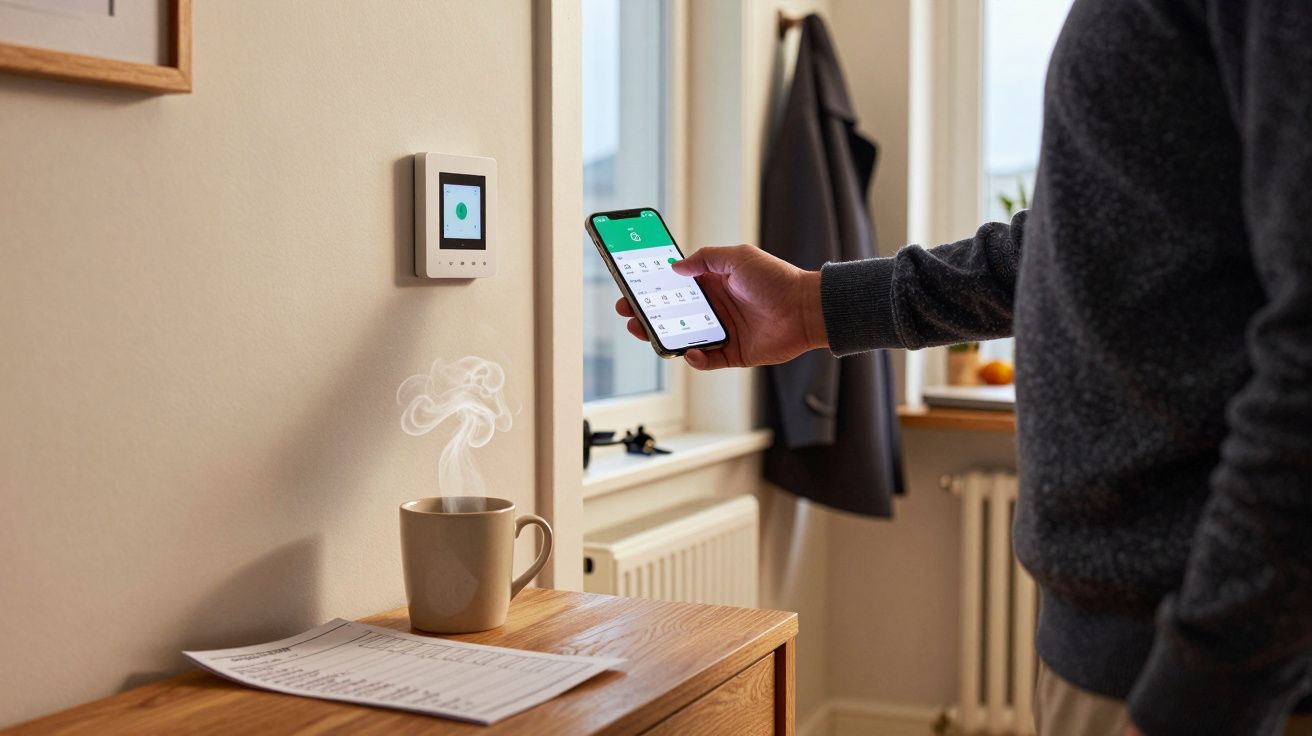
Smart thermostats are brilliant at keeping a home comfortable, but they can also be strangely good at wasting money if you let them “help” in the wrong way. The tweak that most often delivers faster heat-up times is simple: stop asking your heating to jump from cold to cosy in one big leap. In a typical UK house, that single change can make mornings calmer, rooms feel more even, and bills hurt a little less.
It usually shows up on a grey weekday when you’re already late. You nudge the temperature up, the radiators clank into life, and you spend the next half-hour doing that awkward dance between “freezing” and “too hot” because the system is chasing a moving target. It’s not that your boiler is weak; it’s that your settings are quietly working against how homes actually warm up.
The tweak: lower the “comfort” temperature by 1°C - and start it earlier
Most people think the win is turning the thermostat up. The real win is turning the target down slightly, then giving your system a head start so it can heat steadily instead of sprinting.
Here’s the version that changes everything:
- Drop your usual comfort setting by 1°C (for many homes, think 20°C down to 19°C).
- Use your smart thermostat’s schedule to start heating 15–30 minutes earlier than you currently do.
- Leave the rest alone for a week so you can actually feel the difference.
That’s it. A small target, a slightly earlier start, and suddenly the house stops lurching from cold to roaring-hot.
Why it works (and why it feels like cheating)
Heating a home is slower than heating your body. When you crank the thermostat, the boiler runs hard, the radiators get very hot, and the room temperature still takes time to catch up because walls, floors, and furniture are cold sponges. Smart thermostats can then over-correct, especially if you’re constantly nudging the target.
A 1°C lower target reduces the “overshoot” temptation. Starting a little earlier gives the system time to build warmth into the space, so the room feels comfortable sooner-even though the number on the screen is lower. It’s gentler heat, but it arrives in a way your life actually notices: fewer cold spikes, fewer sweaty spikes, less fiddling.
How to set it up in five minutes
Pick one day you’re usually at home-so you can observe without guessing.
- Find your current comfort temperature (the one you default to when you want the house “nice”).
- Reduce it by 1°C.
- Go into your schedule and move the first “heat on” period earlier by 15–30 minutes.
- If you have zones, do this for the main living area first. Bedrooms can follow later.
- Leave manual overrides alone for a week, unless you genuinely need them.
If you’re thinking, “But won’t starting earlier cost more?” it can in some homes, but the lower target and reduced overshoot often cancels it out. What many people actually save is the habit of turning it up to 22°C in frustration, then opening a window later because they’re boiling.
The common mistake: chasing warmth with the app
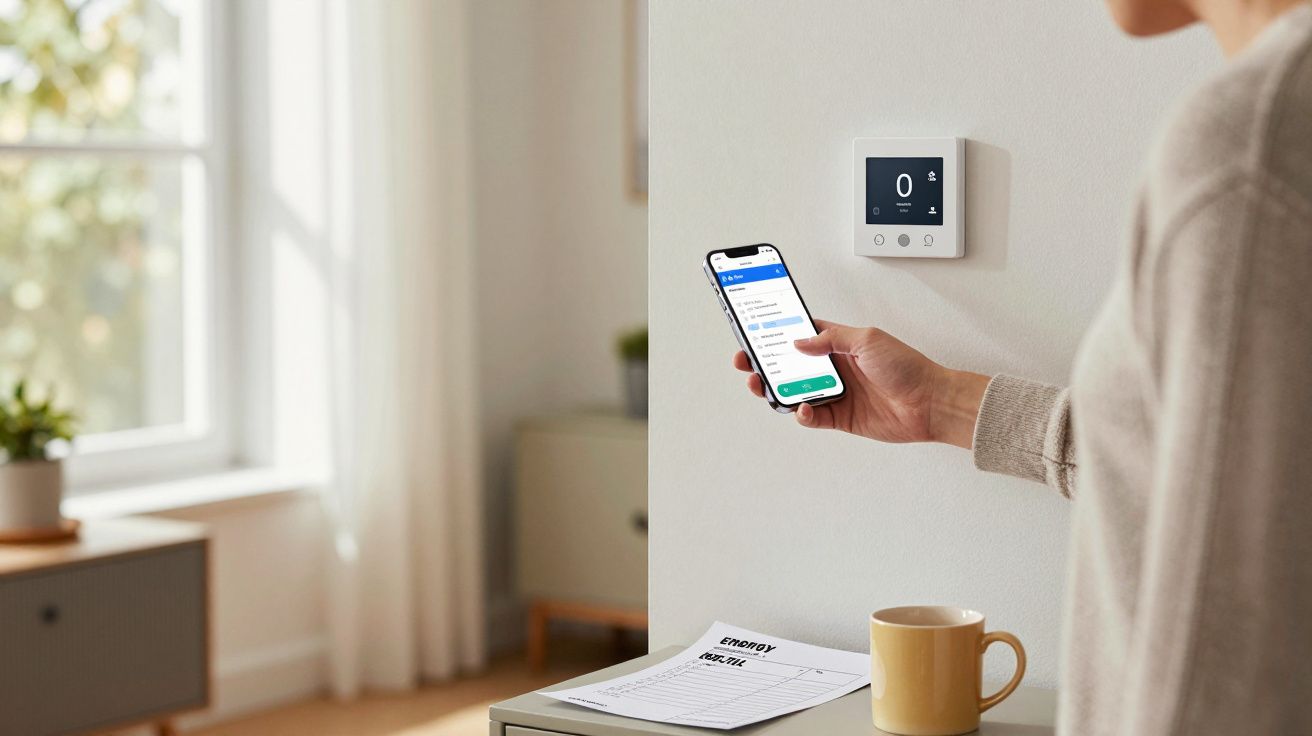
Smart thermostats make it dangerously easy to tweak from the sofa. That convenience is the trap. If you keep turning the temperature up “just for twenty minutes”, you train the system into bursts of hard heating, and you train yourself into always feeling slightly uncomfortable until it over-delivers.
A better rule is boring, but it works: change the schedule, not the moment. If you’re cold at 7am every morning, fix 7am-don’t fight with 7:05am.
“The goal isn’t to blast heat into the room. It’s to stop the house falling behind in the first place,” as a heating engineer once told me, while looking mildly offended by my constant fiddling.
Small settings that stack with the tweak (without becoming a hobby)
Once the 1°C/earlier-start change is working, these add-ons help-quietly.
- Turn off “early start/optimum start” if it’s too aggressive. Some systems start very early to guarantee a target temp by a set time, which can feel wasteful. Test it both ways for a week each.
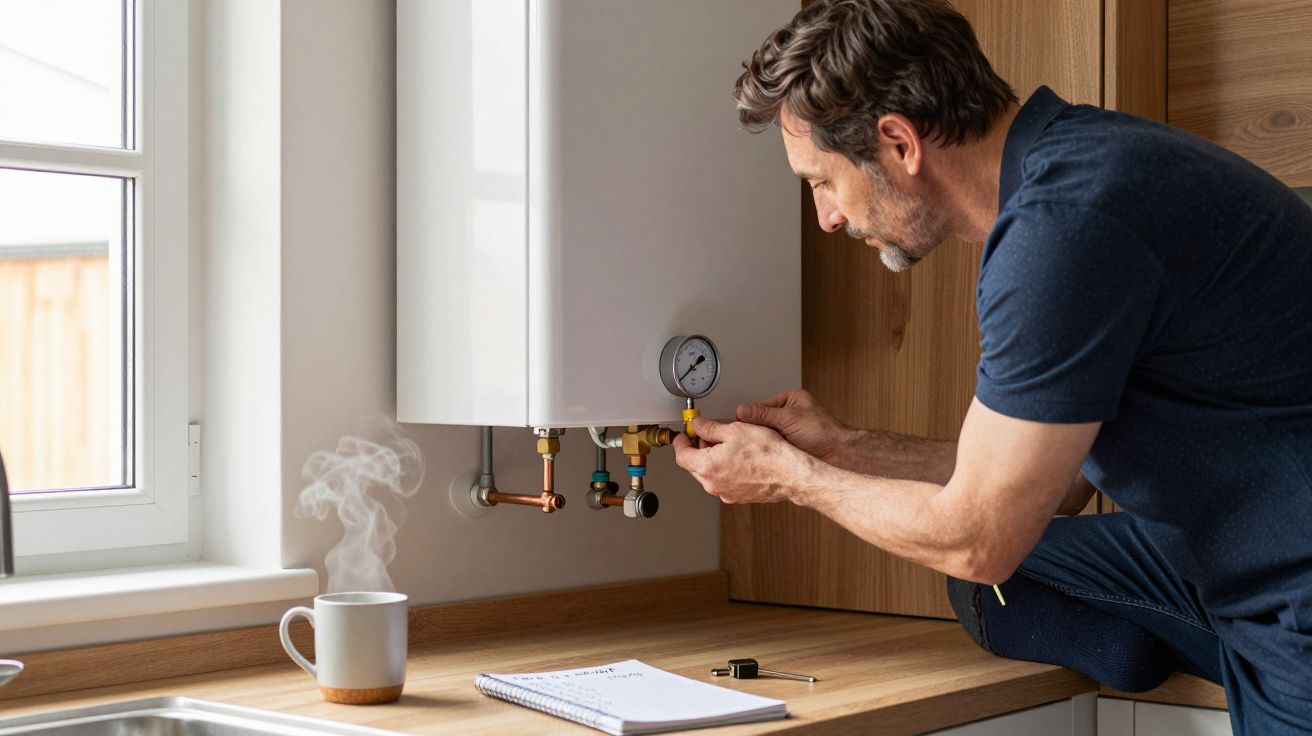
- Check your radiator balance. If one room races ahead and another never catches up, the thermostat gets confused. Balancing makes the whole system behave.
- Use a “sleep” temperature at night. Even 17–18°C for bedrooms (if comfortable for you) can stop the morning warm-up feeling like a shock.
Keep it simple. The point is to do one tweak that sticks, not build a control room in your hallway.
A quick guide to what to change (and what to ignore)
| Setting | What to do | Why it helps |
|---|---|---|
| Comfort temperature | Lower by 1°C | Less overshoot, steadier warmth |
| Morning start time | Start 15–30 mins earlier | Warmth arrives when you need it |
| Manual overrides | Use less, adjust schedule instead | Stops the “chase and spike” cycle |
FAQ:
- Will 1°C really make a difference? Yes. It’s often the difference between a system that overshoots and one that cruises. It also reduces the urge to crank it higher in a cold moment.
- What if the house still feels cold? Keep the earlier start, but add the 1°C back for a few days and compare. If one room is always cold, look at radiator balancing or draughts rather than pushing the whole house hotter.
- Does this work with combi boilers and radiators? Usually, yes. It’s about how rooms warm up and how people behave with controls, not a specific boiler type.
- Should I use “boost” mode instead? Occasionally, fine. But if you need boost most days, it’s a schedule problem in disguise.
- Is this the same as turning the flow temperature down? No. Flow temperature is a separate (and powerful) lever, but it’s also easier to get wrong. The 1°C/schedule tweak is safer and still surprisingly effective.


Comments (0)
No comments yet. Be the first to comment!
Leave a Comment