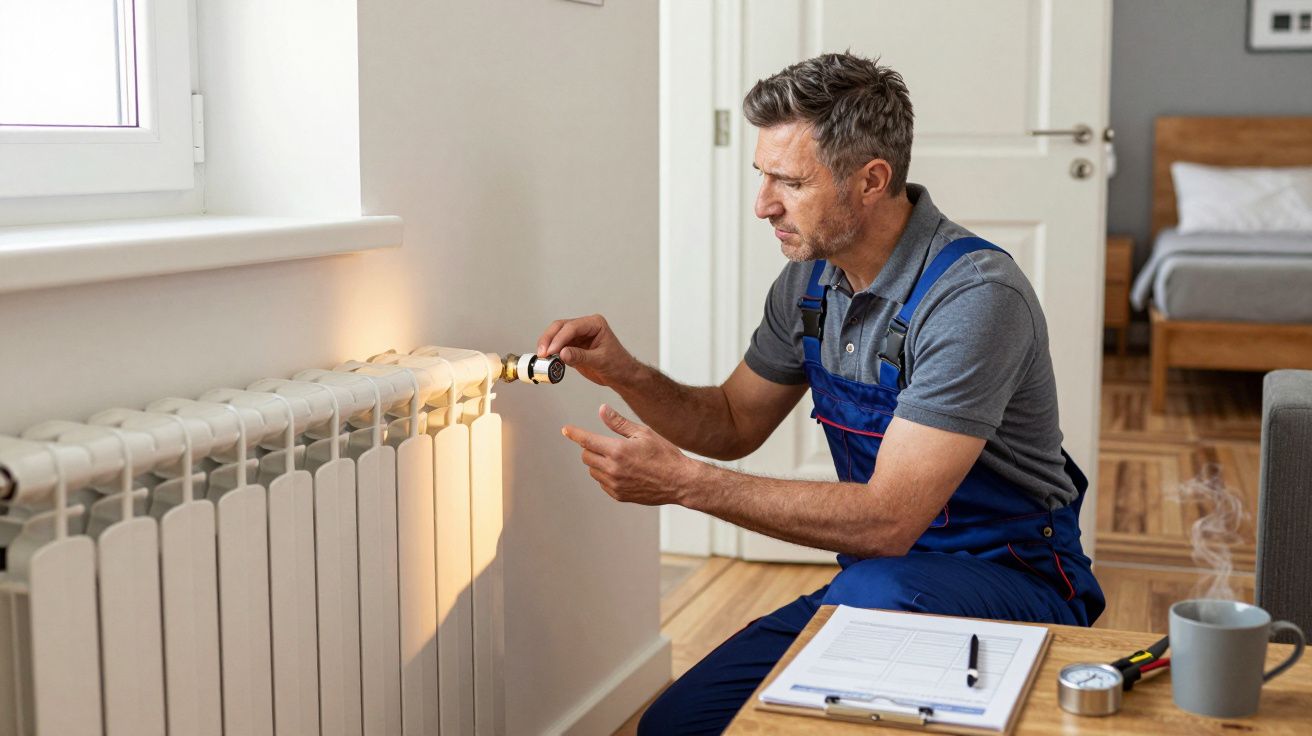
Someone turns the thermostat, the radiators half‑wake, and the room stays stubbornly lukewarm. In let properties, that moment tends to show up right before a viewing, a tenant complaint, or-worse-when paperwork is being checked alongside gas safety inspections. Heating failures aren’t just an inconvenience; they’re one of the quickest ways to turn a “fine on paper” rental into a problem you can’t ignore.
Landlords often assume a failed heating inspection means an old boiler or a big, expensive breakdown. The quieter truth is more boring, more common, and easier to fix.
The one reason rental heating checks fail so often
It’s not usually the boiler. It’s the system being out of balance.
When a heating system isn’t balanced, hot water takes the easiest route through the nearest radiators and skips the rest. So you get the classic pattern: one or two radiators roasting, the back bedroom barely warm, and a tenant convinced the whole setup is dying. Inspectors don’t need dramatic flames or leaks to spot it-uneven heat is a loud signal.
Balancing is unglamorous work: small adjustments at the lockshield valves, patience, and a willingness to stand there while temperatures settle. But it’s the difference between a property that “has heating” and a property that actually heats.
Why imbalance looks like a bigger fault than it is
Heating systems behave like people in a hurry. They go where it’s easiest.
If one radiator is wide open and closest to the pump, it will steal the flow. Add a bit of sludge, a sticky TRV pin, or air trapped in an upstairs rad, and the system’s shortcuts get worse. The end result can mimic a failing boiler: longer warm‑up times, tenants boosting the thermostat, and rooms that never feel stable.
This is why a lot of call‑outs end with the same sentence: “Nothing wrong with the boiler-your radiators just aren’t sharing.”
The quick signs an inspector (or tenant) notices first
You don’t need tools to spot the pattern-just five minutes and a hand near the metal.
- One radiator gets hot at the top quickly, while others stay cold for ages.
- The living room is tropical but bedrooms are chilly.
- Upstairs radiators are slow, noisy, or cold at the top (air).
- The boiler cycles on and off more than you’d expect.
- Tenants report “it only works if I turn it up to 28”.
There’s a specific frustration to this: the heating is technically “on”, yet comfort never arrives. That gap is what inspections tend to catch.
How to fix it without guessing (and without upsetting everything)
Start simple, then get systematic. You’re aiming for even warm‑up across the property, not maximum heat in the first radiator.
- Bleed radiators (especially upstairs) and top up pressure if needed, following the boiler instructions.
- Check TRVs: make sure the pins aren’t stuck and the heads actually control flow.
- Feel for cold spots: if the bottom stays cold, sludge may be in the picture.
- Balance using lockshield valves: partially close the radiators that heat up fastest, leaving slower ones more open.
- Let it settle: each change needs time; rushing turns it into chaos.
If you’ve got repeated cold radiators or gritty water, balancing may not stick until the system is cleaned. A powerflush isn’t always necessary, but some form of flushing and inhibitor often is.
Where gas safety inspections fit into this (and why it matters)
Gas safety inspections focus on safe operation-appliance condition, ventilation, flue performance, and correct combustion. They’re not a “comfort audit”. But in real life, the moment an engineer is on site is when heating complaints surface, patterns get noticed, and small issues get logged before they become bigger disputes.
A poorly balanced system can also drive behaviour that increases risk and wear: tenants over‑cranking thermostats, using portable heaters, blocking vents to “keep heat in”, or repeatedly resetting boilers. None of that helps your paperwork-or your relationship with the people living there.
A small routine that keeps let properties from failing the “it doesn’t feel warm” test
The quiet win is making balance part of the annual rhythm, not an emergency task.
- Ask for a quick “which rooms feel cold?” note before the visit.
- Budget time for bleeding and balancing after any radiator replacement.
- Record what you changed (which lockshields were adjusted) so the next visit isn’t guesswork.
- If you’re getting repeat issues, test for sludge and add inhibitor once cleaned.
Most heating “failures” in rentals are really distribution problems. Fix the flow and the property suddenly looks well‑maintained, even if the boiler is older than you’d like.
| What’s spotted | What it usually means | The practical fix |
|---|---|---|
| Some rads hot, others cold | System imbalance | Balance lockshields, check TRVs |
| Cold at top, warm at bottom | Air in radiator | Bleed radiator, check pressure |
| Cold at bottom, warm at top | Sludge build‑up | Flush/clean, add inhibitor |
FAQ:
- Is balancing radiators something a landlord can do themselves? Yes, if you’re confident and careful. It’s fiddly rather than dangerous, but if you’re unsure, get a heating engineer-especially in HMOs or larger systems.
- Will balancing fix a genuinely failing boiler? No. If the boiler has ignition faults, pressure issues that keep returning, or error codes, balancing won’t cure that. But it often removes symptoms that look like boiler trouble.
- How often should a system be balanced in a rental? Typically after changes (new radiator, new TRV, pipework alterations) and whenever tenants report persistent cold rooms. Many landlords fold it into annual maintenance.
- Does a gas safety inspection include checking radiators? Not as a formal requirement. It’s primarily about gas appliance safety, but engineers often note obvious heating performance issues when tenants raise them or when symptoms are clear.
- What if only one radiator is cold? Check the TRV pin first, then bleed it. If it’s cold at the bottom, consider sludge; if it’s one of the last on the run, balancing may also help.





Comments (0)
No comments yet. Be the first to comment!
Leave a Comment