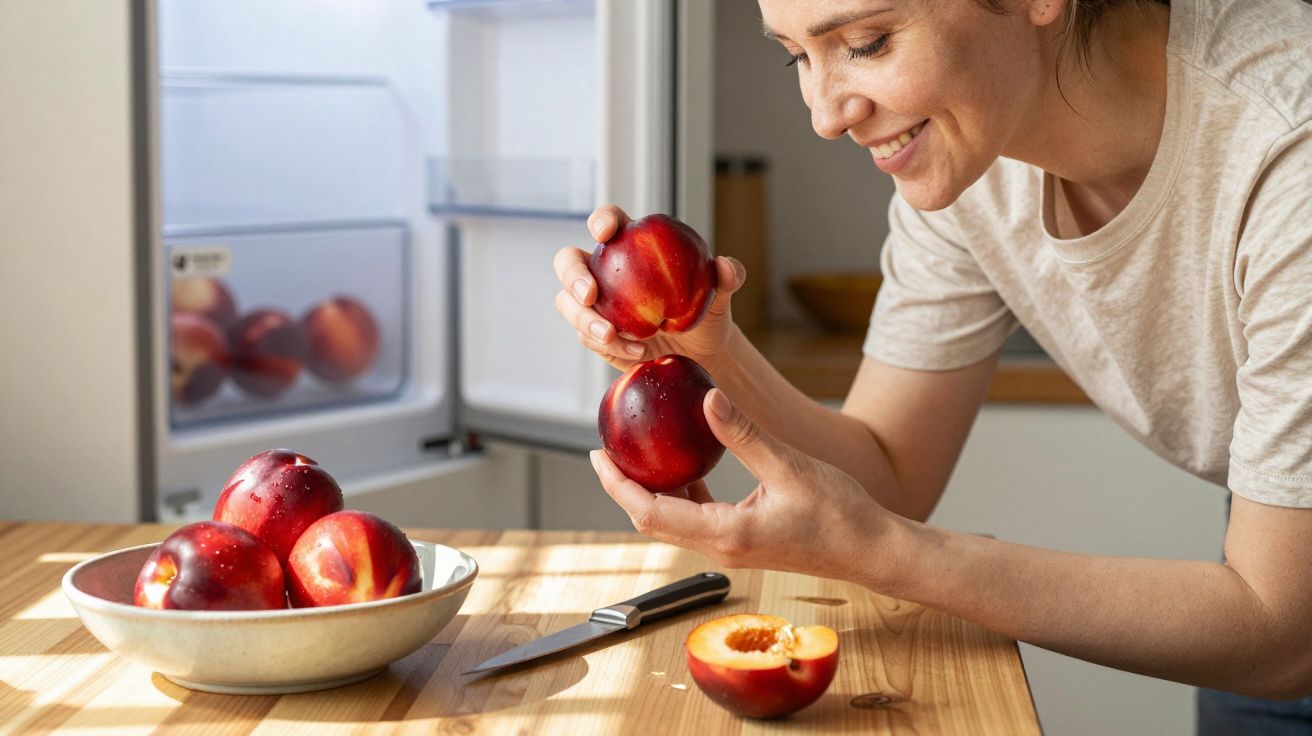
Nectarines show up in our kitchens as the no-fuss summer fruit: sliced into bowls, baked into tarts, grilled with pork, or eaten over the sink with juice on your wrists. But that odd little phrase - “it looks like you haven't provided any text to translate. please enter the text you'd like me to translate into united kingdom english.” - captures something researchers keep running into with nectarines: we think we know what we’re dealing with, until we try to pin it down precisely.
Because behind the supermarket sticker and the smooth skin, nectarines are becoming a surprisingly useful model for bigger questions about flavour, waste, allergies, and how fruit copes with heat.
The quiet problem with “a nectarine is just a peach without fuzz”
Most of us were taught the shorthand: nectarines are peaches, just smooth. In a botanical sense that’s close enough to be handy, but it hides the real work breeders and food scientists are trying to do now. The skin is only the visible difference; the important differences are often in texture, aroma, and how the fruit behaves after picking.
Walk the stone-fruit aisle in July and you’ll see the mismatch. Some nectarines look perfect and taste watery. Others are smaller, slightly scarred, and somehow much sweeter. That gap - between appearance and eating quality - is where a lot of current research effort is landing.
And it matters for you because it determines what you actually get for your money: whether a fruit ripens properly in a bowl, whether it turns to floury disappointment, and whether “perfect” fruit is driving waste in the supply chain.
The new questions researchers are asking (and why they’re not academic)
The old questions were mostly about yield: more fruit, fewer pests, longer shelf life. The new questions are more human. They’re about what makes a nectarine worth eating, and how to deliver that without binning half the crop.
Researchers are zooming in on things like:
- Aroma compounds: why two equally sweet nectarines can taste wildly different once you factor in volatile scents.
- Texture and “mealiness”: what changes inside the flesh during cold storage, and why some varieties collapse into a dry crumble.
- Sugars vs acids: not just sweetness, but balance - the sharpness that makes a bite feel lively rather than flat.
- Heat and water stress: how hotter summers shift ripening, sunburn risk, and flavour development in the orchard.
- Skin function: a smooth skin isn’t just cosmetic; it affects moisture loss and bruising patterns during transport.
Taken together, the questions point to a shift: from producing fruit that survives logistics to producing fruit that survives logistics and tastes like the memory you’re buying.
The hidden tug-of-war: flavour versus shelf life
Nectarines are often picked firm because they have to travel and sit. The problem is that many of the aromas you associate with “proper” ripe fruit don’t fully develop once the fruit is off the tree, especially if it’s been chilled hard. Cold storage keeps fruit saleable, but it can nudge the flesh towards that cottony, dry texture people describe as floury.
Scientists working on post-harvest handling keep circling the same awkward truth: the supply chain is optimised for uniformity, not joy. Even small changes - storage temperature bands, time in transit, the point at which the fruit is “triggered” to ripen - can make the difference between fragrant and forgettable.
If you’ve ever wondered why one punnet is glorious and the next is bland, it’s rarely your imagination. It’s biology colliding with logistics.
The breeding pivot: not just prettier fruit, but more resilient fruit
Breeders aren’t only chasing sweetness now. They’re also looking for traits that make nectarines less fragile in a warming climate and less dependent on tight chemical control. That includes resistance to common diseases, tolerance to heat spikes, and firmness that doesn’t turn into cardboard.
What’s interesting is how often “better for growers” overlaps with “better for eaters”. A fruit that bruises less can be harvested closer to ripe. A tree that handles heat stress may hold onto acids better, keeping flavour brighter. A variety that ripens more evenly reduces the incentive to pick everything early “just in case”.
In other words, better nectarines aren’t just a shopping preference. They’re a systems problem, and research is starting to treat them like one.
How to use this research at home (without needing a lab)
You can’t control orchard temperatures or storage protocols, but you can stack the odds in your favour. The aim is simple: buy fruit with potential, then finish the ripening gently.
A few practical moves that align with what researchers keep finding:
- Smell beats colour. A ripe-ready nectarine often has a clear, sweet scent at the stem end; a perfect red blush can be meaningless.
- Ripen at room temperature, then chill briefly. If you like nectarines cold, let them soften first, then refrigerate for an hour or two before eating rather than storing them cold for days.
- Handle like a tomato. Bruising isn’t just cosmetic; damaged areas can turn watery or flat-tasting quickly.
- Use “nearly there” fruit strategically. Slightly firm nectarines are excellent sliced and briefly grilled or roasted, where heat helps unlock aroma.
None of this guarantees perfection. But it matches the reality that nectarines are living tissue, still changing after you bring them home.
The bigger point: nectarines as a clue to how food is changing
It’s easy to treat a summer fruit as a small pleasure. Yet nectarines sit right at the intersection of climate, farming economics, and what we demand from food: year-round availability, flawless looks, and low waste - plus great taste.
The research questions sound technical, but the outcomes are ordinary and immediate. More reliable flavour. Less disappointment. Less fruit thrown away because it travelled well but ate badly. In a hot, unpredictable growing season, that’s not a luxury problem; it’s a quality-of-life one.
FAQ:
- Are nectarines actually healthier than peaches? Nutritionally they’re very similar; both provide fibre, vitamins, and polyphenols. Differences are more about variety and ripeness than “nectarine versus peach”.
- Why do some nectarines go mealy in the fridge? Extended cold storage can disrupt cell structure in some varieties, leading to a dry, floury texture. Letting fruit ripen at room temperature first often helps.
- How can I tell if a nectarine will taste good? Look for aroma at the stem end and a gentle give when pressed, rather than relying on redness. A heavy, fragrant fruit is usually a better bet than a hard, shiny one.
- What’s the best way to use nectarines that are bland? Cook them: roasting or grilling concentrates sugars and boosts aroma. Add a pinch of salt or a squeeze of lemon to bring back contrast.





Comments (0)
No comments yet. Be the first to comment!
Leave a Comment