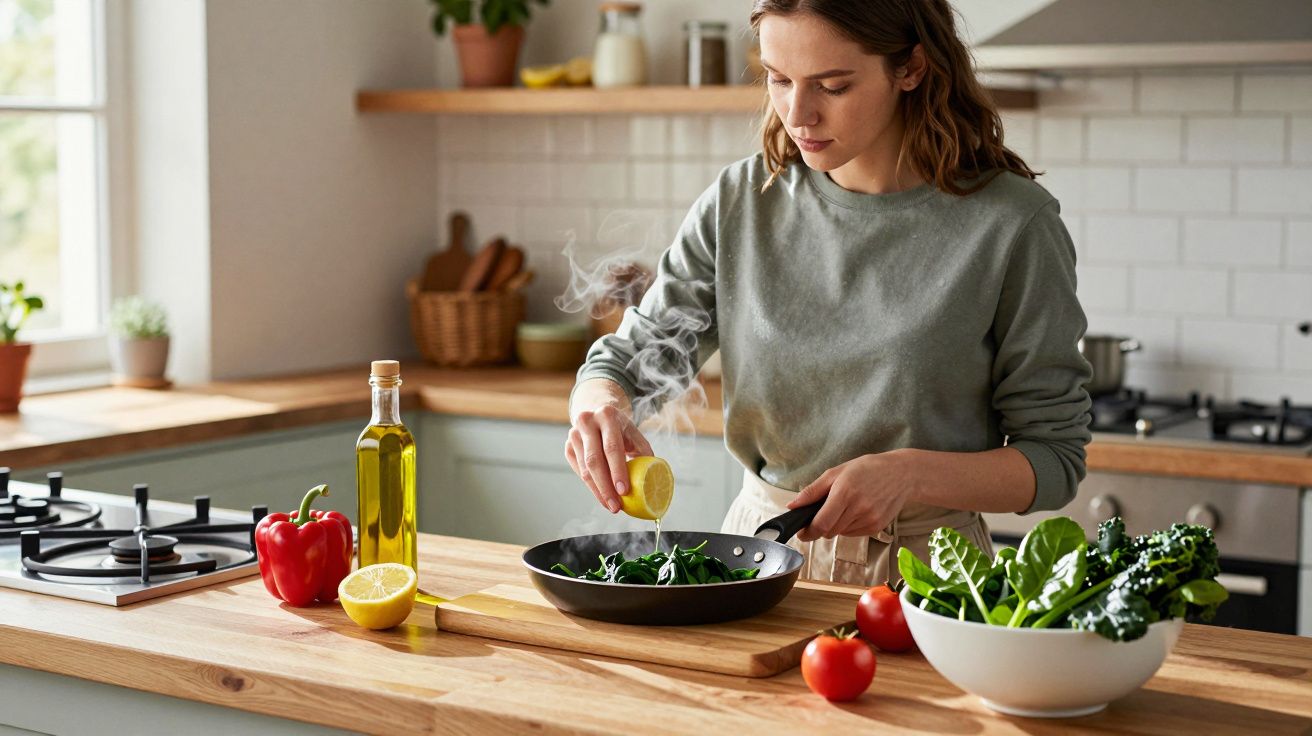
The question didn’t start in a lab. It started in a kitchen, with spinach wilting in a pan while someone muttered, “of course! please provide the text you would like me to translate.” as if nutrition were just another message to tidy up and make sense of. Spinach is a daily vegetable for salads, curries and smoothies, and it matters because the more we learn about what’s actually in it-and how it behaves in the body-the easier it is to use it well rather than just assume it’s “good for you”.
A researcher will tell you it’s not that spinach has stopped being healthy. It’s that we’re finally getting more precise about which benefits show up, for whom, and under what conditions. The old story was simple: iron, strength, job done. The new story is messier-and more useful.
The old spinach story was tidy. Real life isn’t.
Ask most people what spinach is “for” and you’ll hear the same hits: iron, maybe vitamins, maybe “Popeye”. Then you meet the runner who eats spinach every day and still feels wiped, or the parent trying to raise a child who won’t touch greens unless they’re blended into pasta sauce. We’ve all lived that moment when a food’s reputation is louder than what it’s doing on your plate.
Researchers are now circling around the gaps between reputation and reality. Not to take spinach off the pedestal, but to understand why it helps in some contexts and disappoints in others-especially when you factor in cooking, pairing, and individual biology.
What researchers are actually asking about spinach now
The questions are less “Is it healthy?” and more “What changes the outcome?” Three threads keep coming up.
First: bioavailability. Spinach contains iron, but much of it is non-haem iron, which the body absorbs less efficiently. The presence of vitamin C (say, lemon juice, peppers, tomatoes) can improve absorption; other compounds in the same meal can reduce it. That’s not scandal-it’s just chemistry meeting dinner.
Second: oxalates. Spinach is high in oxalates, which can bind to minerals like calcium and may matter for people prone to certain kidney stones. For most people, that’s not a reason to fear spinach; it’s a reason to avoid turning it into a single-food habit and to pay attention if you have a history that makes oxalates relevant.
Third: nitrates and performance. Leafy greens can be a dietary source of nitrates, which the body can convert into nitric oxide-a molecule involved in blood flow. That’s why spinach keeps popping up in conversations about endurance, blood pressure, and “greens powders”. The question isn’t whether nitrates exist, but how much you get from typical portions, and whether your overall diet pattern makes the effect noticeable.
A simple way to hold it in your head: spinach is useful, but it’s not a magic token. It behaves differently depending on how you use it.
The small choices that change what you get from a bowl of greens
A lot of the “new questions” lead back to very ordinary habits. Not supplements. Not fads. Just basic decisions that either help spinach do its job, or quietly get in the way.
Take Elena, 29, who started adding big handfuls of raw spinach to smoothies because she was told it was “the easiest nutrition upgrade”. She felt virtuous-and also bloated. When she switched to smaller portions, rotated in other greens, and stopped treating raw spinach as a daily litre-sized ritual, the smoothie habit became sustainable again. Nothing dramatic happened. It just stopped being a fight with her own body.
Here are the tweaks that keep coming up in dietetic advice and research discussions:
- Pair spinach with vitamin C sources (lemon, oranges, peppers, tomatoes) if you’re relying on it for iron.
- Cook it sometimes: heat reduces volume (so you may eat more), and can change how certain compounds behave; it also tends to be gentler on some stomachs.
- Rotate your greens: rocket, kale, chard, spring greens-variety lowers the chance that one compound (like oxalates) dominates your intake.
- Add fat for fat-soluble vitamins: a drizzle of olive oil, yoghurt, nuts, or eggs helps with absorption of vitamins like A and K.
- Don’t let spinach become your only “healthy act” of the day. It works best as part of a pattern, not a badge.
“The point isn’t to worship spinach,” says one nutrition researcher. “It’s to understand the conditions under which it helps-so you can stop guessing and start building meals that actually deliver.”
What this shift says about “healthy eating” now
The spinach story is a neat snapshot of where nutrition is heading. We’re moving away from halo foods and towards mechanisms: absorption, interactions, gut tolerance, and the way real meals behave outside a controlled study. It’s also a reminder that “more” isn’t automatically “better”, especially when you concentrate a food into powders, juices, or enormous raw servings.
None of this makes spinach less valuable. It makes it more specific. If you love it, keep it-just use it with intention. If you hate it, you’re not doomed; the benefits people chase through spinach exist across many plants, and variety often beats loyalty.
| Point clé | Détail | Intérêt pour le lecteur |
|---|---|---|
| Iron isn’t automatic | Non-haem iron absorption varies; vitamin C helps | Better energy goals with smarter pairings |
| Oxalates are context-dependent | Relevant for some kidney stone risk profiles | Avoid needless worry, adjust if needed |
| Performance interest is growing | Nitrates may support blood flow | Helps you judge “greens” claims realistically |
FAQ:
- Is spinach still “one of the healthiest foods”? It’s a very nutrient-dense vegetable, but its benefits depend on portion, preparation, and the rest of your diet.
- Should I eat spinach raw or cooked? Both can fit. If you eat it often, mixing raw and cooked forms and rotating other greens is a practical approach.
- Does spinach give you lots of iron? It contains iron, but absorption can be limited. Pairing it with vitamin C-rich foods can help.
- Should people with kidney stone history avoid spinach? Not always, but spinach is high in oxalates, so it’s worth discussing with a clinician or dietitian if you’ve had oxalate-related stones.
- Are spinach powders the same as eating spinach? They can concentrate certain compounds, but they’re not nutritionally identical to whole-food portions-and they’re easier to overdo without noticing.






Comments (0)
No comments yet. Be the first to comment!
Leave a Comment