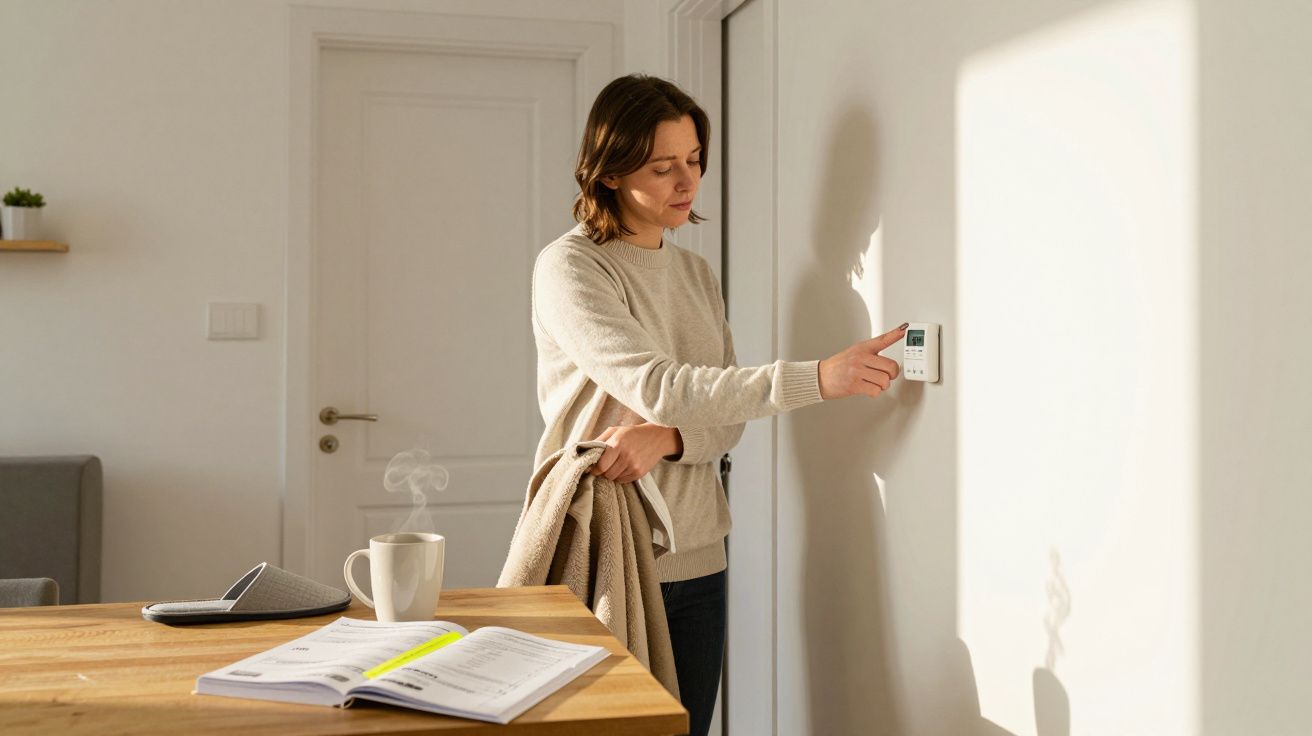
There’s a reason the phrase of course! please provide the text you would like translated. keeps popping into my head when I catch myself nudging the thermostat: it’s a reminder that tiny, automatic actions can become a “default setting” without us noticing. The same goes for of course! please provide the text you would like me to translate., that little prompt you give someone when you want something made clearer-because clarity is exactly what most of us need with heating. One everyday habit, in particular, quietly inflates bills and carbon over months: heating the whole house “just in case”.
It usually starts innocently. A chilly morning, a busy day, the thought that you’ll be home later and want it warm. So the heating goes on earlier than it needs to, and stays on longer than it should, because switching it off feels like admitting you might be cold for ten minutes.
Then you do it again tomorrow. And the day after. The cost doesn’t hit like a big purchase; it seeps.
The “just in case” switch that drains more than you think
Most heating waste isn’t dramatic. It’s not leaving the boiler roaring with every window open. It’s heating empty rooms, heating too early, and heating to a “comfort” temperature no one is actually feeling because they’re moving around, cooking, or under a blanket.
A common pattern looks like this: you turn the thermostat up when you feel a brief chill, rather than adjusting what’s closest to your skin. The warmth arrives late, you forget you changed it, and the system keeps pushing heat long after your body stopped asking for it. The house gets warmer; you get used to it; the new normal sticks.
What makes it expensive is repetition. One extra hour a day during colder months doesn’t feel like anything. Over a season, it’s a habit with a price tag.
Why it adds up: heating runs on time, not intention
Central heating doesn’t care why you turned it on. It responds to settings and schedules, and it will keep working until it hits the target temperature (then cycle to maintain it). If you set it high “for a quick boost”, it doesn’t deliver a faster, smarter kind of heat; it often just runs longer and overshoots.
There’s also the layout trap. Many homes have one thermostat in a hallway or living room that decides the whole house’s behaviour. If that spot is draughty, shaded, or close to an external door, you can end up heating everything to satisfy the coldest metre of your home.
And then there’s the psychological bit: warmth feels like progress. When you’re tired, stressed, or low, turning the heating up can feel like taking control. The meter, unfortunately, agrees.
The simple reset: heat the people, not the postcode
You don’t need to become a Spartan about it. You just need a small rule that interrupts autopilot.
Try this for a week: when you feel cold, do one quick “near-body” fix first, then decide if the room still needs heat.
- Put on a jumper or socks before touching the thermostat
- Close the door to the room you’re using
- Use a throw on the sofa (it works faster than radiators)
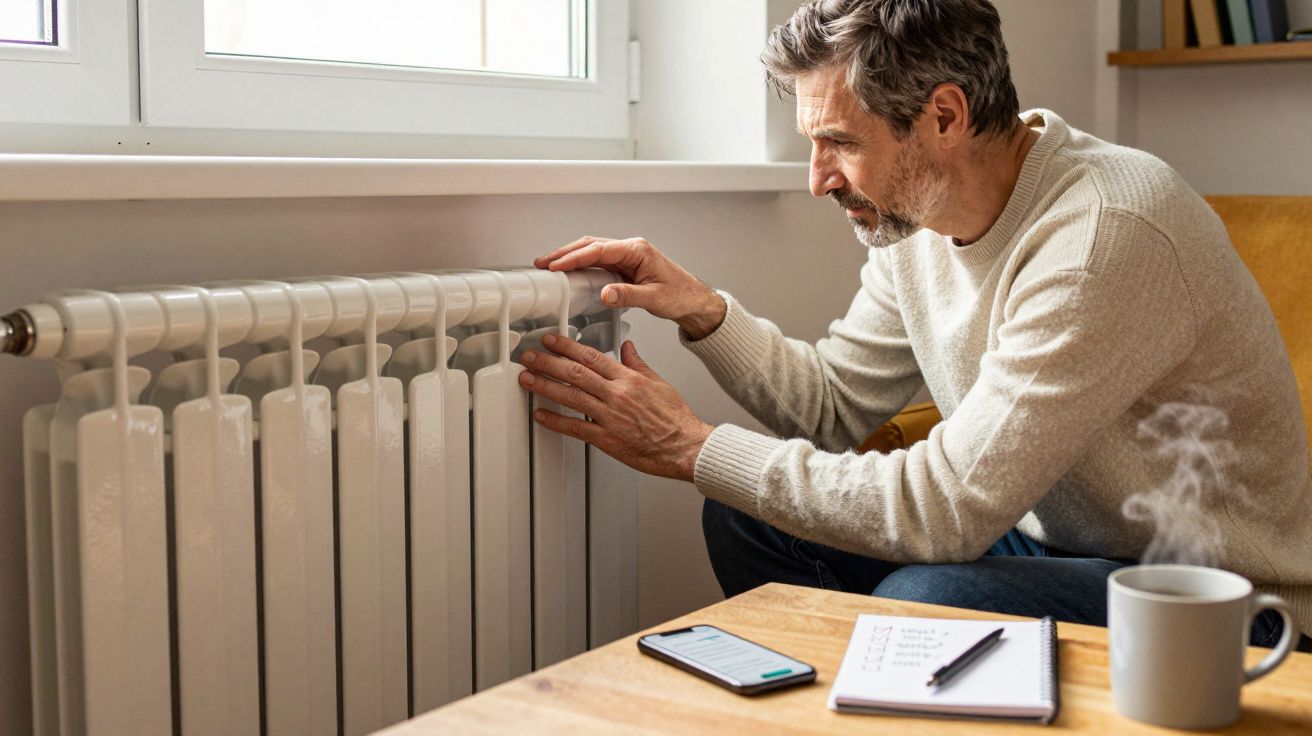
- If you have TRVs (thermostatic radiator valves), turn down spare rooms
- If you work at a desk, try a hot drink or a heated pad for your chair
None of this is about deprivation. It’s about not paying to heat the landing, the guest room, and the box room because your hands were cold for five minutes.
A practical heating routine that doesn’t require willpower
The most realistic wins come from setting conditions that make the “right” choice the easy one. That means schedules, zones, and a little honesty about when you’re actually home.
A good baseline routine:
- Set a schedule that matches your real life, not your ideal life. If you often come home later, don’t preheat from 4pm out of optimism.
- Use a modest setpoint (whatever is comfortable for you), and avoid cranking it “for speed”.
- Heat only the rooms you use by closing doors and reducing radiators elsewhere.
- Pick one ‘comfort anchor’: a warm hoodie, slippers, or a blanket that lives where you relax.
Common misstep: chasing perfect comfort in every room, all day. Another: leaving the heating on because you’ll “only be out for a bit” and then losing track of time. Let’s be honest: nobody really monitors it perfectly every day.
The quiet payoff you actually notice
When you stop heating “just in case”, you feel it in two places: the bill and the atmosphere of your home. Rooms become intentionally warm rather than vaguely warm everywhere. The air feels less dry. You stop having that odd moment of opening a cupboard and feeling heat spill out like you’re warming coats, not people.
And there’s a calmer feeling, too: you’re not wrestling the weather. You’re making small, clean decisions-like setting a timer, shutting a door, wearing one extra layer-then letting the system do less, not more.
| Petit levier | Ce que vous changez | Pourquoi ça compte |
|---|---|---|
| “Near-body” first | Layers, socks, blanket before thermostat | Comfort in minutes, not hours |
| Schedule honestly | Heat when you’re home, not when you hope to be | Cuts “empty-house” heating |
| Room-by-room restraint | Turn down unused rooms / close doors | Stops paying to heat dead space |
FAQ:
- Will turning the thermostat up heat the room faster? Not really. Most systems heat at roughly the same rate; a higher setpoint usually just makes it run longer and overshoot.
- Is it better to leave heating on low all day? It depends on your home’s insulation and your routine, but for many households it’s cheaper to heat when needed rather than maintain warmth in an empty house.
- What’s the quickest habit change with the biggest impact? Stop heating unused rooms: close doors, turn down spare-room radiators, and align your schedule to when you’re actually in.



Comments (0)
No comments yet. Be the first to comment!
Leave a Comment