
Somewhere between the first frost and the first bill shock, the same promise gets repeated: if you hold a stable indoor temperature, your home will feel warmer and your heating will “work less”. It sounds sensible, and it fits our user expectations of comfort as something you can set once and forget. The trouble is that houses don’t feel heat the way thermostats measure it, and the cheapest-looking choice can quietly become the priciest habit.
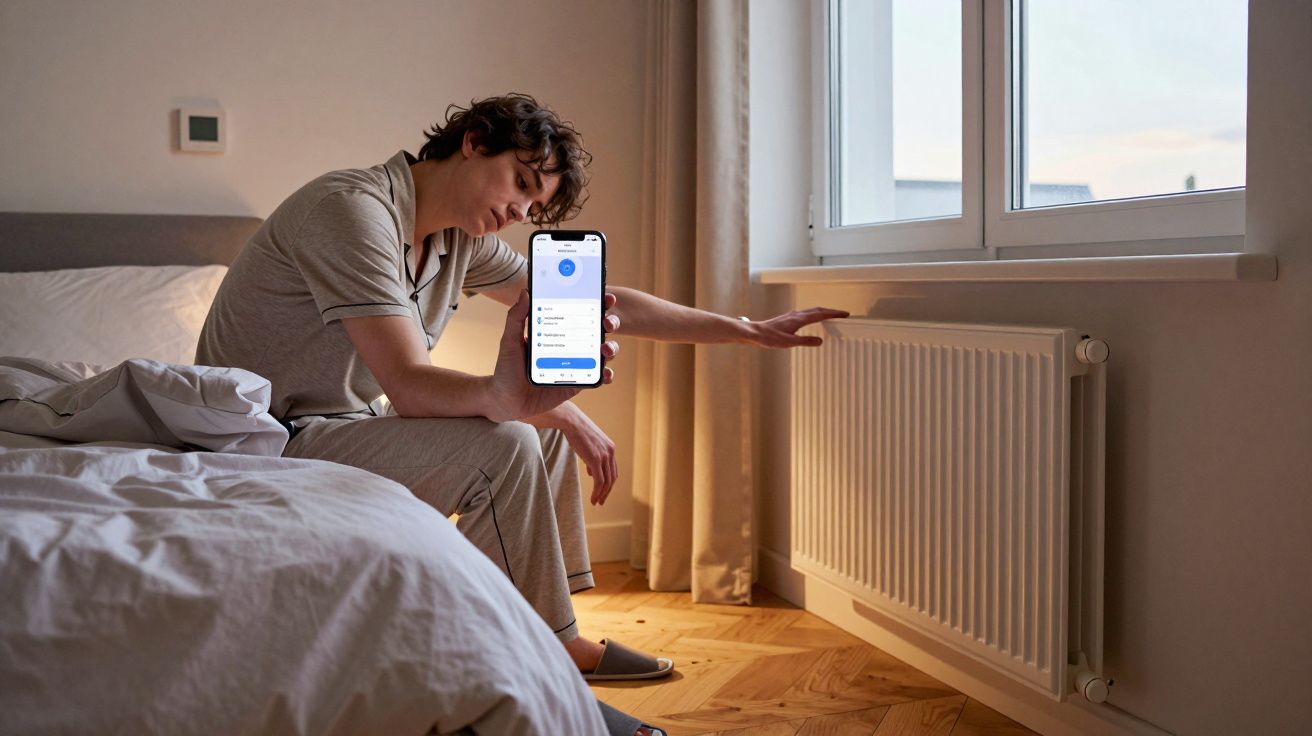
A homeowner pads downstairs at 6am, sees 17°C on the display, and nudges the dial up “just to take the edge off”. By mid-morning the rooms feel fine, so the heating stays on. By evening, the bill feels like a different kind of weather.
The myth: “Keep it constant and you’ll use less”
The myth survives because it borrows truth from the wrong place. A stable indoor temperature can reduce the swings that feel unpleasant-cold floors in the morning, chilly walls at night-and it can prevent condensation problems in some homes. But it doesn’t automatically reduce energy use, because heat loss is not a mood. It’s maths.
Your home loses heat to the outdoors in proportion to the difference between inside and outside. Hold the house warmer for longer, and you increase that difference for longer. The boiler doesn’t get tired; it simply responds to the ongoing leak.
A steady setpoint can feel calm, but it can also mean you’re paying to heat empty rooms for hours.
Why “comfort” isn’t just the number on the wall
People don’t experience air temperature in isolation. We feel mean radiant temperature (how warm the surfaces around us are), drafts, humidity, and whether our feet are cold. Two homes can both be 20°C and one will feel snug while the other feels like a bus stop.
This is where user expectations sabotage decisions. We expect the thermostat number to equal comfort, so we chase that number instead of fixing the things that actually create “cold”: leaky door seals, underheated bedrooms, a sofa against an uninsulated external wall, or a radiator blocked by a heavy curtain.
A steady temperature can also mask a problem. If a room never quite feels right even at a higher setpoint, you’re not “bad at heating”; you’re being asked to compensate for heat loss, drafts, or poor air distribution with pure energy.
What actually happens when you “turn it down while you’re out”
Lowering the setpoint (or using a timed setback) usually saves energy because the house spends fewer hours at a higher temperature difference. But there are caveats, and they’re the bits that fuel the myth.
- If your home is very leaky, it cools quickly, so setbacks help.
- If your home is very well insulated, it cools slowly, so setbacks help less-but they rarely hurt.
- If you have slow emitters (underfloor heating, high thermal mass), aggressive setbacks can be uncomfortable because the warm-up takes time.
- If you let the house get too cold, you risk condensation and mould, and you may crank the heating later in a panic, overshooting your target.
The goal isn’t “off” versus “always on”. It’s controlled heat, delivered when it matters, at the lowest temperature that still feels comfortable.
A better rule: steady where you live, flexible where you don’t
Instead of trying to keep the whole house at one constant number, treat heating like lighting. You don’t light every room all day to avoid “using more later”. You put light where you are, when you need it.
Try this pattern for a week and see how it feels:
- Pick a comfort band, not a single number. For many households, that’s something like 18–20°C when occupied, lower overnight.
- Use a timed schedule that matches real life. Warm-up before getting up and before you’re home, not all afternoon “just in case”.
- Set a modest setback for away hours. Not freezing-just cooler. Think “protect the building and come back to comfort”, not “start from scratch”.
- Close doors and heat zones properly. If you have TRVs, use them to prioritise living areas and bedrooms, not to “fight” the thermostat.
You’re still aiming for a stable indoor temperature where it counts-your occupied rooms-without paying to maintain it everywhere, always.
The comfort traps that make people overheat their homes
The fastest way to spend more without feeling better is to treat symptoms with temperature alone. These are the patterns that show up every winter:
1) Chasing drafts with the thermostat
If a cold draft is hitting your ankles, raising the setpoint warms the whole house to fix a local problem. Draft-proofing and curtain placement fix it at the source.
2) Heating the wall, not the room
Sitting beside a cold external wall lowers your radiant comfort. Pull furniture a few centimetres forward, use thicker curtains (without covering radiators), and consider reflective foil behind radiators on external walls.
3) Expecting instant warmth from slow systems
Underfloor heating and heat pumps often deliver steadier, gentler heat. If you expect the punch of a gas boiler and radiators, you’ll over-adjust, then overshoot.
4) Using one setpoint for everyone
One person wants 21°C, another is happy at 18.5°C with a jumper. Agreeing a household “base temperature” and using local comfort (throws, heated pads, closing doors) is often cheaper than heating arguments into the air.
“So what should I do today?” A practical checklist
You don’t need a perfect model of your home. You need a few simple experiments that respect both comfort and cost.
- Stop thinking “constant” and start thinking “consistent”. Consistent comfort routines beat a fixed number.
- Set a schedule before you touch the temperature. Two or three heating blocks per day often works better than all-day.
- Use a small setback when out or asleep. If you wake up cold, adjust the timing earlier before you raise the temperature.
- Check radiator freedom. Curtains tucked behind radiators, furniture pressed against them, and blocked vents all reduce effective heat.
- Aim for fewer adjustments. If you’re turning the dial up and down repeatedly, the system is responding to your anxiety, not your needs.
If you want a single mantra, make it this: heat for people, not for empty air.
A quick “reality check” table
| Choice | What it tends to do | When it makes sense |
|---|---|---|
| Hold one constant setpoint all day | Maximises comfort consistency, can increase run hours | Very occupied homes; slow systems; condensation-prone buildings |
| Timed heating with a modest setback | Cuts warm hours, usually lowers cost | Most households with predictable routines |
| Big setbacks, big boosts | Can feel harsh and lead to overshoot | Only if your home warms quickly and stays dry |
The takeaway most homeowners miss
The stable indoor temperature idea isn’t “wrong”. It’s incomplete. It works when it’s paired with a home that holds heat, a schedule that matches occupancy, and realistic user expectations about how warmth feels in rooms-not just on a screen.
Comfort is not a number you win. It’s a system you tune.
FAQ:
- Why does 20°C sometimes feel cold? Because comfort also depends on drafts, humidity, and how warm surrounding surfaces are. Cold walls and air movement can make a “normal” air temperature feel chilly.
- Is it ever cheaper to keep the heating on constantly? Rarely. It may be more comfortable in some homes, and it can help prevent condensation, but energy use usually rises when the house is kept warmer for more hours.
- What’s a sensible setback temperature? Enough to avoid the home feeling clammy or taking ages to recover. Many households start with a small drop (a few degrees) and adjust based on morning comfort and damp risk.
- I keep turning the thermostat up-what does that mean? Often it signals a draft, poor radiator output, blocked airflow, or expectations that the system should feel “instant”. Fix the delivery and the room feel, then revisit the setpoint.


Comments (0)
No comments yet. Be the first to comment!
Leave a Comment