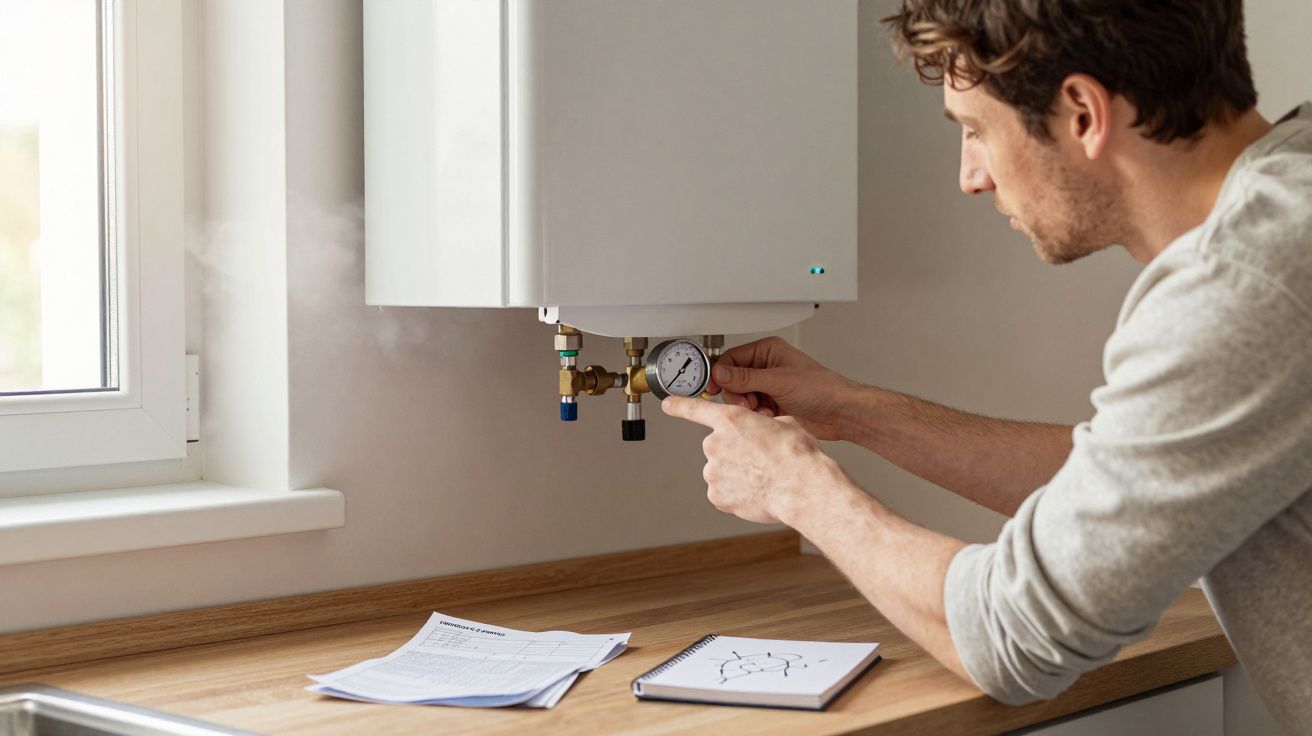
The boiler cupboard is quiet until it isn’t: a faint hiss, a dull clunk, radiators that need bleeding again. When energy-efficient heating starts costing more instead of less, the culprit is sometimes not tariffs or your thermostat habits, but a small metal tank called the expansion vessel. It sits inside many combi and system boilers, and when it fails, pressure swings make your system work harder - and your bills creep up in ways that feel strangely personal.
You notice it in ordinary moments. The hot shower turns peaky and unpredictable, the boiler short-cycles like it can’t settle, and the pressure gauge keeps wandering back towards zero. You top it up, it behaves for a day or two, then the same loop begins again. It’s not dramatic enough to call an emergency, but it’s constant enough to drain money.
The hidden fault that makes “efficient” systems burn more
Modern boilers and heat pumps are built to modulate: to run low and steady, sipping energy rather than gulping it. That’s the whole promise of energy-efficient heating-smooth output, fewer stop-start bursts, and kinder running costs. But that promise relies on stable system pressure.
The expansion vessel is the pressure buffer. Water expands when it heats, and the vessel gives that extra volume somewhere to go by compressing a pocket of air behind a rubber diaphragm. When that air charge is lost, or the diaphragm fails, the system has nowhere to absorb expansion. Pressure spikes, safety valves may lift, and then-once things cool-pressure drops and the boiler is starved again.
The result is a kind of mechanical anxiety. The system lurches between too high and too low, and the controls respond by cycling more often, firing up more aggressively, and shutting down prematurely. That churn is where efficiency leaks away.
A heating system can be “good on paper” and still waste energy if it can’t hold steady pressure in real life.
What it looks like in a normal home (and why it hits your bill)
Picture a typical weekday. The heating comes on at 6:30, hot water is drawn for a shower, the radiators start filling, and the boiler ramps. If the expansion vessel is failing, pressure rises quickly and the boiler may cut out to protect itself. Then it restarts. Then it cuts out again.
You feel it as comfort that won’t settle. The house takes longer to warm, radiators heat unevenly, and the boiler seems louder and busier. You pay for all that ignition and ramping-especially with gas boilers, where the least efficient moments are the on/off edges.
You may also be losing water. If the pressure relief valve has been dumping small amounts during spikes, you’re refilling the system with cold mains water. That fresh water has to be heated from scratch, again and again. It’s a quiet cost, but it adds up.
Common signs people ignore for months:
- Boiler pressure climbs when heating is on, then collapses when off
- You need to top up pressure frequently (weekly is a red flag)
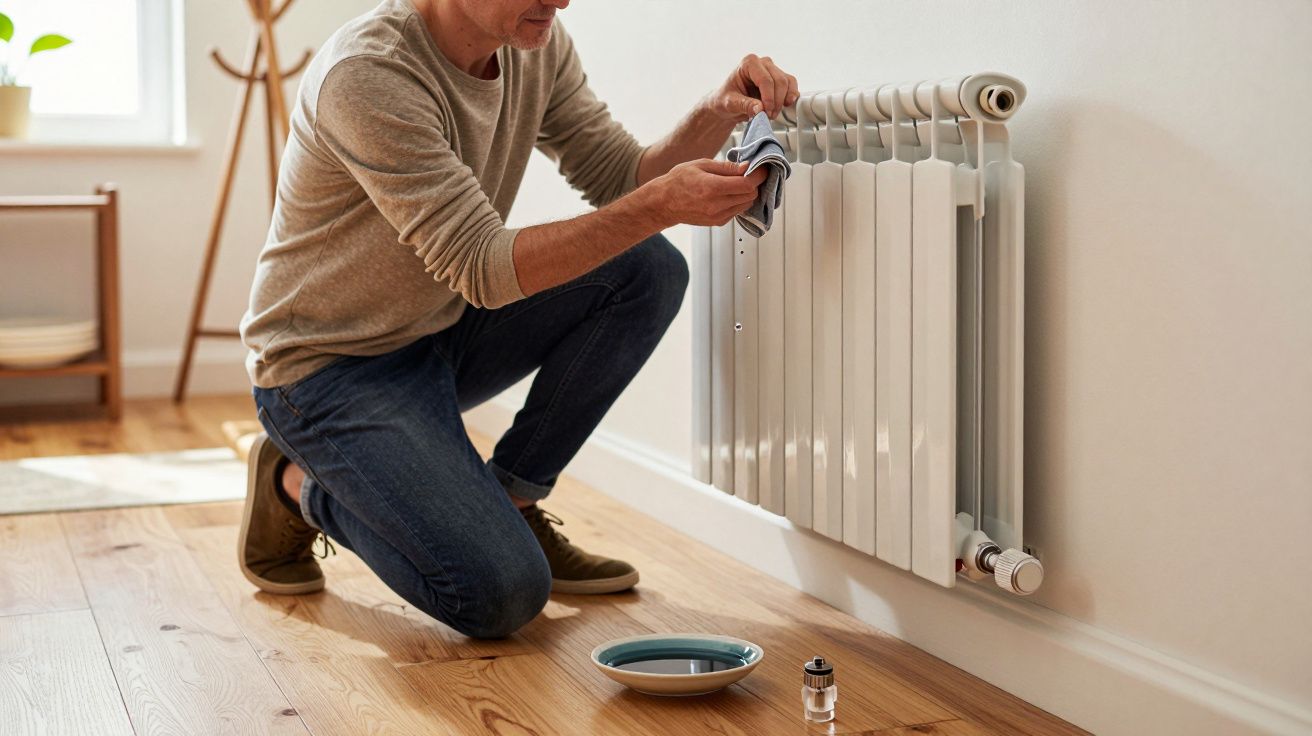
- Radiators need bleeding often, but the problem keeps returning
- The discharge pipe outside drips intermittently (especially after heating cycles)
- Boiler short-cycles: lots of brief runs instead of long, steady ones
A quick, safe way to sense-check the problem
You don’t need to dismantle anything to spot the pattern, and you shouldn’t open sealed boiler casings yourself. But you can observe like a technician would: calmly, over a couple of cycles.
- Note the pressure when the system is cold (first thing in the morning is ideal).
- Run the heating for 20–30 minutes and watch how far the pressure rises.
- Turn heating off and see how low the pressure falls once it cools.
A healthy sealed system might rise a little-say from 1.2 bar cold to around 1.8 bar hot. If you’re seeing sharp climbs towards 3 bar, followed by big drops, that’s the signature. If it hits 3 bar, many boilers will vent via the safety valve, and once that valve has lifted a few times it can start weeping even at normal pressures.
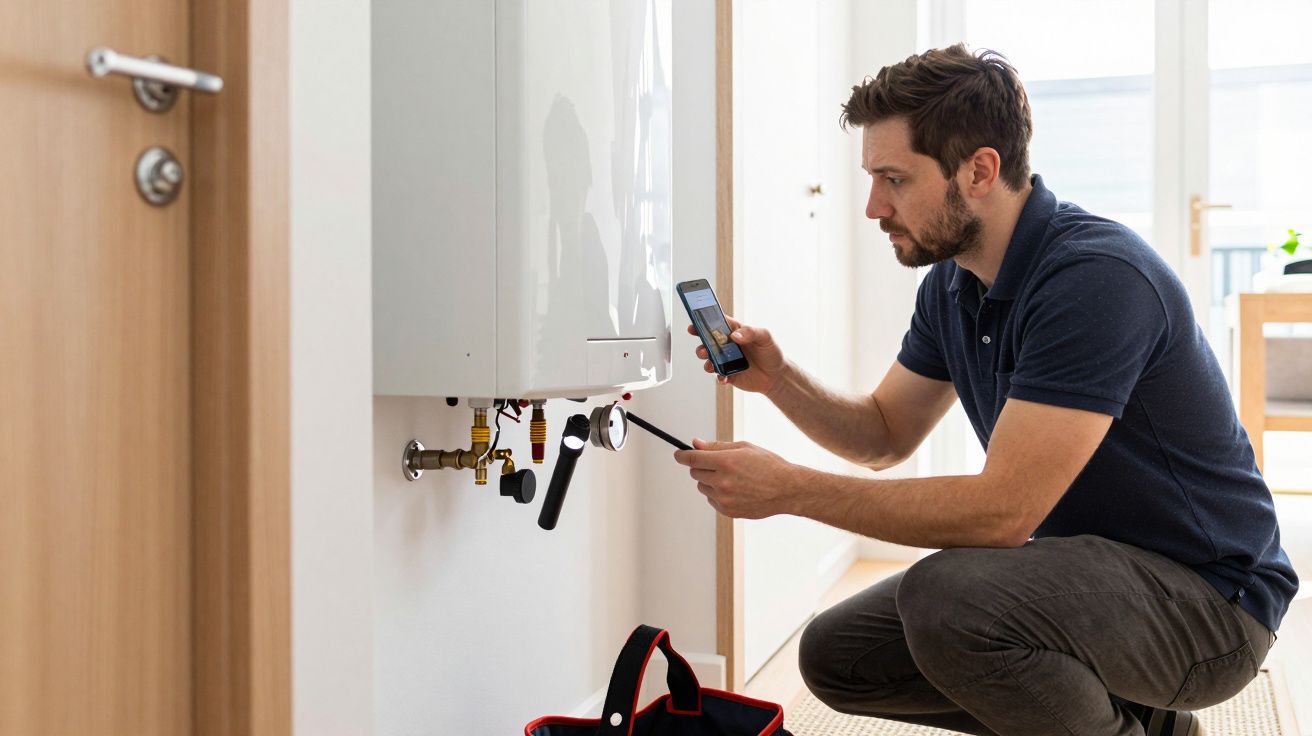
There’s also a tactile clue engineers often use: on some systems the expansion vessel is accessible, and tapping it can reveal whether it’s waterlogged (a dull thud) versus air-charged (a hollower sound). But access varies, and the useful part is the pattern, not the percussion.
What usually fixes it (and what doesn’t)
The most tempting “fix” is topping up pressure more often. That keeps the boiler from locking out, but it treats the symptom and feeds the cycle: more fresh water, more heating demand, more pressure swings. Bleeding radiators can help if air is present, but if the underlying cause is repeated pressure loss, you’ll be back at the key in a few days.
A proper remedy depends on what’s actually failed:
- Recharging the vessel: If the diaphragm is intact and it’s simply lost its air charge, an engineer can re-pressurise it to the manufacturer spec.
- Replacing the vessel: If the diaphragm has ruptured, the vessel is effectively dead. Replacement restores stable pressure and reduces cycling.
- Replacing the pressure relief valve: If it’s been lifting and now won’t seal, it may need changing alongside the vessel work.
- Checking for hidden leaks: Small leaks on valves, radiator tails, or under floors can mimic vessel failure by steadily dropping pressure.
The key point is that a pressure problem is an efficiency problem. When the system can’t stay in its stable range, all the clever modulation you paid for becomes irrelevant.
How much difference can this make to running costs?
It won’t halve your bills overnight, and anyone promising that is selling you a feeling. But restoring stable pressure often brings back the boring, quiet behaviour that efficient heating depends on: longer runs at lower output, fewer restarts, and less wasted heat cycling through the heat exchanger.
People usually notice it first as steadier comfort. Then they notice the boiler is simply “around” less-less noise, less firing, fewer lockouts, fewer top-ups. The energy savings come from that absence.
| What you notice | What it often means | Why it affects cost |
|---|---|---|
| Pressure swings hot-to-cold | Expansion vessel not buffering | More cycling, less efficient burn |
| Outside pipe dripping | Safety valve lifting | Water loss + reheating fresh mains |
| Frequent top-ups | Leak or valve/vessel issue | Constant reheating and instability |
What to do this week if you suspect it
Treat it like a small investigation, not a panic. Note your cold and hot pressure readings for two days, and check whether the discharge pipe outside is wet after heating runs. If your boiler is locking out, or pressure is repeatedly dropping to near zero, book a Gas Safe engineer (or appropriately qualified heat pump technician for your system) and mention the expansion vessel specifically so they arrive prepared.
If you’re also trying to make your home more efficient-lower flow temperatures, weather compensation, smart controls-get the pressure stability sorted first. It’s hard to tune a system that can’t hold itself together.
FAQ:
- Is a faulty expansion vessel dangerous? It’s usually not immediately dangerous because boilers have safety valves, but repeated pressure spikes and venting can lead to breakdowns and water damage. If you see regular discharge outside or frequent lockouts, get it checked.
- Can I re-pressurise the expansion vessel myself? On most boilers this should be done by a qualified engineer; access and safe isolation vary, and incorrect charging can worsen performance.
- Why do I keep bleeding radiators but the air returns? Repeated pressure loss and refilling introduces dissolved gases that come out of solution when heated. Fixing the cause of pressure loss often reduces recurring air.
- Will this still matter if I’m careful with the thermostat? Yes. Control settings help, but if the system is cycling due to pressure instability, it will waste energy regardless of how sensible your schedule is.


Comments (0)
No comments yet. Be the first to comment!
Leave a Comment