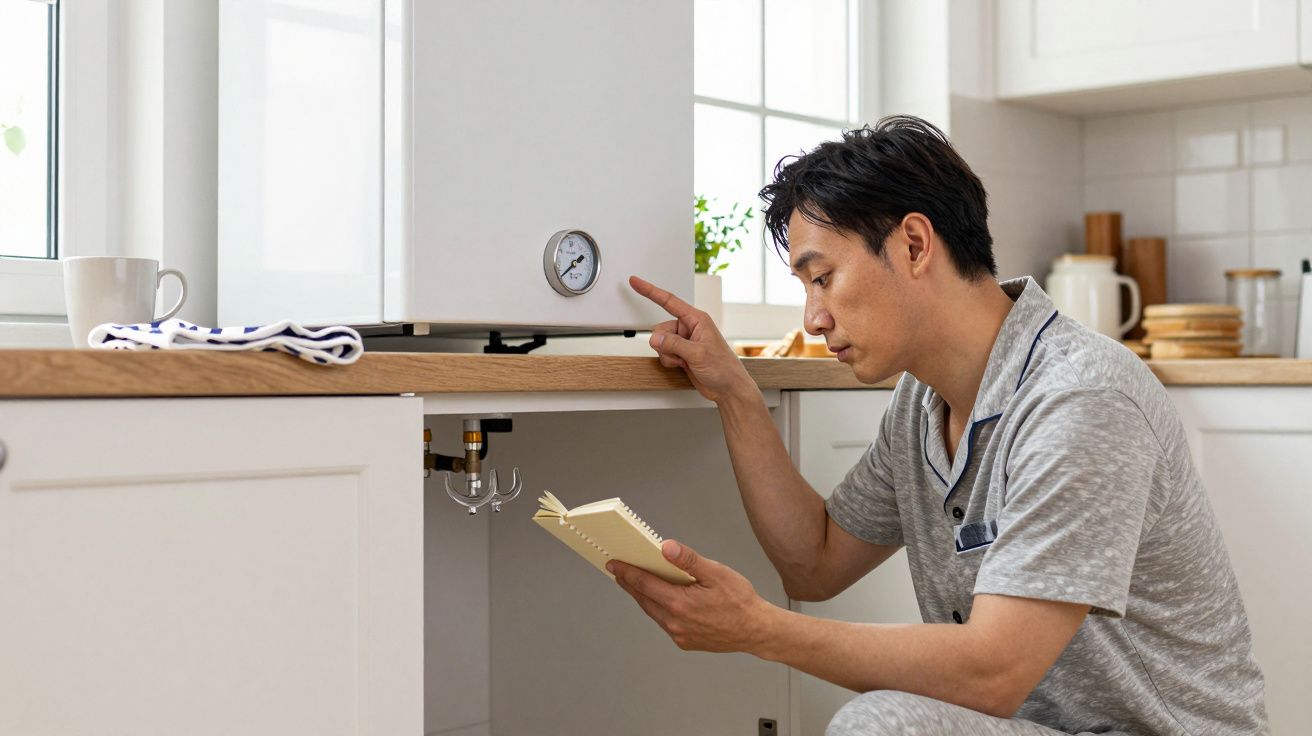
People talk about a gas boiler the way they talk about a good neighbour: you only notice it when it isn’t behaving. When there’s boiler making noise in the kitchen cupboard at 2am, suddenly it’s not “just background”-it’s your sleep, your nerves, and that creeping worry that something expensive is about to happen. The myth is that a “quiet boiler” is the goal, when the real goal is a boiler that sounds normal.
I learned this the boring way: by turning the heating on after a mild spell and hearing a new little chorus I couldn’t un-hear. Not a dramatic bang. More like a shiver, a gurgle, a faint tapping that seemed to travel through the pipes like gossip. It’s easy to tell yourself you’re imagining it. It’s harder to ignore when the sound repeats every single time the hot water kicks in.
The fantasy of silence (and why it trips people up)
A boiler isn’t a library. It’s a working machine pushing heat into water and sending it around your home. Fans spin, pumps whirr, gas ignites, metal expands, condensate drains. Some noise is simply the soundtrack of “doing its job”.
The trouble is that people lump all noise into one bucket: bad. So they either panic at normal operating sounds, or they do the opposite-dismiss a genuine warning because “boilers are noisy, aren’t they?” Both reactions come from the same myth: that the best boiler is the silent one.
A better test is this: does it sound like it always has, or has the pattern changed? New, louder, sharper, more frequent, or happening at odd times is what deserves attention. Familiar, consistent, and only during expected moments is usually just… life with central heating.
The sounds that are usually normal
If you stand by the cupboard when it fires up, you’ll often hear a small sequence. It can sound fussy, but it’s mostly routine-like a car going through its checks.
Common “normal-ish” noises include:
- A brief whoosh as the burner ignites and the fan ramps up
- A low, steady hum while it’s running
- Soft clicks as components switch or valves move
- Gentle rushing through pipes when radiators begin heating up
You might also hear the plastic casing tick slightly as it warms and cools. That can sound oddly dramatic in a quiet house, especially at night, but it’s often just expansion and contraction.
Normal doesn’t mean “ignore everything forever”. It means: note it, don’t catastrophise it, and pay attention to change.
The noises that tend to mean “something’s up”
This is where the myth gets costly. People wait for a full breakdown, when the boiler has often been “talking” for weeks.
A few noise patterns are worth treating as a prompt to investigate:
1) Kettling (rumbling, banging, or a growl when heating)
If it starts to sound like a kettle boiling inside the casing-rumbles, thuds, or a deep vibrating roar-that can point to restricted water flow or limescale build-up on the heat exchanger. The water overheats in small pockets and forms steam bubbles, which collapse and bang.
It’s not just annoying. It can stress components and reduce efficiency, and it usually doesn’t fix itself by being ignored.
2) Gurgling and glugging in radiators or pipes
Gurgling often means air in the system, low pressure, or circulation issues. Sometimes it’s as simple as bleeding radiators (if you know how and your system type allows it), but it can also be a sign of leaks or poor balancing.
If you’re topping up the pressure often, that’s not a personality trait of your home. It’s a clue.
3) High-pitched whining or squealing
A whine can come from the pump, the fan, or vibration where pipework meets brackets and floors. Sometimes it’s an early warning-bearings wearing, a fan slightly off, or a part straining harder than it should.
The key detail is persistence. A one-off squeak is one thing. A rising, regular whine that wasn’t there last month is another.
4) Loud banging when the heating turns on or off
Not all banging is inside the boiler. “Water hammer” can come from fast-closing valves, pipework that isn’t properly secured, or sudden pressure changes. It can still be related to boiler operation, but the fix may be in the system rather than the unit itself.
If it’s violent enough to make you flinch, treat it as more than “quirky plumbing”.
The quiet checks that make a noisy problem clearer
There’s a temptation to start dismantling the mystery with Google at midnight. You can do something calmer and more useful: a short, tidy observation pass that helps you (and any engineer) pinpoint what’s happening.
Try this the next time you notice it:
- Note the moment: does the noise happen on hot water, heating, or both?
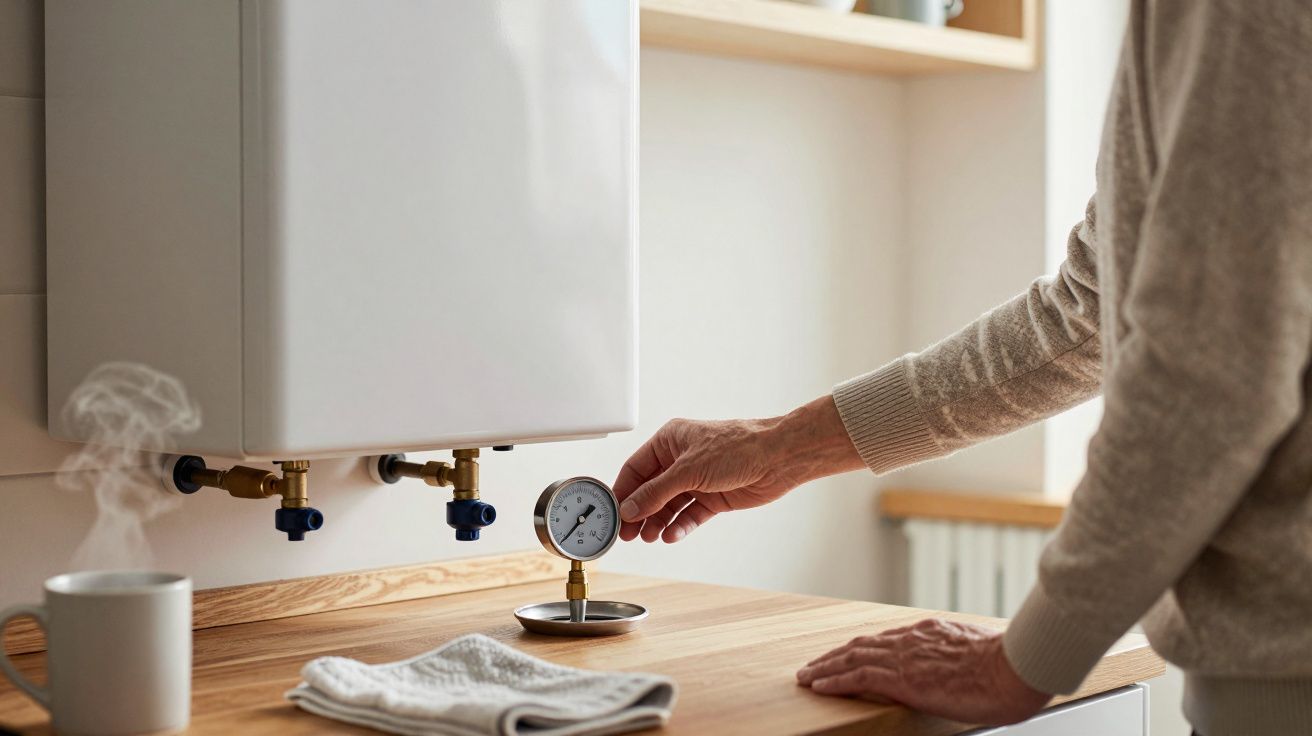
- Check the pressure gauge (if you have one): is it in the normal range for your system? (Many homes sit around 1–1.5 bar when cold, but follow your manual.)
- Listen for location: inside the boiler casing, at the nearest pipe run, or at a specific radiator?
- Watch for repetition: every ignition, only when the thermostat is calling, or randomly?
- Look for obvious signs: damp patches, new drips, staining under pipe joints, radiator cold spots.
This isn’t about diagnosing yourself. It’s about turning “it’s making a weird noise” into “it growls for 20 seconds only when the hot water starts, and the pressure has been dropping weekly.” That difference saves time, money, and sometimes a call-out that ends with “nothing wrong found”.
What “quiet” should actually mean
A healthy boiler is rarely silent; it’s predictable. The sound should match the workload, not your anxiety. When it’s cold outside and the heating is working hard, you’ll hear more. When it’s mild and it’s only topping up hot water, it should be brief and restrained.
If you want a rule that isn’t mystical, use this one: new noise, new attention. Especially if it comes with performance changes-radiators taking ages to heat, hot water temperature fluctuating, pressure dropping, or the boiler short-cycling (turning on and off too often).
And if your instinct says “this doesn’t feel right”, listen to that. Homes teach you their baseline. When the baseline shifts, it’s not you being dramatic-it’s you being observant.
A tiny “sound log” you’ll thank yourself for
This takes two minutes and makes you feel oddly in control, which is half the battle when something in the house starts acting up.
- Date and time
- What you were using (heating/hot water)
- The sound (gurgle/whine/bang/rumble)
- How long it lasted
- Anything else unusual (pressure, smell, error code, radiator behaviour)
Keep it in your notes app. It’s not overkill. It’s clarity.
| Sound pattern | Common cause | What to do next |
|---|---|---|
| Gurgling/glugging | Air in system, circulation issues, low pressure | Check pressure; consider bleeding radiators; call an engineer if recurring |
| Rumbling/kettling | Limescale/flow restriction, overheating | Book a service; don’t keep “pushing through” |
| High-pitched whine | Pump/fan strain, vibration, worn parts | Monitor; arrange inspection if persistent or worsening |
FAQ:
- Is boiler making noise always a sign it’s unsafe? No. Many operating sounds are normal. Safety concerns are more about gas smells, sooting, headaches/dizziness, or carbon monoxide alarms-treat those as urgent.
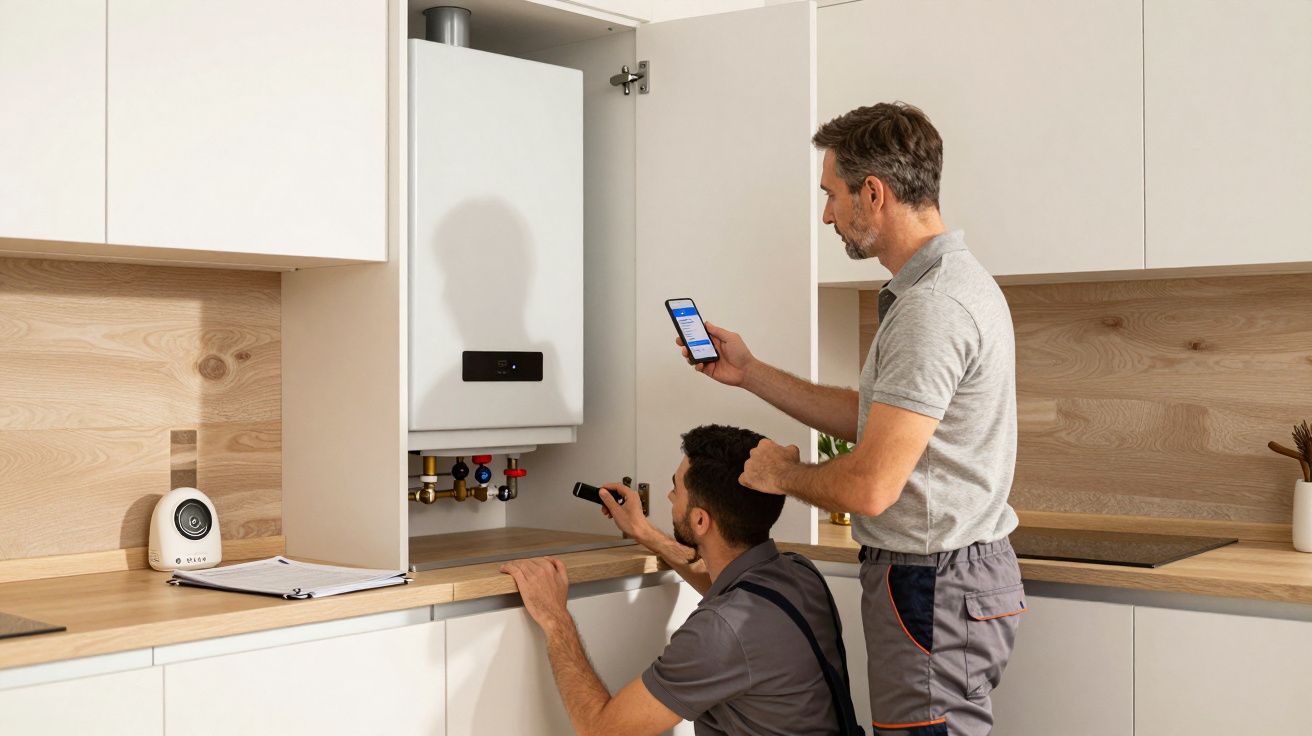
- Should I keep using the heating if it’s banging or rumbling? If it’s mild and brief, you can monitor while arranging a check. If it’s loud, worsening, or paired with poor performance or error codes, stop and book an engineer.
- Why is it louder at night? Your house is quieter, and pipe expansion sounds travel more. A noise that felt “fine” at 6pm can feel huge at 1am.
- Can low boiler pressure cause noise? It can contribute to circulation issues and strange sounds. If you’re frequently topping up, though, find out why-pressure loss is usually a symptom.
- Do newer boilers stay quiet forever? They can be quieter, but not silent, and not forever. “Quiet” comes from good installation, correct system setup, and regular servicing-not just the model nameplate.



Comments (0)
No comments yet. Be the first to comment!
Leave a Comment