
The first time you notice it, it’s never during a tidy, convenient moment. Central heating systems tend to show their true character right when the house is cold, the day is long, and you can’t afford extra system stress. In the UK, where winter drags and damp sneaks in sideways, that matters because heat isn’t a luxury here - it’s what keeps your mornings normal.
It starts small: a radiator that stays lukewarm at the top, a boiler that sounds a bit throatier than usual, a hallway that never quite warms up. You tell yourself it’s “just the weather”. Then one evening you turn the thermostat up and nothing changes, and you feel that quiet panic rise as the house stays stubbornly the same temperature.
Most of us only think about our heating when it stops doing its job. And that’s exactly the problem.
The one test you don’t schedule (but it always arrives)
There’s a simple truth about any home system: it will cope beautifully right up until it doesn’t. The test isn’t a service reminder or a warning light. The test is pressure - not water pressure, not gas pressure, but life pressure.
A cold snap. Guests staying over. A newborn who can’t regulate their temperature. Working from home during a week of frost. That’s when the system is asked to be steady, repetitive, reliable. That’s when “fine, mostly” becomes “not fine at all”.
If you’ve ever noticed your boiler behaving perfectly in mild weather and then throwing a tantrum the first proper cold night, you’ve already met the test. You just didn’t call it one.
What “system stress” looks like in a heating setup
Central heating doesn’t usually fail with fireworks. It fails like a tired person: slower, noisier, less consistent, and more prone to giving up when asked to do a bit more than usual.
Common stress points are almost boring in their predictability:
- Pressure swings: the gauge drops, you top up, it drops again, and you start wondering if you’re imagining it.
- Air and circulation issues: radiators heat in patches, or only after ages, because flow is compromised.
- Aging components: pumps get sluggish, diverter valves stick, expansion vessels lose their bounce.
- Controls and sensors: thermostats, programmers, and temperature sensors can misread reality and make the system behave oddly.
None of this feels dramatic until the day it is. A system can limp along for months, then fail the moment it’s asked to run harder and longer - the very definition of stress.
The quiet reason winter exposes everything
In milder weeks, a boiler cycles gently. It warms the water, rests, warms it again. In a proper cold spell it has to work for longer stretches, and everything marginal becomes obvious.
Small inefficiencies get amplified. A partially blocked heat exchanger that’s “fine” at 8°C outdoors becomes a problem at -2°C. A weak pump that coped with half the house in autumn suddenly can’t keep up when every radiator is calling for heat.
Think of winter as the system’s endurance run. Not a sprint. The same basic task, repeated, without much recovery time.
A quick “pre-stress” check you can do in 15 minutes
This isn’t about turning you into an engineer. It’s about giving yourself a first move before you’re standing in socks on a freezing kitchen floor, Googling emergency call-outs.
Here’s a simple routine you can run once at the start of the season (and again before any forecasted cold snap):
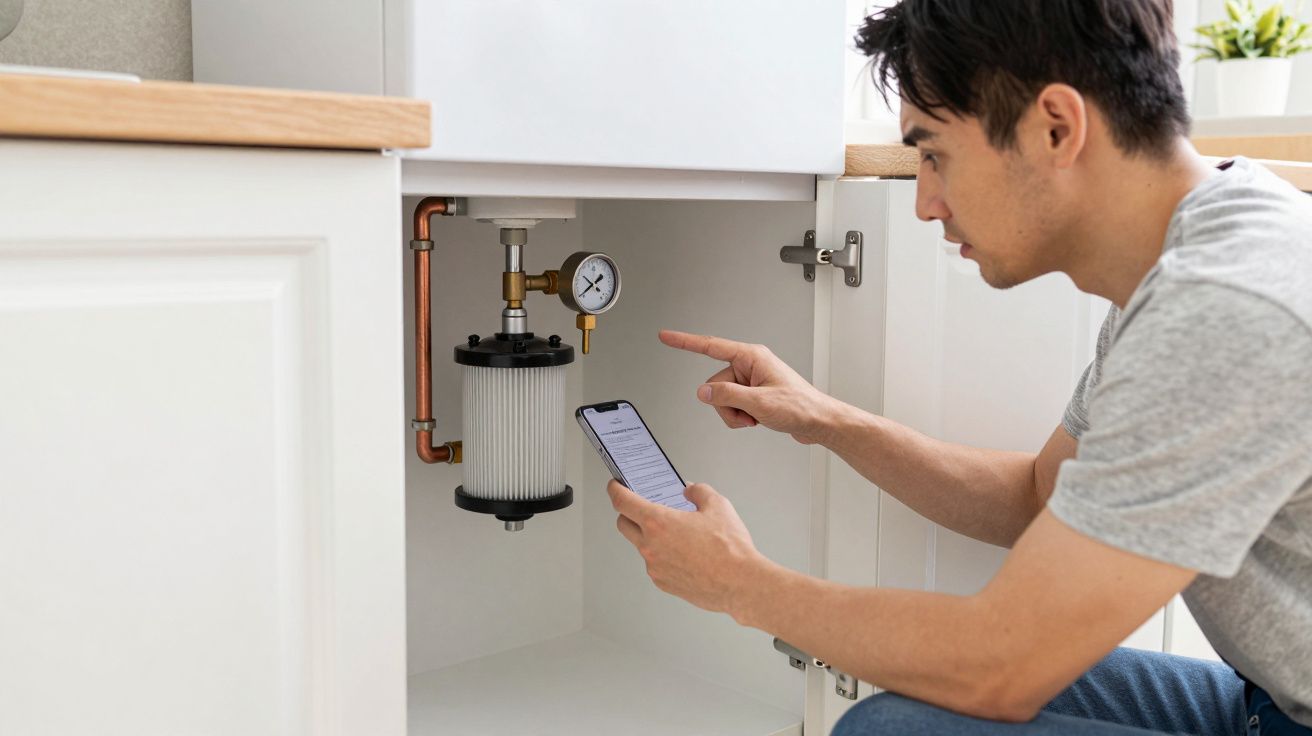
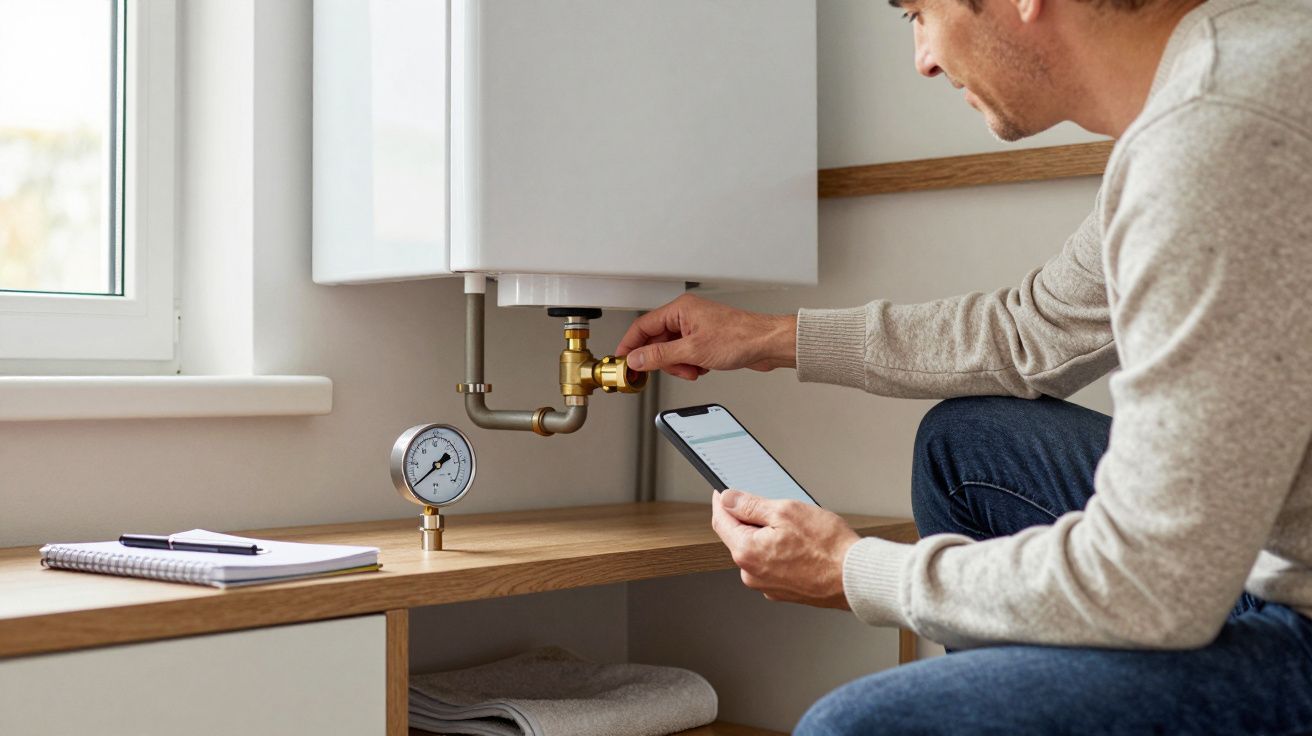
- Check boiler pressure (when the system is cold): most sealed systems sit roughly around 1–1.5 bar, but follow your manual. If you’re topping up frequently, that’s a clue, not a hobby.
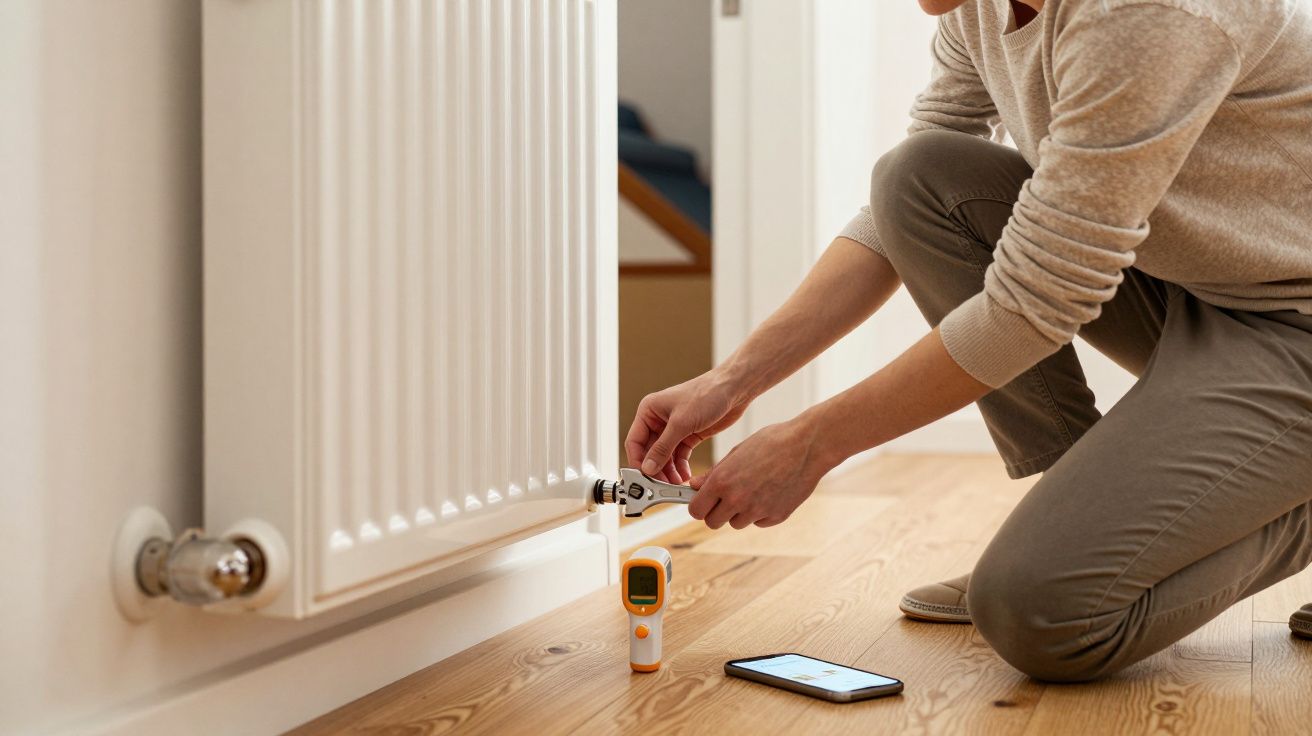
- Bleed radiators if needed: if the top is cold and the bottom is warm, air may be trapped. Bleed, then re-check pressure afterwards.
- Listen for circulation: with heating on, radiators should warm steadily, not in weird fits. Gurgling, knocking, or “whooshing” can signal air or flow issues.
- Spot-check hot water (if combi): does it go hot quickly and stay stable, or surge between warm and hot like it can’t decide?
- Look for small leaks and stains: under the boiler, around radiator valves, near visible pipework. Tiny drips become big problems under stress.
The point isn’t perfection. The point is catching the “nearly” before winter turns it into “broken”.
When to stop DIY and call someone
There’s a line between sensible checks and playing mechanic with a pressurised, gas-fired appliance. Cross the line and you can make a small issue worse - or unsafe.
Call a Gas Safe registered engineer if:
- the boiler is losing pressure repeatedly and you can’t find an obvious cause
- you notice error codes that return after a reset
- there’s a smell of gas, soot marks, or anything that suggests incomplete combustion
- the boiler makes new loud noises (banging, whistling, grinding) under load
- the heating works but the hot water is erratic, or vice versa, and it’s getting worse
A useful rule: if you’re doing the same “little fix” twice in a week, it’s not a little fix. It’s a symptom.
The habit that changes everything: testing before you need it
People treat heating like a background service: invisible until it fails. But the households that avoid the worst breakdowns tend to have one unglamorous habit - they test the system on their terms, not winter’s.
They put the heating on for an hour in early autumn. They notice the slow radiator. They book the service before the calendar fills. They fix the tiny leak before pressure drops become routine. It’s not that their homes are fancier. They just run the stress test early, when the stakes are lower.
Because eventually, every system gets asked: can you do this for longer than usual, with no drama?
And eventually, every system answers.



Comments (0)
No comments yet. Be the first to comment!
Leave a Comment