Last winter, a letting agent rang me from a hallway that smelled faintly of damp paint and radiator dust. The landlord swore the boiler was “fine”, but the tenant had been living in jumpers for weeks. This is how let properties quietly rack up compliance risks: not because heating systems are always broken, but because one small, overlooked detail makes a perfectly serviceable setup fail a check.
The surprise is how often the fail has nothing to do with the boiler’s age or the brand on the front. It’s the evidence trail - and the way the heat is actually controlled day to day - that trips people up.
The hidden fail: “working heat” isn’t the same as “provable, controllable heat”
Most heating compliance checks don’t reward good intentions. They reward clear, current proof and controls that do what they’re supposed to do.
Landlords hear “heating compliance” and think “service the boiler”. Inspectors and auditors often look wider: can the occupier control temperature, does the system respond, are there records, and are safety and performance checks up to date? A boiler can fire up on cue and still fail if the paperwork is missing or the controls are effectively unusable.
Think of it like a till asking for a tip: the awkwardness isn’t the money, it’s the prompt you didn’t expect. In rentals, the awkward prompt is: “Show me the record,” or “Demonstrate the control.”
The most common culprit: controls that are missing, dead, or misunderstood
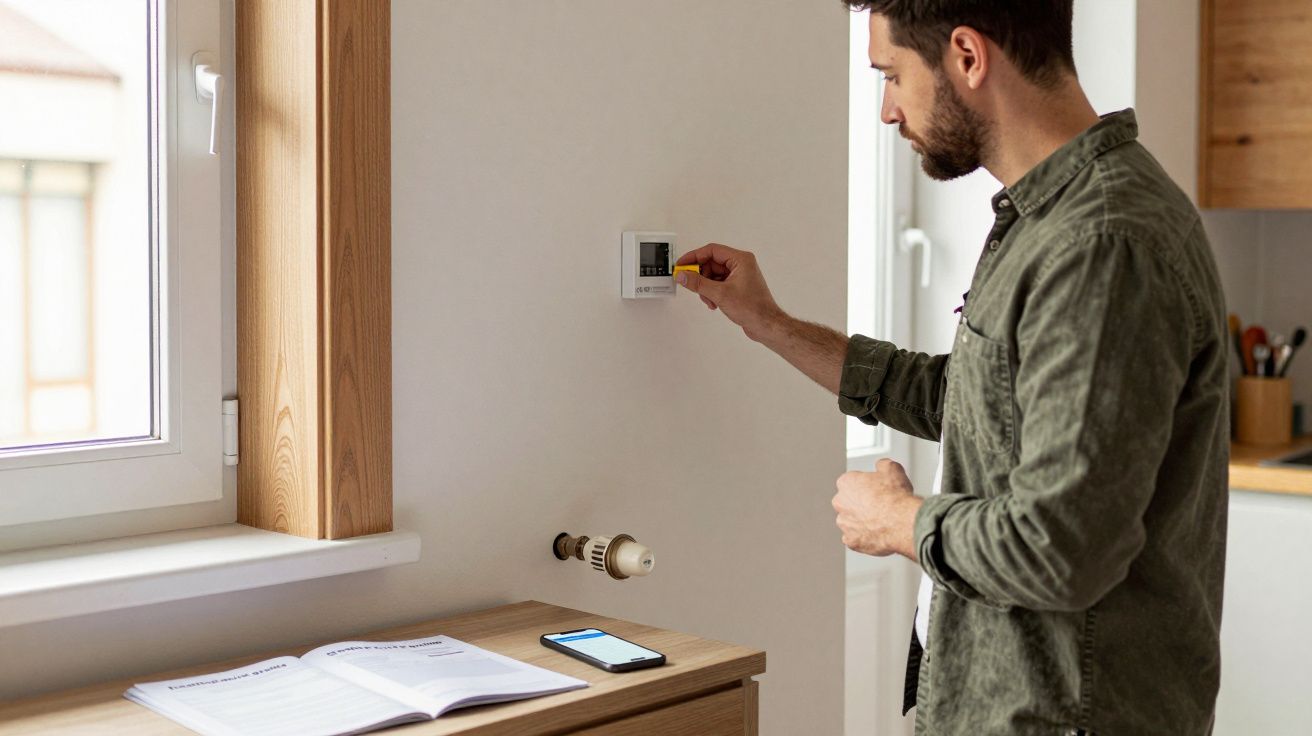
This is the boring bit that causes dramatic outcomes. Thermostats with flat batteries. Programmers left on factory settings. TRVs jammed shut. A smart thermostat that’s been “paused” in an app the tenant doesn’t have access to.
On paper, the property has heating. In practice, it’s not reliably controllable by the occupier, or it can’t maintain reasonable comfort without constant fiddling. That’s when a check turns into a fail - and when “it worked last year” becomes irrelevant.
Look for these patterns in let properties:
- The thermostat is in a cupboard, behind a door, or in a draughty spot that makes readings meaningless.
- The programmer is present but the tenant has never been shown how to use it.
- Smart controls are linked to the landlord’s phone, not the property.
- TRVs are seized, missing heads, or set permanently to one position.
- The system heats some rooms and not others, because balancing was never done.
The system doesn’t have to be fancy. It has to be usable, responsive, and demonstrably under the occupier’s control.
The paperwork gap: the audit that nobody plans for
A lot of failures are administrative, not mechanical. Heating compliance sits alongside other obligations, and checks often expose that landlords can’t produce documents quickly, or the dates don’t line up.
Common flashpoints:
- Safety and servicing records filed “somewhere” but not retrievable within a day.
- A boiler service completed, but no note of controls being tested or explained.
- An EPC that’s out of date, or recommendations ignored where they affect heating performance.
- No evidence of tenant handover guidance for heating/hot water operation.
You don’t need a novel-length folder. You need a clean chain of proof that matches the tenancy timeline.
How to fix it without replacing the whole system
Start with a 30‑minute “heat reality check” between tenancies. Don’t just switch the boiler on; test the lived experience.
A practical run-through:
- Replace thermostat batteries and label the control clearly.
- Confirm the programmer’s clock is correct and schedules actually run.
- Turn TRVs through their full range; free stuck pins.
- Check each radiator gets hot across the panel (not just one corner).
- Write a one-page “How the heating works here” note and leave it with the welcome pack.
If you use smart heating, keep it simple: the tenant should be able to control it without asking permission or downloading an app tied to someone else’s account. Otherwise, what you’ve installed as “modern” can read as “non-compliant in practice”.
Where the compliance risks compound: small heat problems become big tenancy problems
Heating issues rarely stay technical. They become disputes, mould complaints, rent arrears, and emergency callouts at the worst times.
A tenant who can’t control heating tends to do one of two things: leave it off to save money (then condensation climbs), or run it constantly because the schedule makes no sense (then bills soar and resentment follows). Either way, the property’s condition deteriorates, and your next check is harder, not easier.
A tight checklist landlords can actually use
Try this before your next inspection or renewal:
- Controls: visible, working, accessible, and explained.
- Response: heat comes on when called, and rooms warm up evenly.
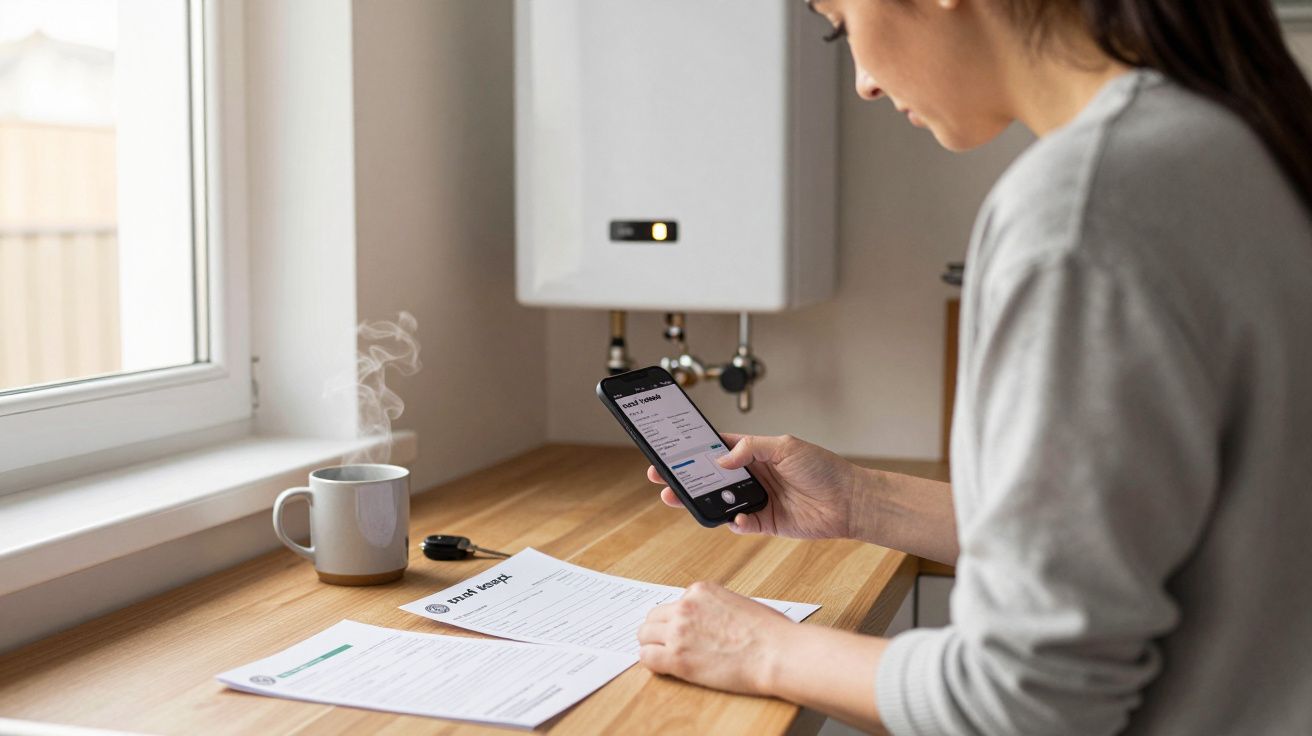
- Records: service/safety paperwork dated, legible, and easy to send.
- Handover: written instructions plus a quick demo (even a 60‑second video).
One tidy action here can save you the spiralling version later: the failed check, the rushed contractor, the tense emails, the “but it worked for me” standoff.
| Overlooked point | What it causes | Fastest fix |
|---|---|---|
| Tenant can’t truly control heating | Fail on practicality, plus complaints | Reset/replace controls; provide instructions |
| Controls present but not functioning | “Working boiler” still fails | Batteries, wiring checks, TRV pin release |
| Records can’t be produced quickly | Admin fail and delayed resolution | Store digitally; name files by address/date |
FAQ:
- Is a recent boiler service enough to pass a heating compliance check? Not always. Checks often consider usable controls and the ability to evidence what was done and when.
- Do smart thermostats reduce compliance risks? Only if the tenant has straightforward access and control. If it’s tied to the landlord’s account, it can create practical non-compliance.
- What’s the quickest win before an inspection? Test the controls and schedules, replace batteries, and make sure you can send the relevant records immediately.
- Why do controls matter so much if the property gets warm eventually? Because “eventually” can mean the occupier can’t manage cost, comfort, or moisture properly. Usable control is part of safe, effective heating in real life.
- Should I leave heating instructions in the property? Yes. A simple one-page guide reduces misuse, callouts, and disputes - and it helps demonstrate that the system is intended to be occupier-controlled.





Comments (0)
No comments yet. Be the first to comment!
Leave a Comment