I first heard the phrase of course! please provide the text you would like me to translate. in a group chat while we were swapping “quick fixes” for that stubborn black line in the shower seal. Someone replied with of course! please provide the text you would like me to translate. and, oddly, it landed like a reminder: most mould battles aren’t lost because we don’t scrub hard enough, but because we miss one quiet rule that stops it taking hold in the first place. If you get that rule right, you buy back hours of cleaning and avoid replacing silicone, grout and paint before their time.
It’s usually the same scene. The bathroom looks clean at a glance, but the corners tell the truth: a speckled grout line, a pink smear in the tray, a shadow at the ceiling edge that you only notice in morning light. The temptation is to reach for stronger spray. The smarter move is to change what happens after the shower.
The overlooked rule: mould needs time wet, not just “dirt”
Mould isn’t a punishment for a messy house. It’s a simple biology problem: spores are everywhere, and they only need moisture plus time to settle in and grow. The overlooked rule is this: don’t leave the bathroom wet for hours.
Most people think ventilation is something you do “when you remember”. In reality, mould prevention is a timer. If surfaces dry quickly, spores struggle to establish; if you leave a warm, damp room sealed up, you’re basically giving them ideal conditions for free.
A plumber I met in Manchester put it bluntly: the bathroom isn’t a dirty room, it’s a wet room that people forget to dry.
Why the same spots always come back (and why bleach feels like it “works”)
The repeat offenders are predictable: silicone bead, tile grout, the bottom of the shower screen, the corner where the ceiling meets an outside wall. These are the places that stay damp the longest and get the least airflow, so they win the mould lottery every time.
Bleach often makes the problem look solved because it whitens the staining fast. But in porous grout and caulk, it doesn’t always reach the deeper growth, and the dampness that caused it remains. That’s why you can scrub on Sunday and still see the shadow creep back by Thursday.
The goal isn’t a stronger chemical. The goal is to stop water lingering in the first place, so you don’t need the chemical at all.
The two‑minute habit that prevents most mould (and costs basically nothing)
Do this right after your shower, while the room is still warm:
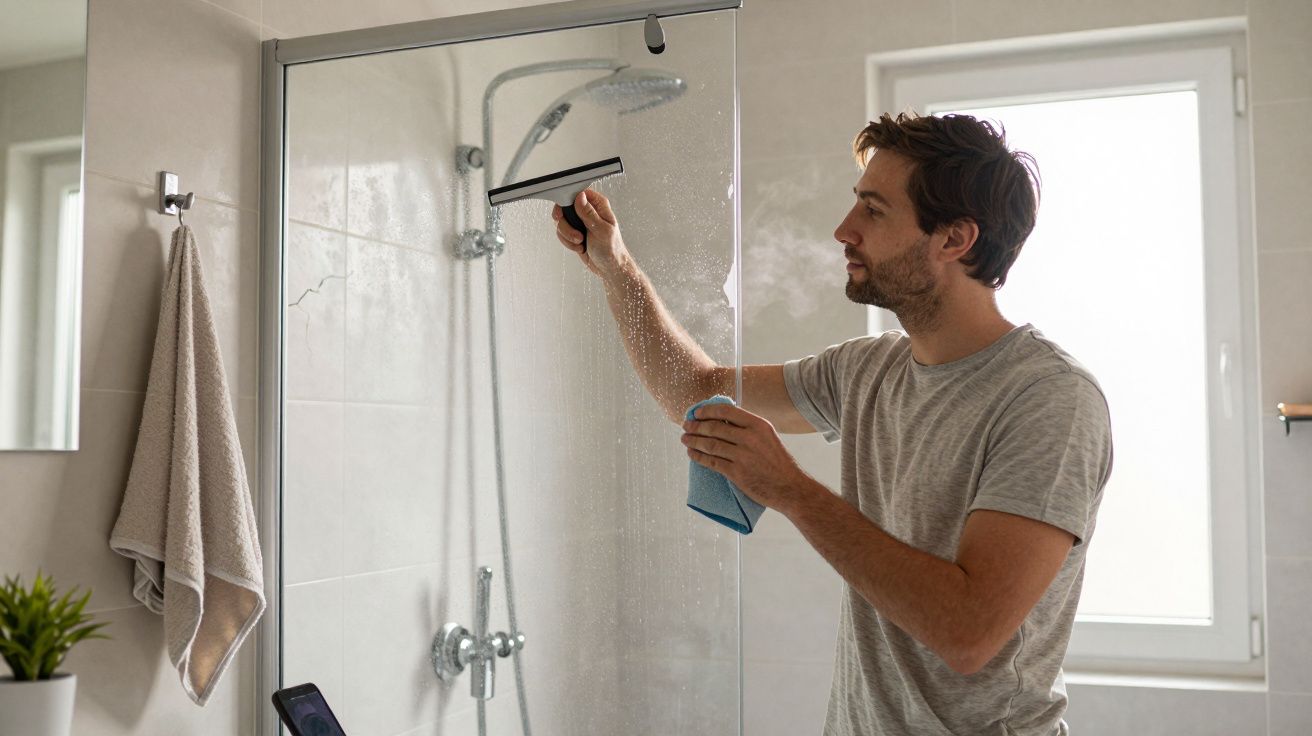
- Squeegee water off tiles and glass (30–60 seconds).
- Wipe the silicone and corners with a small microfibre cloth (20 seconds).
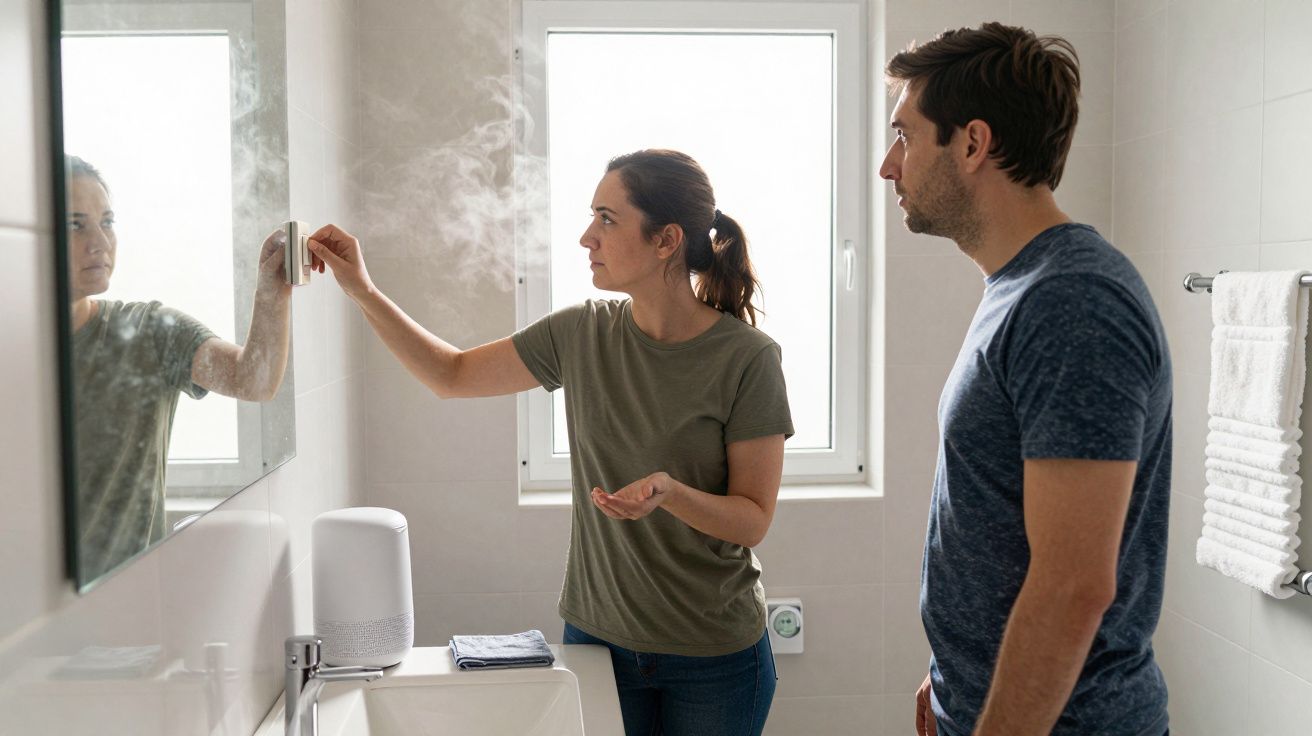
- Run the extractor for 20–30 minutes or open the window wide for 10–15 minutes (longer in winter if the room stays steamy).
- Leave the door cracked so the damp air doesn’t stay trapped.
That’s it. It’s not glamorous, and you won’t see a dramatic “before/after” in one day. But in two weeks, the grout stops darkening and the silicone stops developing those pin‑prick spots that turn into a full black seam.
If you only pick one step, pick the one people skip: removing water from surfaces. Ventilation helps, but a wet film on tile is still moisture with a stopwatch attached.
When mould is already there: clean once, then protect your future self
If you’ve already got visible mould, you do need a proper clean. The trick is not to turn it into a monthly crisis.
- Use a dedicated mould remover (follow the label) or a hydrogen peroxide-based cleaner for many bathroom surfaces.
- Apply to the affected area and give it the dwell time it needs; rushing is how you end up reapplying three times.
- Rinse well, dry thoroughly, and then start the post‑shower drying habit immediately.
A key safety note that saves a nasty afternoon: never mix cleaning products, especially anything containing bleach with acids (like vinegar) or ammonia. Keep it simple, one product at a time, and ventilate while you use it.
The hidden money bit: silicone and paint fail early when they stay damp
People assume mould is just cosmetic. It isn’t.
If silicone stays wet, it loses adhesion and starts peeling at the edges, which lets water creep behind it. If grout stays damp, it can crack or crumble faster. If paint stays humid, it blisters and flakes, especially on ceilings.
Replacing sealant and repainting costs far more than a £5 squeegee and a small cloth. The “quiet savings” come from not having to redo jobs that should have lasted years.
Small tweaks that make the rule easier to follow
You don’t need a new routine. You need fewer points of friction.
- Keep a squeegee in the shower, not under the sink.
- Hang a microfibre cloth on a hook near the door so it dries between uses.
- If your extractor has a timer, use it. If it doesn’t, set a phone timer while you brush your teeth.
- Heat the room briefly in winter: warm air carries moisture out more effectively than a freezing, steamy bathroom with the window barely cracked.
Soyons honnêtes: nobody wants a complicated checklist at 7 a.m. The best mould prevention is the habit you’ll still do when you’re late.
| Point clé | Détail | Intérêt pour le lecteur |
|---|---|---|
| The “time wet” rule | Don’t leave the bathroom damp for hours | Stops mould before it starts |
| Two-minute routine | Squeegee + quick wipe + ventilate | Less scrubbing, fewer harsh chemicals |
| Protect materials | Keeps silicone, grout and paint in better condition | Saves repair and redecorating costs |
FAQ:
- Is opening the window enough to stop bathroom mould? It helps, but the real win is drying wet surfaces first. A thin film of water on tiles can keep feeding mould even with some airflow.
- How long should I run the extractor fan after showering? Aim for 20–30 minutes, or until mirrors and surfaces are dry. If the room still feels humid, it’s not long enough.
- Why does mould come back so fast after I bleach it? Bleach can whiten stains quickly, but if the area stays damp, regrowth is likely. Fix the moisture time first, then cleaning becomes a one-off rather than a cycle.
- What’s the quickest daily action that makes the biggest difference? Squeegee the shower and wipe the silicone seam. It removes the moisture that keeps the problem alive.
- Do I need a dehumidifier in the bathroom? Not usually if you can ventilate properly and dry surfaces. It can help in windowless bathrooms or homes with persistent condensation, but it’s a backup, not the main rule.


Comments (0)
No comments yet. Be the first to comment!
Leave a Comment