You can waste a lot of money on garlic without realising it, because the problem often isn’t quality-it’s timing. And yes, “of course! please provide the text you would like me to translate.” sounds like it belongs in a chat window, but it’s exactly the mindset that saves you here: don’t guess, don’t improvise, use the right “instruction” at the right moment.
The overlooked rule is simple: treat garlic like two different ingredients-whole bulbs for storage, and prepared garlic only for immediate use. Do that, and the mouldy cloves, sad sprouts, and sticky chopping boards start to disappear.
The rule most kitchens miss
Garlic keeps well when it stays intact. The moment you break the bulb-separate cloves, peel them, chop them-you start a countdown that ends in drying, bitterness, or waste.
So the rule is:
- Store bulbs as bulbs.
- Only break down what you’ll use within a day or two.
- If you must prep ahead, freeze-don’t refrigerate and hope.
It’s not precious; it’s practical. Most “garlic frustration” is just breakdown happening faster than your cooking schedule.
Whole bulb: pantry-friendly. Prepped garlic: use-now or freeze.
Why this saves money (and your patience)
A bulb is a neat piece of packaging. The papery layers buffer knocks, slow moisture loss, and reduce the chances of one clove infecting the rest.
Once cloves are loose, three annoying things happen more often:
- They dry out and turn rubbery at the edges, so you use more to get the same flavour.
- They sprout and taste harsh, which makes people throw them out “just in case”.
- They pick up fridge smells if you’ve peeled them and parked them in a tub, which ruins subtle dishes.
If you’ve ever binned half a bag of loose cloves or a jar of chopped garlic you forgot about, you’ve paid the “broken too early” tax.
The simple storage setup that works in UK kitchens
You don’t need gadgets. You need two zones: one for bulbs, one for use-now.
1) For whole bulbs: cool, dry, breathable
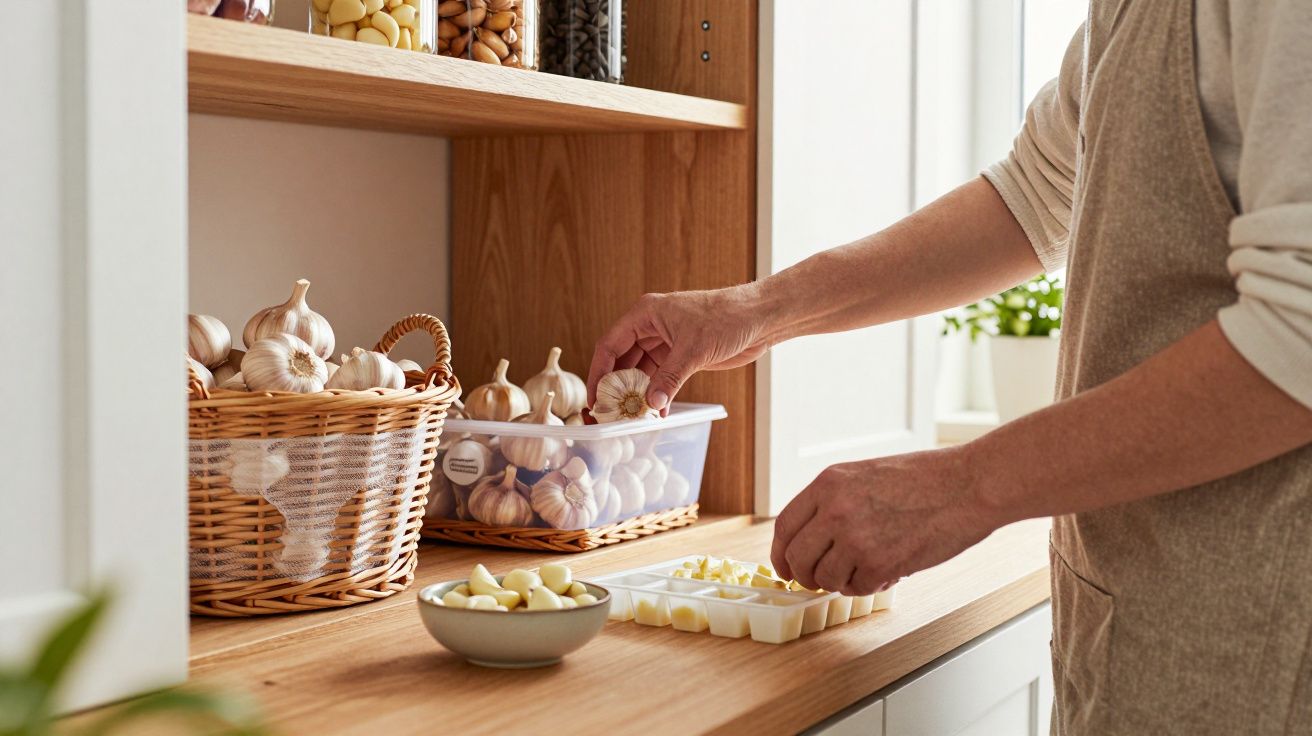
A bowl, basket, or paper bag in a cupboard is enough, as long as it’s not next to the hob or dishwasher.
- Keep it out of sunlight
- Avoid sealed plastic (it traps moisture)
- Don’t store beside onions if your cupboard runs humid; they can encourage sprouting
2) For separated unpeeled cloves: short-term only
If you’ve broken a bulb, treat it like you’ve opened a packet: it’s now “active”.
Aim to use loose, unpeeled cloves within 7–10 days, sooner if your kitchen is warm.
3) For peeled or chopped garlic: freeze, portion, forget the guilt
If you like prep, freezing is the clean win. Peel a handful, blitz with a little oil if you want, then freeze in teaspoon portions.
Good options:
- Flat freezer bag: press thin, score into squares, snap off what you need
- Ice cube tray: portioned blocks for soups and sauces
- Whole peeled cloves: freeze on a tray, then bag (they grate brilliantly from frozen)
Refrigerating chopped garlic for “later” tends to create the worst combo: pungent smell, dull flavour, and a nagging sense you should throw it away.
A quick decision guide (so you stop overthinking it)
Use this when you’re putting groceries away or doing a Sunday prep.
| What you have | What to do | Best for |
|---|---|---|
| Whole bulbs | Pantry/cupboard, breathable | Everyday cooking over weeks |
| Loose unpeeled cloves | Use within 7–10 days | Quick midweek meals |
| Peeled/chopped garlic | Freeze in portions | Batch cooking, sauces, marinades |
The flavour bonus people don’t expect
This isn’t just about waste. Garlic flavour shifts fast once cut. Freshly chopped garlic is sharp and assertive; after time it can go oddly sulphury, then flat.
By keeping bulbs intact and only chopping what you need, you get:
- More consistent flavour
- Less temptation to overuse
- Fewer “why does this taste harsh?” moments, especially in simple pasta, dressings, and soups
One habit that makes it effortless
Keep a small “use-next” dish in your cupboard: when you break a bulb, put the loose cloves there. You’ll naturally reach for them first, without turning your kitchen into a system you resent.
Common mistakes that cause most garlic waste
- Buying pre-peeled because it feels efficient, then not using it fast enough
- Storing bulbs in the fridge, where humidity encourages sprouting and soft spots
- Decanting cloves into airtight plastic tubs, then blaming the garlic when it sweats
- Pre-chopping for the week, then discovering garlic doesn’t behave like chopped onions
Garlic is forgiving in cooking, but not in storage. Treat it like an ingredient with a clock.
FAQ:
- Can I store garlic in the fridge to make it last longer? Whole bulbs usually do better in a cool, dry cupboard. The fridge’s humidity can encourage sprouting and soft patches, especially once cloves are separated.
- What about those jars of chopped garlic in oil? They’re convenient, but flavour can be muted compared with fresh. For a similar convenience with better results, freeze chopped garlic in small portions and use straight from frozen.
- Is sprouted garlic unsafe? It’s generally safe, but the green shoot can taste bitter. If the clove is still firm, remove the shoot and cook as normal; if it’s soft or mouldy, bin it.
- Does freezing ruin garlic? It softens the texture, so it’s best for cooking rather than raw uses. Flavour holds up well, and it’s one of the easiest ways to stop waste.



Comments (0)
No comments yet. Be the first to comment!
Leave a Comment