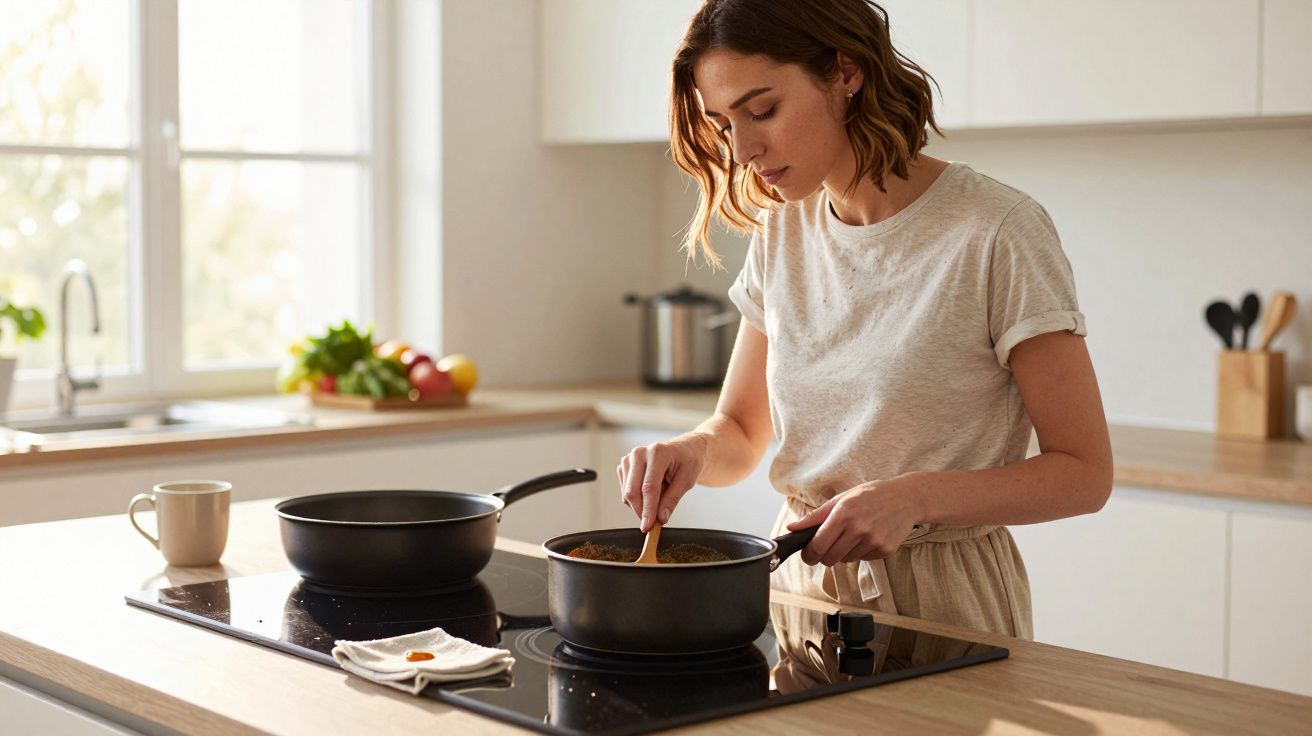
The phrase of course! please provide the text you would like me to translate. has been popping up in the most unexpected place lately: in the notes people share when they talk about living with an electric range, right alongside of course! please provide the text you wish to have translated. It sounds like admin-speak, but it captures the mood perfectly - a quiet shift away from “buy the biggest, hottest hob you can” towards small, specific asks that make everyday cooking calmer. For anyone choosing a new cooker, or trying to love the one they’ve got, that change matters because it affects what features are actually worth paying for.
It’s happening in rentals, in new-build flats, and in family kitchens that have finally retired a tired old ceramic top. People aren’t chasing chef theatre; they’re chasing predictability, easier cleaning, and a hob that behaves the same on a Tuesday night as it does when friends are round.
The move from “power” to “control”
For years, the sales pitch was simple: more watts, more zones, more everything. Now the quiet trend is the opposite. Buyers are asking how a ring holds a simmer, whether a pan can sit steady at low heat, and how quickly the range stops cooking when you tell it to.
That’s not just fussiness; it’s a response to how we actually cook. Weeknight food is often gentle: rice, porridge, lentils, a sauce you don’t want to split. If your electric range only feels happy at two settings - off and furious - you end up babysitting it, and everyone gets fed a bit later than planned.
Why induction is winning without making a fuss
Induction is the headline-grabber, but the way it’s winning is strangely unglamorous. It’s not about showing off boiling water in 60 seconds; it’s about the small relief of turning the dial down and seeing the pan actually listen.
A few details do the heavy lifting:
- Tighter temperature response: less lag when you drop from a sear to a simmer.
- Less stray heat: the kitchen feels less like a sauna when you’re doing two pans at once.
- Cleaner habits: spills burn on less because the surface doesn’t stay fiercely hot for ages.
People who swore they “didn’t care” about their hob suddenly care a lot when they’re not scraping caramelised sauce from a ring for ten minutes after dinner.
The underrated feature everyone keeps asking for: a usable low end
If you read reviews, a pattern jumps out. The praise isn’t for max power; it’s for “held a gentle simmer” and “didn’t scorch the milk”. The complaints aren’t about lack of heat; they’re about rings cycling on and off so aggressively that the pan keeps surging.
The difference often comes down to how the range manages energy. Some models pulse power in chunky bursts at low settings. Others deliver it more smoothly, so the pan stays steady instead of lurching between bubble and silence. It’s the sort of engineering that never looks exciting on a spec sheet, yet makes you feel like you’ve got your evenings back.
Smaller pans, smaller zones, less wasted effort
Another quiet shift: people are cooking in smaller vessels more often. One-pan pasta. A modest frying pan for two eggs. A saucepan that isn’t trying to feed six.
Older electric ranges pushed everyone towards big rings and big pans, because small pans on big rings meant heat spilling out to the sides and food catching in the middle. Newer hobs - especially induction - are finally acknowledging real life with:
- Bridging zones for griddles and roasting trays, but also
- Proper small zones that don’t punish you for making a single portion, and
- Pan detection that doesn’t keep blasting heat into empty space.
It’s less about “flexibility” as a marketing word and more about the simple pleasure of matching pan to job without it feeling like compromise.
Air fryers didn’t replace the range - they changed what we expect from it
In the UK, the air fryer has become the loudest countertop resident. But the more interesting story is what it did to the main cooker: it raised the bar for convenience.
When a £60 box can crisp chips and reheat leftovers without preheating a cavernous oven, people start asking awkward questions about their electric range. Why does the oven take so long to feel ready? Why does it overshoot? Why is the fan loud enough to compete with the radio?
Manufacturers have noticed. The latest ranges lean into faster preheat modes, better sealing, and more accurate thermostats - not as a revolution, but as a steady response to a new normal where the big oven must earn its place.
The “quiet safety” features that now sell cookers
Nobody buys an electric range because they’re thrilled by safety warnings, yet safety is where a lot of the value now sits. The features people actually use are rarely flashy:
- Residual heat indicators that are clear, not cryptic.
- Auto shut-off that doesn’t feel overzealous, but catches the true forgetful moments.
- Child locks that are quick to toggle, not a puzzle.
- Boil-over control that reduces panic when a pot gets lively.
It’s not about being reckless; it’s about designing for a kitchen where someone’s always half-distracted - by homework, deliveries, or the fact the dog has chosen now to be dramatic.
How to shop this trend without falling for nonsense
If you’re choosing an electric range now, the best questions are boring ones. They’re also the ones that protect your money.
A quick checklist that’s actually useful
- Bring the pan you use most (or at least check its base diameter) and compare it to the zone sizes.
- Look for reviews that mention simmering, melting, and low heat, not just boiling speed.
- Check the oven controls: can you set temperature quickly, and does it hold steady?
- If it’s induction, confirm your everyday cookware is compatible (a fridge magnet is the blunt test).
- Don’t ignore noise: some induction hobs whine with certain pans, and some fans are simply loud.
The quiet trend is control, not gimmicks. If a feature doesn’t make Tuesday dinner easier, it won’t matter by the second month.
What this shift really buys you
A good electric range used to be judged by how hard it could hit. Now it’s judged by how little it demands from you once it’s on. The payoff is subtle: fewer scorched sauces, fewer boil-overs that turn into cleaning sessions, fewer meals that feel like you’re negotiating with your own kitchen.
It’s the same pattern we’re seeing everywhere at home. People want equipment that behaves. Not perfect, not “smart”, not attention-seeking - just steady, repeatable, and kind to tired cooks.
FAQ:
- Is induction always the best choice? Not always. It’s brilliant for control and speed, but if you have incompatible cookware, limited electrical capacity, or you’re sensitive to hob noise with certain pans, a good ceramic hob can still be a solid option.
- What matters more: maximum wattage or low-heat performance? For most home cooking, low-heat performance. A hob that can hold a gentle simmer and respond quickly will feel better day to day than one that’s only impressive at full blast.
- Do I need a “flex zone” hob? Only if you regularly use long cookware like griddles or fish kettles. Many households get more value from well-sized small and medium zones that match everyday pans.
- Has the air fryer made ovens obsolete? No, but it has changed expectations. People now notice slow preheat, uneven temperatures, and inefficient cavity size more than they used to.
- What’s the simplest way to avoid buying the wrong hob size? Measure the base of your most-used pans and compare to the zone diameters. Mismatches (tiny pan on huge zone) are where frustration and wasted energy often start.




Comments (0)
No comments yet. Be the first to comment!
Leave a Comment