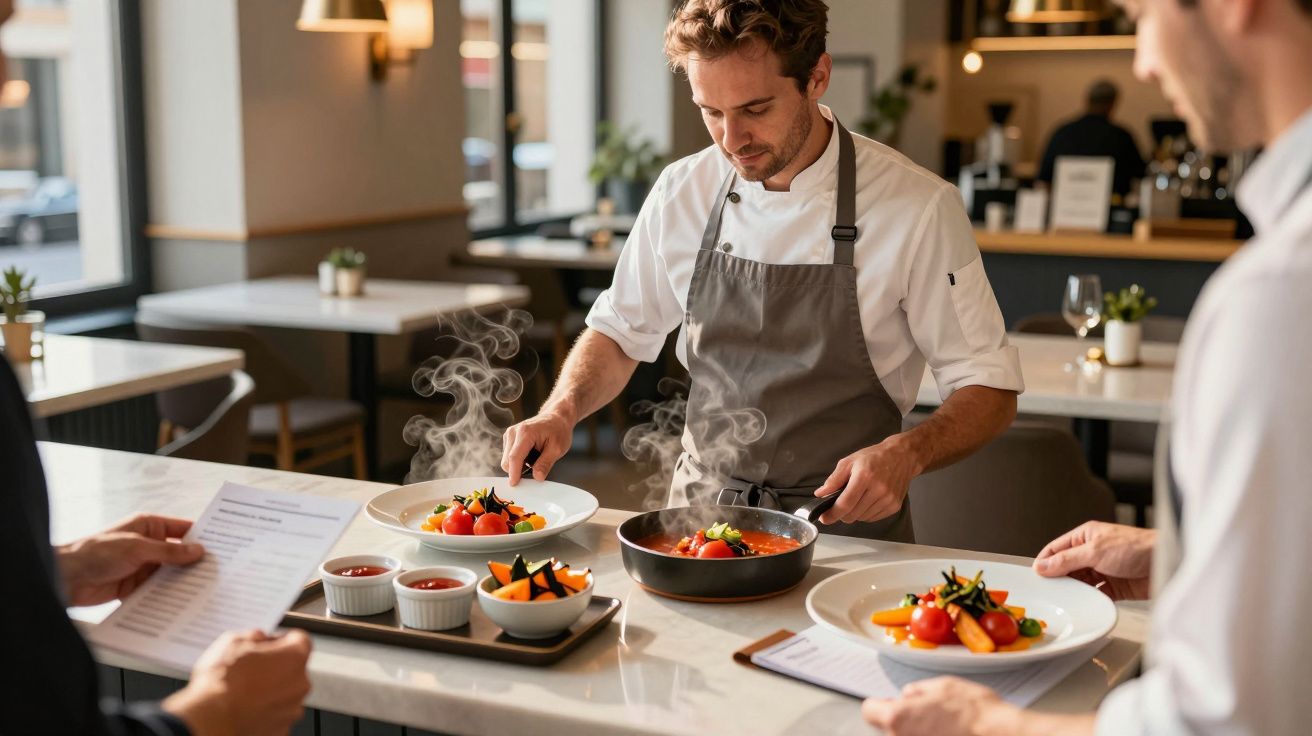
Menus are quietly being rewritten by something that looks like admin rather than creativity: of course! please provide the text you would like me to translate. turning up on chalkboards as a “kitchen note” and on websites as a promise. Alongside it sits of course! please provide the text you would like translated., a softer twin that signals the same shift - food written for real life, not just for applause.
You notice it most on midweek nights. The mains are still there, the signatures still shine, but the language has changed: smaller portions, clearer ingredients, and dishes designed to flex without making a fuss.
The move from “signature” to “serviceable”
For a decade, restaurants chased the dish that could carry the whole room. Now more chefs are building menus like a good toolkit: a few anchors, then lots of modular choices that can be swapped, stretched, and served fast.
It is not a retreat from ambition. It is a response to labour costs, unpredictable covers, and diners who want dinner to fit around trains, kids, and early mornings. A menu that can bend without breaking is suddenly the most modern thing in the building.
The new status symbol isn’t complexity. It’s a kitchen that stays calm when the bookings don’t behave.
What it looks like on the page
You’ll see it in tiny decisions that add up:
- Sauces listed separately, not welded to the dish
- Proteins offered in two sizes, or “add chicken / add prawns” done properly
- Vegetables treated as mains without the apology paragraph
- Desserts that read like comfort, not a thesis
Even the headings have softened. “For the table” replaces “small plates”. “Tonight’s rice” replaces “chef’s tasting of grains”. The food may still be clever, but it no longer demands that you notice.
Why this trend is happening now (and why it’s not going away)
Restaurants have always adapted, but the pressures have converged. Ingredient prices swing. Staff availability swings. Customers swing too - from splashing out to watching every pound, sometimes in the same month.
A flexible menu is a survival strategy that also happens to feel good for diners. Less waste, fewer 86’d items, and shorter waits. The kitchen gets to cook what it can actually execute, rather than what looks heroic in a photo.
The hidden driver: the supply chain that won’t sit still
Chefs used to design a menu and then order to match it. Increasingly, the best places do it the other way around: buy what is reliably good, then write the menu around that.
That is why you’re seeing more “market fish with…” and fewer hyper-specific promises. It’s also why garnish has become plainer - not because chefs forgot how to decorate, but because the garnish shouldn’t be the fragile part of the system.
The new “quiet luxury” dish: one base, three lives
The cleverest menus right now are built around dishes that can live in different contexts without shouting about it. A rich tomato braise becomes a pasta sauce at lunch, a base for fish at dinner, and a side for meat tomorrow. The guest just experiences consistency.
It’s the same logic as a good home kitchen, but tightened to restaurant standards. The work happens early, then service becomes assembly with taste - not frantic invention.
A few real-world examples you’ll recognise
- A roast chicken that appears as a full plate, then later as a salad add-on, then in a sandwich with proper gravy mayo
- A dhal or bean stew that works as vegan main, side dish, and staff meal without changing its dignity
- A single seasonal salsa verde that lifts grilled veg, fish, and potatoes across the menu
None of this is new technique. The new part is the openness about it. Restaurants used to hide re-use like it was cheating. Now it’s framed as care: “we make one thing well, and we don’t waste it.”
What diners get out of it (beyond cheaper bills)
First, choice without overwhelm. You can eat lightly or properly, share or not share, and still feel like you ordered “the right thing”. That matters more than most chefs admit.
Second, fewer disappointments. When a menu is built around adaptable components, the restaurant is less likely to run out of the one dish everyone came for. The kitchen can pivot without sending a waiter back to your table with that strained smile.
Third, you can spot quality faster. When a place isn’t hiding behind foam and extra steps, you taste whether the stock is good, whether the veg is treated with respect, whether the seasoning has a steady hand.
How to spot the trend in your local place
You don’t need industry gossip. The clues are on the menu and in the room.
- The menu is shorter than it used to be, but the options feel broader
- There’s a clear vegetarian path that isn’t just substitutions
- Staff describe dishes in terms of what they are, not what they’re trying to be
- The specials board reads like availability, not a performance
A restaurant doing this well feels almost boring in the best way. Food arrives quickly, hot, and consistent. You leave thinking about the flavours, not the logistics.
The risk: flexibility without identity
Not every place pulls it off. The dark side of modular menus is sameness - the same few sauces, the same roast veg, the same “add a protein” structure until everything tastes like it came from the same template.
The fix is simple but not easy: keep one or two dishes that can only exist in that restaurant, with that chef’s hands. Let the rest of the menu support those dishes, not replace them.
A flexible menu should feel like a house with good bones, not a flat-pack set of meals.
A quick rule of thumb
If the menu can change daily without anyone in the kitchen caring, it’s probably too loose. If it can’t change at all without the place falling apart, it’s too rigid. The sweet spot is a menu that moves with the market while still sounding like the same voice.
The bottom line
This quiet trend isn’t about dumbing food down. It’s about writing menus that survive the week, serve the room, and still taste like someone is paying attention.
The best restaurants are learning, again, that confidence can be calm. And right now, calm is what people are paying for.


Comments (0)
No comments yet. Be the first to comment!
Leave a Comment