
The first cold snap is when people start craving predictable heating behaviour - not as a luxury, but as the basic promise that the house will warm up when you ask it to. Yet winter heating problems have a way of turning that promise into a guessing game: radiators that are hot upstairs and lukewarm downstairs, a boiler that short-cycles, or a heat pump that seems to “hunt” all day. It feels random, but it usually isn’t.
On paper, heating is simple: make heat, move it, measure it, repeat. In real homes, cold weather changes the rules under your feet - the physics in the pipes, the air in the system, and even how your thermostat makes decisions. The result is the same familiar complaint: “It was fine in autumn, then winter arrived and it started acting weird.”
The cold doesn’t just make your house lose heat - it makes your system less stable
When outdoor temperatures drop, your home loses heat faster through walls, glazing and draughts. That part is obvious. The less obvious part is that your heating system is now operating closer to its limits, where small imperfections stop being “background noise” and start steering the outcome.
A slightly sticky radiator valve, a bit of air in one loop, a marginal pump setting, a thermostat in a bad location - these things can hide for months. In mild weather, there’s enough spare capacity that the system still feels fine. In cold weather, the same system has to run longer, push harder, and recover from bigger temperature dips, so the weak link shows itself.
That’s why the behaviour feels unpredictable. It’s not chaos. It’s sensitivity.
The real culprit is feedback: your heating is constantly correcting itself
Most domestic heating is a feedback loop. You set a target temperature, the system measures what’s happening, then it adjusts - firing the boiler, opening a zone valve, changing pump speed, or ramping a heat pump compressor up and down.
In winter, feedback loops can get twitchy because the “lag” increases:
- The house cools down faster between cycles.
- Radiators (or underfloor) take longer to catch up.
- The system water temperature may be higher, which changes flow and noise.
- Doors open less predictably (school runs, wet dogs, visiting family), spiking heat loss.
If your controls aren’t tuned for that reality, you get overshoot and undershoot: too hot, then too cold, then too hot again. People often blame the thermostat, but the thermostat is just the messenger.
The system isn’t failing to heat. It’s failing to settle.
Why radiators go “half hot” and rooms heat unevenly
Uneven heating in cold spells is usually a circulation problem that only becomes obvious when the system runs hard. The common causes aren’t exotic; they’re just quiet.
- Air in radiators or high points reduces effective surface area and interrupts flow.
- Sludge and magnetite narrow channels, especially in older steel radiators, increasing resistance.
- Unbalanced circuits mean the easiest routes steal most of the flow, leaving distant radiators to starve.
- Thermostatic radiator valves (TRVs) can stick after a summer of not moving.
The reason it worsens in winter is simple: you need maximum output, so you notice every missing percentage. A radiator that’s 80% effective might be “fine” in October and miserable in January.
Boilers short-cycle more in winter - not because it’s colder, but because demand is messier
Short-cycling (boiler firing for a minute or two, then cutting out, then firing again) gets blamed on “the cold”. Often the cold is just what pushes a borderline setup into view.
Common drivers include:
- Oversized boiler output relative to the active zone (e.g., only one small area calling for heat).
- Poor flow through the boiler (partially closed valves, blocked filter, weak pump setting).
- Controls that call for heat in bursts rather than steady demand.
- Incorrect radiator balancing, causing rapid return-temperature rise and early shut-off.
In milder weather, calls for heat are shorter and less frequent, so cycling is less noticeable. In deep winter, the system can spend hours in a stop-start rhythm that feels like it can’t make up its mind.
Heat pumps feel “unpredictable” for a different reason: they change gear in the cold
If you have a heat pump, cold weather introduces two behaviours that many people interpret as faults.
First, the unit works harder for the same heat output as the outdoor air gets colder. That means longer run times and more visible ramping. Second, there’s defrost: when the outdoor coil ices up, the system temporarily reverses to melt it, which can feel like it’s blowing cooler air or “taking a break” right when you want heat most.
That isn’t random - it’s maintenance built into the machine. But if the system is undersized, or flow temperatures are set too high, or radiators are too small, defrost cycles can tip rooms into a noticeable dip. Your comfort becomes the casualty of tight margins.
The thermostat isn’t lying - it’s measuring a place that may no longer represent the house
Cold weather changes air movement. Warm air stratifies more strongly, draughts are sharper, and sun-warmed rooms spike differently even on bright winter days. If your thermostat is in a hallway, near a kitchen, by a radiator, or in a spot with a hidden draught, it can “see” a different reality from the room you’re sitting in.
Two patterns are especially common:
- Hallway thermostat reads warm because of nearby radiator pipework or a radiator itself, so the living room stays cool.
- Thermostat reads cold because of a draught or external wall, so the system over-heats the rest of the house.
Smart thermostats can add their own quirks if scheduling, occupancy, or learning algorithms meet a week of unusual routines (holiday, guests, school closures). Again: not broken, just sensitive.
The small checks that bring predictable heating behaviour back
You don’t need to overhaul everything to reduce winter weirdness. Most homes improve with a few boring, targeted interventions.
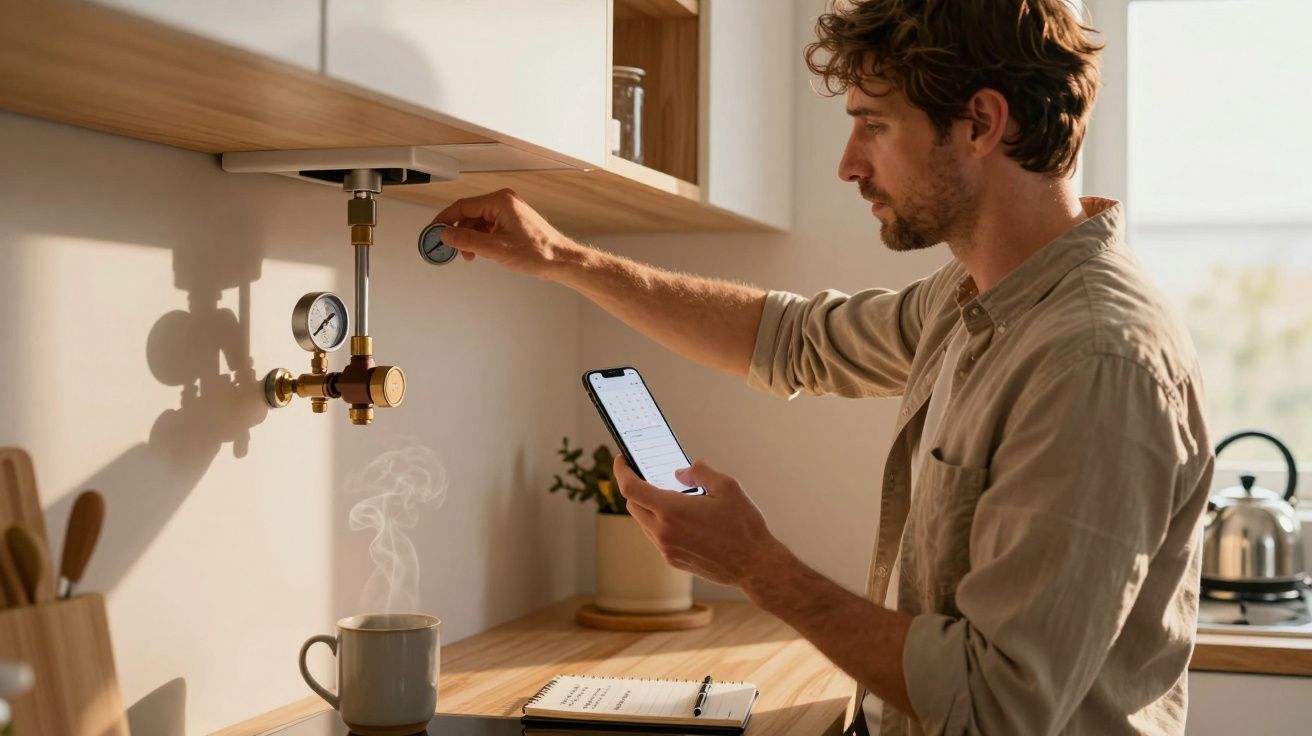
- Bleed radiators and top up pressure (where relevant), then re-check a day later.
- Make sure TRVs aren’t stuck (a gentle pin check often reveals it).
- Clean the magnetic filter (if fitted) and check strainers.
- Balance radiators so the furthest ones aren’t perpetually last in line.
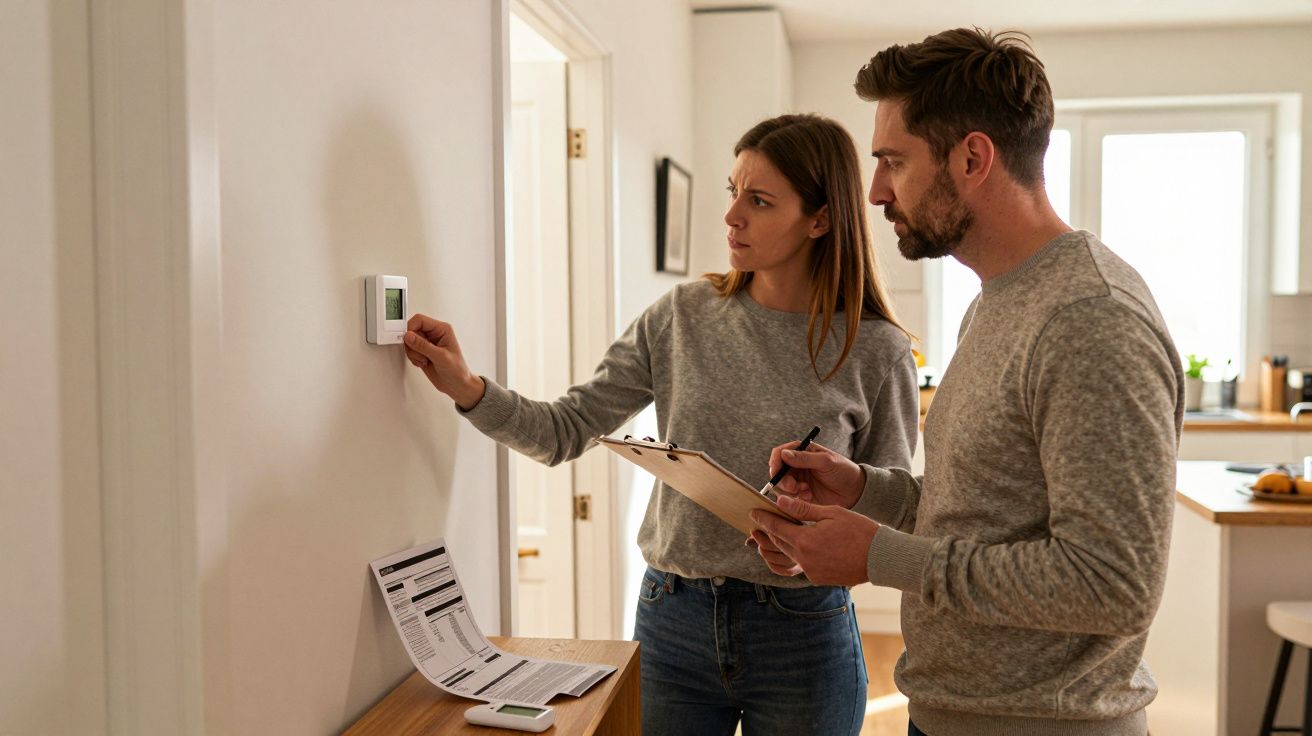
- Confirm the programmer and thermostat schedule matches how you actually live in winter.
- For heat pumps, review flow temperature and weather compensation settings rather than chasing higher targets.
The goal is not “maximum heat”. The goal is stable heat delivered evenly, with controls that don’t panic every time the weather changes.
A quick way to tell what kind of problem you have
If you want a simple diagnosis, focus on what’s inconsistent: the heat source, the distribution, or the measurement.
| Symptom you notice | Most likely category | What it points to |
|---|---|---|
| Boiler/heat pump starts and stops frequently | Control/flow issue | Oversizing, low flow, bursty demand |
| Some radiators hot, others cool | Distribution issue | Air, sludge, balancing, stuck valves |
| House feels wrong despite “correct” thermostat | Measurement issue | Thermostat location, draughts, zoning mismatch |
Once you label the problem correctly, you stop applying the wrong fix - which is where a lot of winter frustration comes from.
The quiet truth about winter heating problems
In cold weather your heating system is asked to do its job under stress, for longer, with less room for error. That’s why tiny imperfections suddenly feel like personality flaws. The system hasn’t become unpredictable; it has become honest.
If you’re chasing predictable heating behaviour, aim for steadiness: steady flow, steady control, and an even distribution of heat. Winter doesn’t require magic. It requires margins - and a few small, unglamorous adjustments that stop the system from constantly correcting itself.
FAQ:
- How do I know if I need to bleed radiators or balance them? If the tops of radiators are cool or you hear gurgling, bleeding is likely. If some radiators heat quickly while others lag even when bled, balancing is the next suspect.
- Is it better to leave heating on low all day in winter? It depends on insulation, system type and tariffs. Many homes feel more stable with longer, lower-output runs (especially heat pumps), but a well-controlled schedule can be just as efficient with boilers.
- Why is my boiler pressure dropping more in winter? Longer run times can reveal slow leaks, failing pressure relief valves, or expansion vessel issues. It’s worth monitoring and getting it checked if topping up becomes frequent.
- Are smart thermostats the cause of “random” heating? They can amplify odd behaviour if schedules, learning modes, or room sensors don’t match the home’s heat-up time in winter. Often the fix is simplifying settings rather than replacing the device.
- When should I call an engineer instead of tinkering? If you smell gas, see repeated fault codes, have frozen/ruptured pipes, persistent pressure loss, or electrical trips. Also call if cleaning filters or bleeding repeatedly doesn’t change anything.



Comments (0)
No comments yet. Be the first to comment!
Leave a Comment