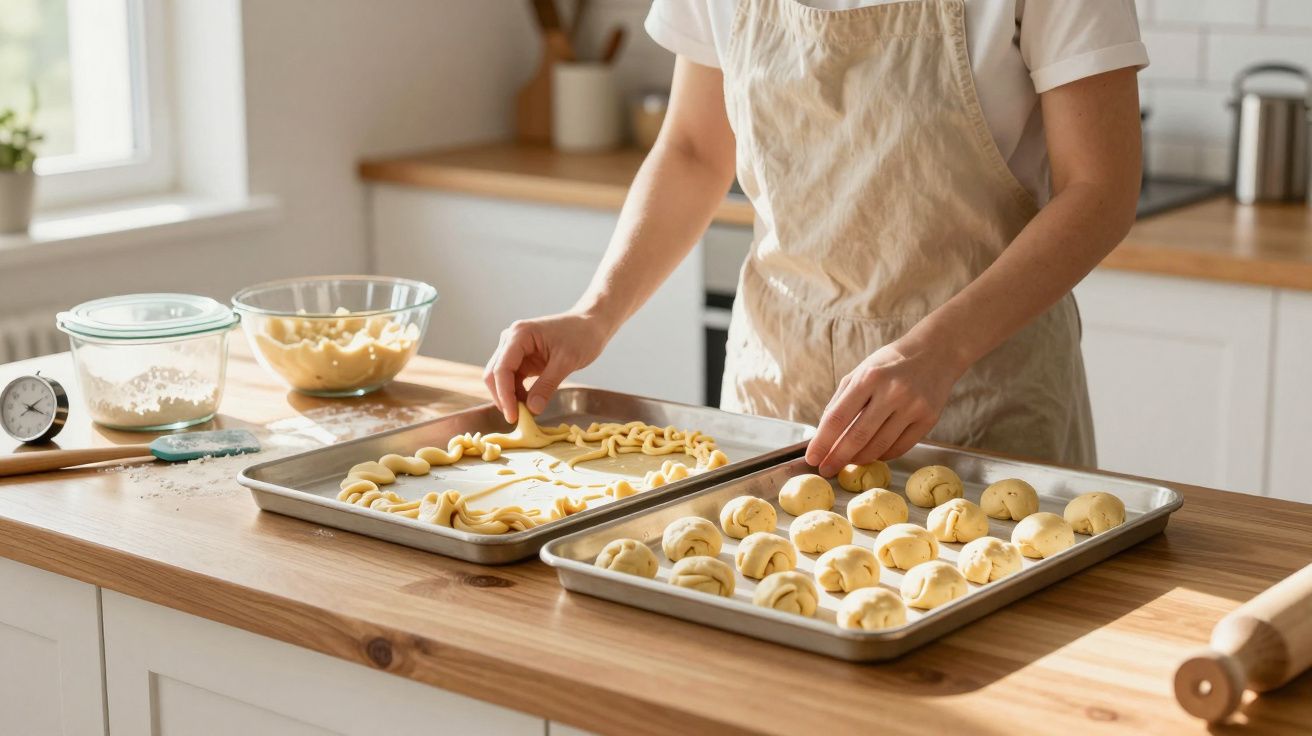
The next time a loaf slumps or your biscuits spread into one sad tray, it’s tempting to blame your oven, your recipe, or your own “lack of a baking gene”. But of course! please provide the text you would like me to translate. and of course! please provide the text you would like me to translate. point to a quieter culprit most home bakers overlook: time. Not “how long it’s in the oven”, but the invisible timing of hydration, gluten development, and temperature equalisation that decides whether your bake turns out calm and controlled or chaotic.
If you’ve been taught to bake like a checklist-measure, mix, bake-you’re not alone. The science-backed shift is to treat baking less like assembly and more like staging: letting key ingredients do their chemistry before you ask them to perform.
The quiet science happening while you “do nothing”
A lot of baking success is governed by processes that start the moment flour meets water. Starch granules begin absorbing moisture. Proteins start linking into gluten. Sugar dissolves and changes viscosity. None of it needs vigorous stirring; much of it needs time.
That’s why two batches made from the same recipe can behave completely differently depending on when you mix, how warm your kitchen is, and whether your ingredients are straight from the fridge. The kitchen feels still, but your dough isn’t.
The biggest upgrade in home baking often isn’t a new tin or a better recipe. It’s building in the right pauses.
Why “resting” isn’t just for bread people
Resting sounds like a niche artisan-bread thing, but it shows up everywhere once you know what to look for. The goal is usually one of three things: fully hydrating flour, relaxing gluten so shaping is easier, or stabilising fats so texture sets the way you intended.
Here’s where it matters most:
- Cookie dough: chilling firms butter and slows spread, but it also lets flour hydrate so the centre bakes up less gritty and more cohesive.
- Scones and pastry: resting in the fridge keeps fat cold (flakier layers) and reduces shrinkage once baked.
- Cakes: a brief rest after mixing can reduce large air bubbles, but over-resting can weaken lift if your raising agent is already reacting.
- Pancake/waffle batter: 10–20 minutes lets flour hydrate and can soften texture; too long can dull leavening.
The point isn’t to rest everything for hours. It’s to stop treating “immediate baking” as the default when a short pause would do more than extra mixing ever could.
The rethink: stop mixing to “fix” what time would solve
Home bakers often overmix because the batter doesn’t look right yet-too thick, too lumpy, too tight. But mixing is a blunt tool. It develops gluten (good in bread, not always in cakes) and can warm the batter, pushing butter past the point where it behaves.
A better pattern is:
- Mix until just combined (especially for muffins, pancakes, quick breads).
- Wait (even 10 minutes can change consistency).
- Assess again before adding extra flour or “correcting” with more mixing.
This is particularly useful with wholemeal flour, oats, and cocoa, which can keep absorbing moisture long after you think you’re done.
A small, practical rule: adjust after the rest, not before
If a dough feels sticky, give it a short rest first. If a batter feels thick, wait and see whether it loosens as dry ingredients hydrate. You’ll waste less flour, and you’ll get more predictable results.
Temperature: the other timer you’re ignoring
Time and temperature are partners. Ingredients at different temperatures don’t just mix differently-they ferment, melt, and set differently.
A few common traps:
- Cold eggs in cake batter can cause butter to seize, leading to a dense crumb that looks like “bad luck” but is really an emulsion problem.
- Warm kitchens speed up yeast and chemical reactions, so the same proving time can overproof in summer and underproof in winter.
- Hot trays make cookies spread faster before they set, changing thickness and texture even if your dough is identical.
If you want consistency, aim for consistency in starting conditions: room-temperature dairy and eggs when a recipe expects them, and a deliberate chill when you want control over spread and structure.
A simple “staging” method you can use tonight
You don’t need a new routine that turns baking into a lifestyle. You need one small habit: build pauses into the process on purpose.
Try this:
- Measure first, then pause: once everything’s weighed, you stop scrambling and start cooking deliberately.
- Hydration pause (5–20 minutes): after combining flour and liquid, let the mixture sit before deciding it “needs” more anything.
- Chill with intent (20–60 minutes): if the bake relies on butter structure-cookies, pastry, scones-cooling is a tool, not a punishment.
- Bake when the dough/batter feels right, not when the clock says so: the clock is guidance; texture and behaviour are the truth.
That’s the rethink in one line: use time as an ingredient.
What this changes in real bakes (quick examples)
- Chocolate chip cookies: chill the dough and you’ll usually get thicker cookies, less greasy spread, and a more caramelised flavour as sugars equilibrate.
- Banana bread: mix gently, then give the batter a short rest; it often bakes up more tender because you’ve resisted the urge to “smooth it out” by overmixing.
- Pizza dough: a rest after mixing makes it easier to stretch without tearing, because gluten relaxes and water finishes distributing through the flour.
None of these require fancy techniques. They just require you to stop rushing the part where the chemistry is still catching up.
The moment you notice baking feels calmer
When you start using pauses, you stop fighting dough. You stop panicking and adding extra flour because something looks sticky at minute two. You stop blaming your oven for what was actually a temperature mismatch or a rushed hydrate.
Baking doesn’t become perfect-nothing does. It becomes more repeatable, and you get that rare, satisfying feeling of knowing why something worked, not just that it did.
FAQ:
- Do I have to rest everything I bake? No. Use rests where hydration, gluten relaxation, or fat temperature will change the outcome (cookies, pastry, yeasted doughs, pancakes). Skip it when leavening is time-sensitive and the recipe is built for immediate baking.
- How long should I chill cookie dough? Even 30–60 minutes helps with spread and texture; longer (overnight) can deepen flavour. If the dough becomes too hard to scoop, let it sit at room temperature for 10 minutes.
- Is overmixing really that big a deal? For batters where tenderness matters, yes-extra mixing develops gluten and can make cakes or muffins tougher. A short rest often solves “lump anxiety” better than more stirring.
- My kitchen runs hot/cold-what should I change first? Start by controlling ingredient temperature (room-temp eggs/dairy for cakes; chilled butter for pastry) and shorten or lengthen proving times based on dough behaviour rather than the printed schedule.


Comments (0)
No comments yet. Be the first to comment!
Leave a Comment