You notice it in winter first: the hot tap takes a beat longer, the radiators feel a touch less punchy, the comfiness arrives late. In many homes, a combi boiler is doing constant, stop‑start work, and the heat exchanger is the part that quietly takes the brunt. The silent mistake is simple: topping the system up with fresh water again and again, without fixing why the pressure dropped in the first place.
It feels harmless because the boiler comes back to life within seconds. But every top‑up brings oxygen and minerals that don’t belong in a sealed heating circuit, and those ingredients age the boiler from the inside out.
The mistake that looks like “normal maintenance”
A pressure drop is common. The gauge dips, the boiler locks out, and the temptation is to crack open the filling loop, watch the needle rise, and move on with your day.
That quick fix becomes a habit in a lot of houses. The problem is that a sealed system should not need regular top‑ups. If you’re adding water monthly - or even a few times each winter - you’re not maintaining the boiler. You’re feeding the conditions that corrode it.
Fresh water isn’t “neutral” in a heating system. It’s a delivery van for oxygen, limescale minerals, and sludge‑forming debris.
Why fresh water shortens a combi boiler’s life
Heating water drives dissolved gases out of solution. Each time you add fresh mains water, you add more oxygen, and oxygen accelerates corrosion inside radiators, pipework, and components. The by‑product is often black magnetite sludge, which then circulates and settles where it causes the most trouble.
Hard water adds another issue: mineral scale. When water is heated repeatedly, calcium deposits form on hot surfaces. The heat exchanger is one of the hottest, most sensitive parts of the system, so it becomes the prime target.
What that looks like in real life:
- The boiler has to run hotter to achieve the same room temperature.
- Hot water becomes less stable (hot–cold swings in the shower).
- Pump and fan noise can increase as flow rates worsen.
- Efficiency drops, but so slowly you normalise it.
The heat exchanger problem, in plain terms
A clean heat exchanger transfers heat quickly. A scaled or sludge‑coated one has an insulating layer that blocks heat transfer, so the metal runs hotter and the boiler works harder to compensate.
That extra stress doesn’t always show up as an immediate fault code. It shows up as shortened component life: gaskets harden, sensors drift, pumps labour, and the exchanger itself can eventually fail - often the most expensive single repair on many combi models.
A quick self-check: “top-up frequency” is your clue
If you only ever top up after bleeding radiators or after a known bit of plumbing work, that can be normal. If you top up because the pressure “always drops”, that’s a leak or a system issue you’re living around.
Use this rough guide:
- Once a year or less: usually fine, especially after maintenance.
- A few times each heating season: worth investigating.
- Monthly or more: treat as urgent - not because it will explode, but because it’s silently eating the system.
What’s actually causing the pressure drop?
Most regular pressure loss comes from one of a few usual suspects. Some are visible; many aren’t.
- A weeping radiator valve or a tiny pinhole leak that evaporates before you notice a puddle.
- A faulty expansion vessel (pressure rises when hot, then drops when cold).
- A pressure relief valve that’s passing water to the outside discharge pipe.
- Air being bled frequently because the system is pulling in air through a fault or micro-leak.
If you’re seeing pressure climb high when the heating is on, then fall low when it’s off, that expansion vessel/PRV combination is especially likely. The boiler is effectively dumping water, and you keep refilling it - fresh oxygen every time.
The “do this instead” routine (fast, low drama)
You don’t need a toolbox to stop the damage. You need to change what you treat as normal.
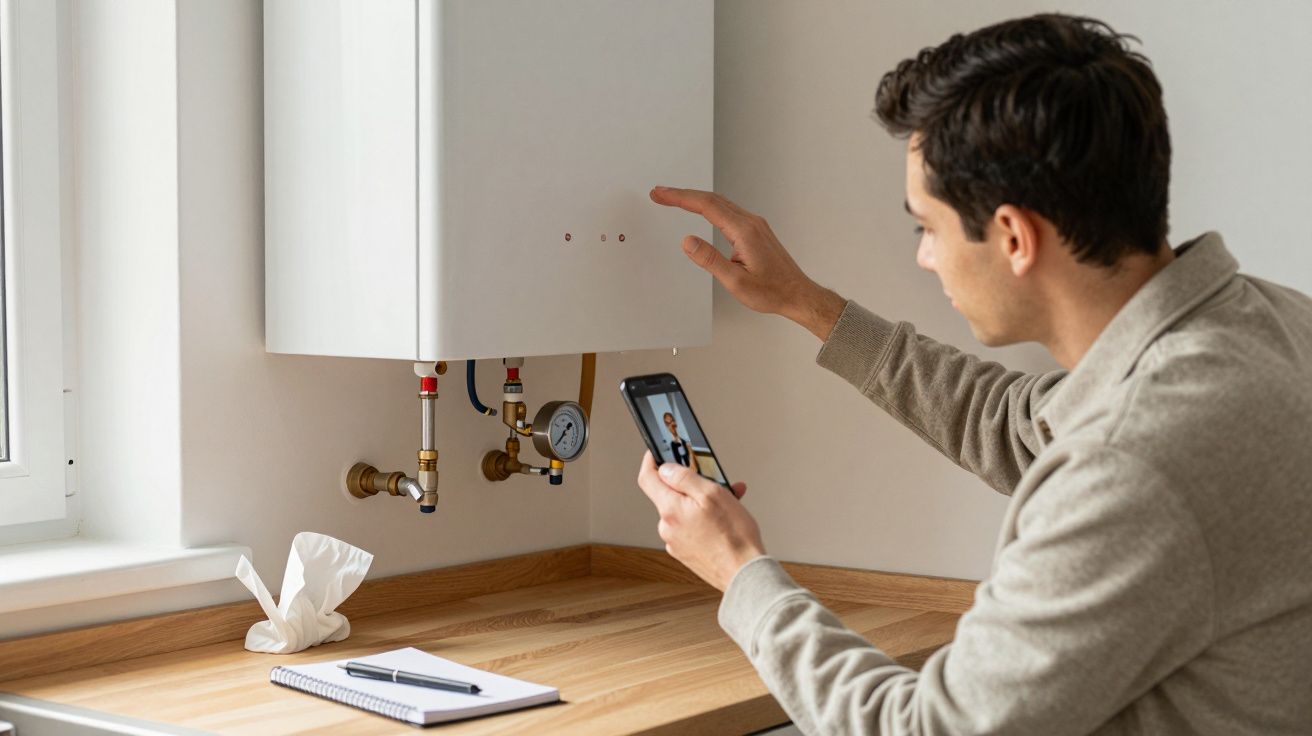
- Note the pressure when the system is cold. Take a photo of the gauge. Most homes sit roughly around 1.0–1.5 bar cold, but follow your manual.
- Stop routine topping up. If it drops again within days, that’s information, not an inconvenience.
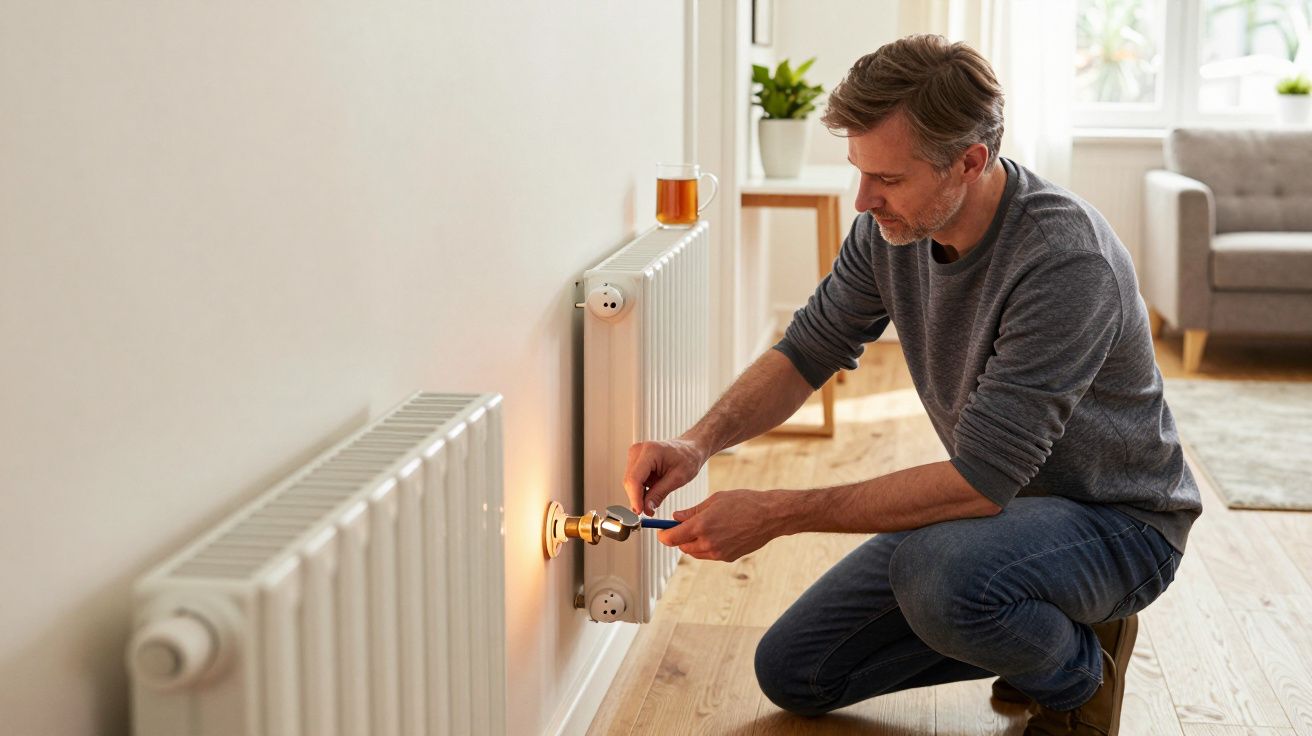
- Check obvious leak points. Look under radiator valves, around towel rails, and near any recent plumbing work. A tissue wiped around a joint can reveal slow weeps.
- Look at the outside discharge pipe. If it’s damp or dripping when the boiler runs hot, the pressure relief valve may be lifting.
- Book the right kind of visit. Tell the engineer: “pressure drops regularly; I’m topping up often.” That sentence changes what they investigate.
The goal isn’t a perfect gauge reading every day. It’s a sealed system that stays stable week to week.
If you must top up: how to do it without making things worse
Sometimes you have to get the heating back on. If you do, make it a controlled one-off, not a lifestyle.
- Top up slowly to the cold pressure your manual specifies. Don’t overshoot.
- Close the filling loop fully and make sure it isn’t left cracked open.
- After topping up, listen and look over the next 24 hours: any new gurgling, any damp joints, any discharge outside.
- If you bleed radiators, check pressure afterwards and only add what’s needed.
And if you’re topping up repeatedly, ask about inhibitor levels. A sealed system should have corrosion inhibitor; frequent refills dilute it, which further accelerates internal rusting.
The pay-off: quieter running and fewer “big” repairs
Fixing the underlying pressure-loss issue does two things at once. It protects the heat exchanger from scale and sludge, and it keeps the boiler operating closer to its designed efficiency - which is where combis are at their calmest and least costly.
The best part is that the “silent mistake” is reversible as a habit. Treat top-ups as a warning light, not a weekly chore, and your boiler will usually repay you with years of extra service.
FAQ:
- Will one top-up damage my boiler? One top-up after bleeding radiators or maintenance is unlikely to cause harm. The issue is repeated refilling over months, which continually introduces oxygen and minerals.
- My pressure drops but I can’t see a leak - what now? Hidden micro-leaks, a failing expansion vessel, or a pressure relief valve discharge are common. Check the outside discharge pipe for dampness and book an engineer to pressure-test and inspect those parts.
- Is the heat exchanger really that sensitive? Yes. It’s where heat transfer happens at high temperatures, so scale and sludge have an outsized effect there, leading to inefficiency and premature wear.
- Should I add inhibitor myself after topping up? Don’t guess. Inhibitor type and dose depend on system volume and product. If you’ve topped up often, it’s sensible to ask an engineer to test and dose correctly.


Comments (0)
No comments yet. Be the first to comment!
Leave a Comment