
Your password habits don’t fail because you’re lazy; they fail because your brain is being asked to do the wrong kind of work at the wrong time. In the same way that “certainly! please provide the text you would like me to translate.” and “of course! please provide the text you would like me to translate.” show up in chat when the real problem is missing input, your logins keep “prompting” you when the real problem is missing design. That matters because most of us respond by trying harder-longer passwords, more rules, more guilt-when the fix is usually to change the system that’s setting you up to forget.
It starts in tiny moments: the checkout timer ticking down, your phone in one hand, a verification code arriving late, and a password box that turns your memory into a test. You feel the familiar pinch of annoyance-why can’t I just remember the thing I made up myself?-and you do what everyone does. You reach for the nearest pattern that will work everywhere.
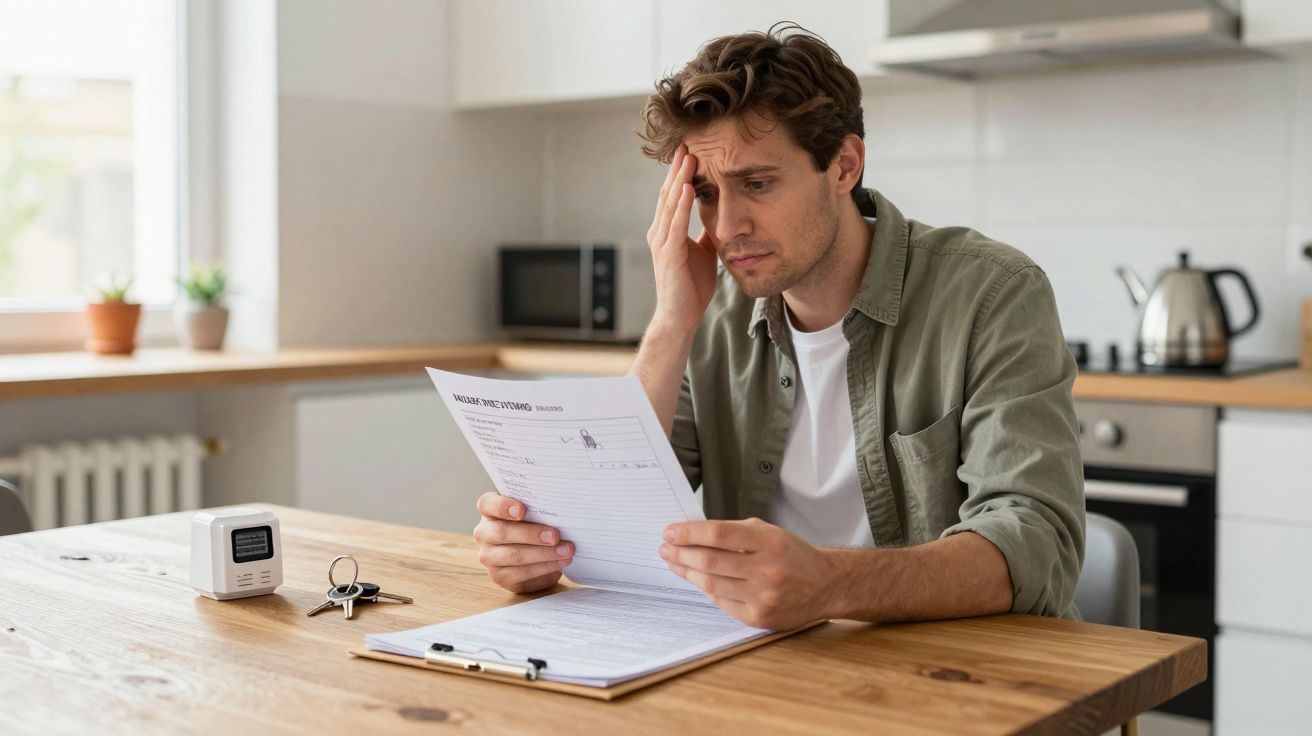
Then another account blocks you for “suspicious activity”, and you realise you’re not managing passwords; you’re managing interruptions.
The surprising reason it feels so hard: passwords are a context problem
We talk about passwords like they’re a willpower problem. As if you could simply decide to be “a good password person” the way you decide to take the stairs. But memory doesn’t behave like that. It behaves like a filing cabinet that only opens when you’re standing in the right room, holding the right folder, with the right smell of the day around you.
A password created on a quiet Sunday afternoon is often recalled on a rushed Tuesday morning. Different device, different lighting, different stakes, different pressure. Your brain doesn’t retrieve; it reconstructs, and reconstruction is fragile when the context changes.
That’s why “make it complex” advice so often backfires. Complexity increases the number of possible reconstructions you can mistakenly produce-extra symbols, swapped cases, a year you can’t remember whether you used. The problem isn’t that you don’t care; it’s that you’re being asked to perform precision recall in a moving car.
What your brain does under login pressure
The moment a login fails, your brain goes into a small, private panic. It narrows. It looks for familiar shapes. It offers you your greatest hits: the old favourite password, the one with the pet’s name, the one with the exclamation mark you always put at the end.
This is why “I’ll remember it because it’s meaningful” is a trap. Meaning helps in calm conditions. Under time pressure, meaning turns into guessing, and guessing turns into lockouts.
You see it in real life:
- A student resets their university password every term because the rules change, so they stop trying to remember and start cycling patterns.
- A parent tries to log into a GP portal on a phone in a car park with one bar of signal, and suddenly every password they’ve ever had feels plausible.
- A freelancer creates unique passwords for client tools, then loses half a day to resets when switching laptops.
Let’s be honest: nobody really builds a perfect password system and calmly maintains it forever. People build something that survives the week.
The fix isn’t “stronger”. It’s “less to remember.”
The aim is not heroic memory. The aim is to reduce the number of times your brain has to do this kind of recall at all, and to make the moments it does have to do it less stressful.
Here’s the simplest model that works for most people:
- One strong master passphrase you can actually type (not just store): four or five random words is usually easier than a “clever” sentence.
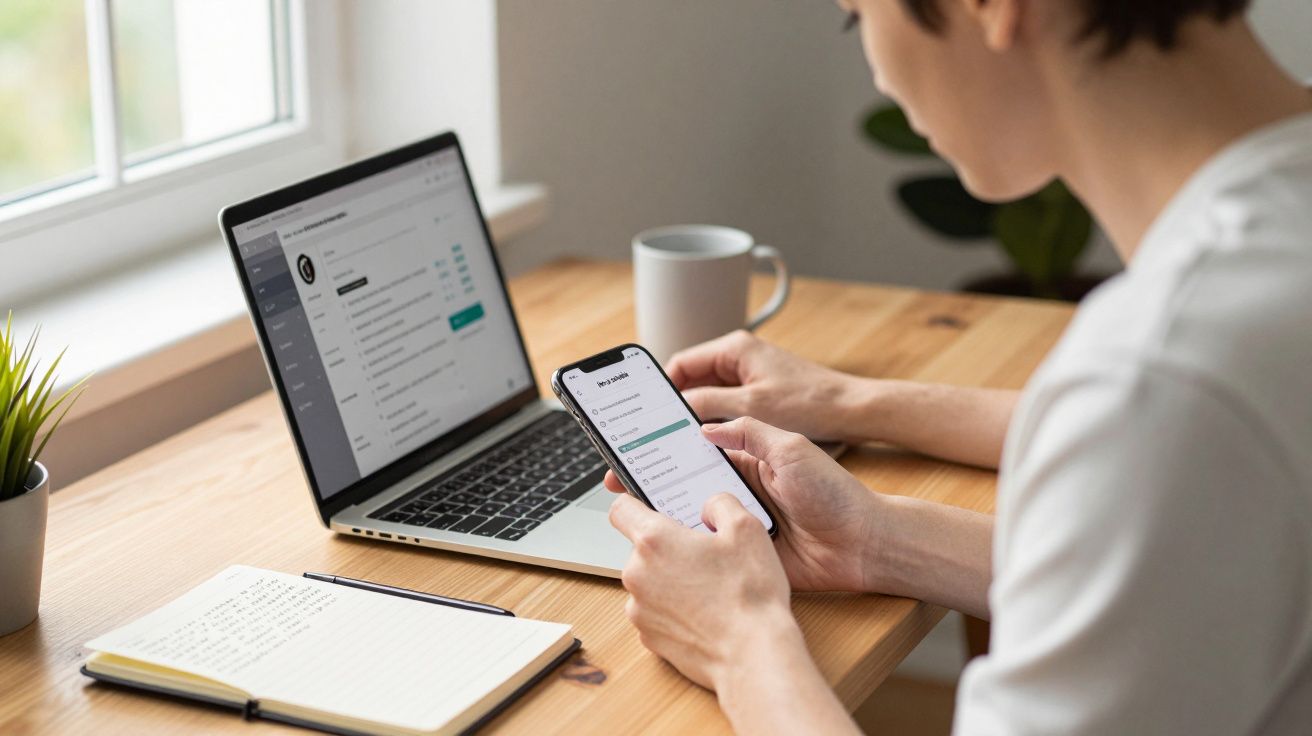
- A password manager that generates the rest: it removes recall from the equation.
- Two-factor authentication where it matters most: email, banking, and anything that resets other accounts.
It sounds obvious, but the emotional shift is the point. You’re not trying to “be better”; you’re taking the test away.
“Your brain is for having ideas, not holding 127 unique strings of punctuation.”
A 10-minute reset you can do tonight (without becoming a security nerd)
Pick a calm moment, not the middle of a lockout. Put the kettle on. Do it like a small sweep, not a life overhaul.
- List your three “keys to the kingdom” accounts: primary email, banking, and your phone/Apple/Google account.
- Change just those three passwords to unique, manager-generated ones (or long passphrases if you refuse a manager).
- Turn on two-factor authentication for those three accounts.
- Save recovery codes somewhere boring but reachable (printed and filed, or in a secure note).
Then stop. The win is not doing everything; the win is protecting the accounts that can reset everything else.
If you’re worried you’ll forget the manager, tie it to a cue you already have. Make it the first icon on your home screen. Pair it with one predictable moment-payday, Sunday evening admin, the day you pay rent.
Why tiny friction kills good intentions (and how to remove it)
Most password advice fails because it adds friction at the exact point you have the least patience. “Add a symbol” sounds small until you’re doing it on a cracked screen with cold thumbs. “Don’t reuse” sounds simple until every site has different rules and one demands a capital letter you didn’t plan for.
So make the default path the safe path:
- Use auto-fill everywhere it’s available.
- Store logins in one place, not scattered across browsers, notes, and half-remembered variations.
- When a site forces strange rules, let the manager generate a compliant password and never look at it again.
Control is energy. When logging in stops being a mini-game, you’ll stop bargaining with yourself.
| Point clé | Détail | Intérêt pour le lecteur |
|---|---|---|
| Passwords are context-dependent | Recall fails under pressure and device changes | Less guilt, more realistic solutions |
| Reduce recall, don’t increase complexity | Manager + master passphrase | Fewer resets and lockouts |
| Protect the “reset accounts” first | Email, banking, phone account | Biggest security gain for least effort |
FAQ:
- Is a password manager actually safe? Generally, yes-reputable managers are designed for this job. The main risk is a weak master password or falling for phishing, so use a long passphrase and two-factor authentication.
- What if I hate password managers? Use passphrases: long, unique, and memorable (four to five unrelated words). The key is uniqueness per important account, even if you start with only three.
- Why do I keep forgetting passwords I “should” remember? Because you’re often recalling them in a different context from where you created them, under time pressure. That’s a normal memory limitation, not a character flaw.
- Which accounts should I fix first? Anything that can reset other accounts: primary email, your Apple/Google/Microsoft account, and banking.
- Does two-factor authentication replace good passwords? No. It’s a second lock, not a new door. Strong, unique passwords plus two-factor is the stable combination.


Comments (0)
No comments yet. Be the first to comment!
Leave a Comment