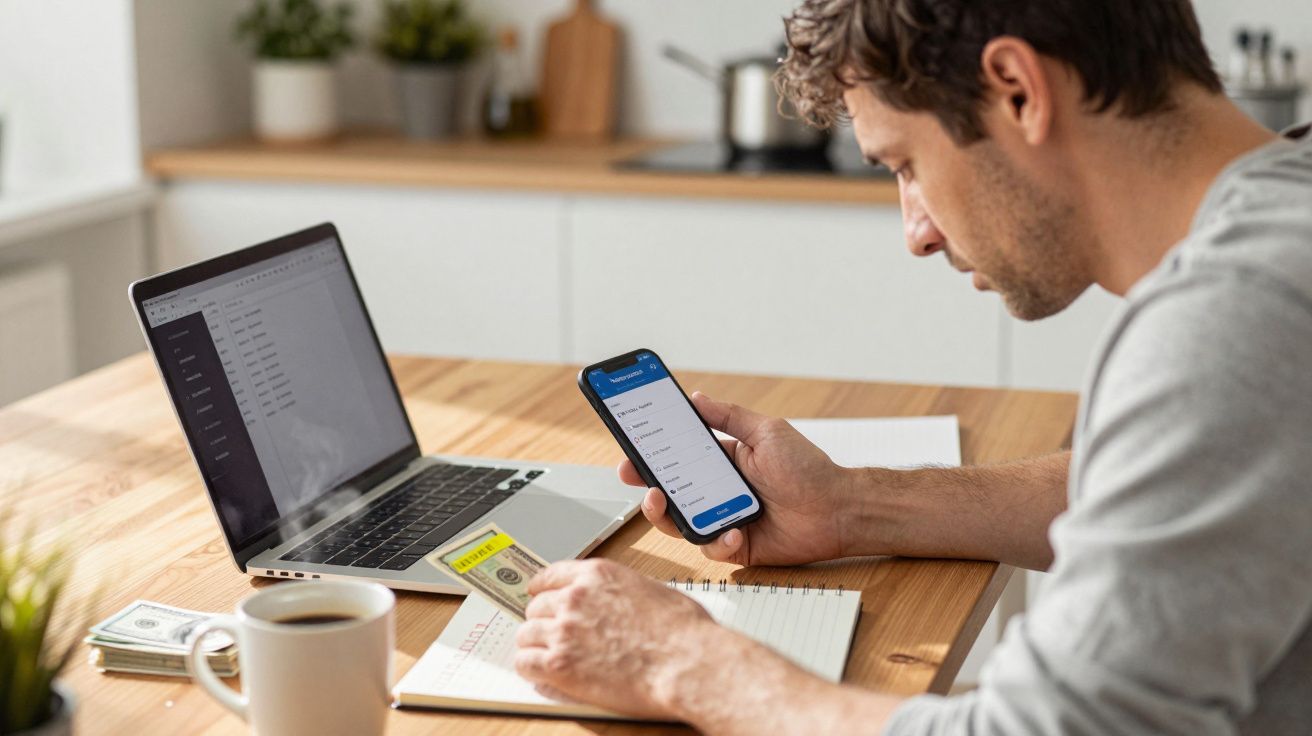
The phrase of course! please provide the text you would like me to translate. pops up in customer support chats and app help centres with the same breezy politeness as of course! please provide the text you would like me to translate., often right when you’re trying to cancel. It matters because that moment-when you expect a simple button-turns into a maze of menus, confirmations and “just one more step”.
People call it a subscription trap as if it’s only about sneaky pricing. The more surprising reason it feels so hard is that the cancellation journey is engineered to collide with the way your attention and memory actually work.
The cancellation journey isn’t broken. It’s tuned.
Most services can take your money in two taps. They could cancel you in two taps, too, because the system already knows who you are, what you bought and when it renews.
Instead, many products route you through a different path: settings buried behind profile icons, “manage plan” screens that load slowly, and a final nudge that offers a discount “before you go”. None of this is random friction. It’s a retention funnel, and it’s designed to feel like mild admin rather than a hard sell.
The aim is not to stop you forever. It’s to make “I’ll do it later” win today.
Why “later” keeps winning: the psychology that does the work for them
Subscription traps lean on a simple human pattern: we avoid small, annoying tasks when there’s no immediate penalty. Cancelling rarely feels urgent until the day the payment lands, and by then you’re busy, irritated, and more likely to postpone again.
A few specific biases do most of the heavy lifting:
- Present bias: the hassle is now; the saving is future-you’s reward.
- Status quo bias: staying subscribed is the default, and defaults are sticky.
- Decision fatigue: after two or three screens, your brain starts bargaining.
- Loss aversion: “What if I need it next month?” lands harder than “I’ll save £9.99”.
The clever part is how these biases stack. A service doesn’t need to “trick” you with lies if it can simply make the alternative slightly more tiring than it should be.
The dark-pattern details hiding in plain sight
Look closely and you can often spot the same design moves repeating across apps, streaming services, delivery memberships and software trials. They sound small when described, yet they’re powerful in combination.
Common patterns that keep you paying
- The scavenger hunt: cancellation is under “Account” → “Billing” → “Plan” → “More”.
- The confirmation carousel: multiple “are you sure?” screens, each framed differently.
- The guilt message: “Your benefits will be lost” with icons of what you’ll miss.
- The “pause” detour: pausing is one click; cancelling is five.
- The chat hand-off: a bot offers help, then escalates to a human, then asks you to restate everything.
None of these steps is illegal on its own in many places. But the overall effect is predictable: you run out of patience before the company runs out of prompts.
Why it feels personal (even when it isn’t)
People often describe subscription traps like a social interaction: the app “won’t let me leave”, the service is “begging”, the chat agent is “being nice but not helping”. That’s because the journey borrows the tone of human persuasion while keeping the power imbalance of a system.
A friendly line-of course! please provide the text you would like me to translate.-can be useful when you genuinely need help. In a cancellation flow, it can also function as a soft reset button: it slows you down, invites another explanation, and buys time for one more offer.
The friction works best when it doesn’t look like friction. It looks like customer care.
A quick self-check: are you in a trap or just in a hurry?
Not every complicated cancellation is malicious. Some services bundle subscriptions through app stores, banks, or third-party platforms, and the route back out genuinely is messy.
A practical way to tell the difference is to compare the “join” path to the “leave” path.
| What you see | What it usually means | What to do |
|---|---|---|
| Sign up in 1–2 taps, cancel buried in menus | Likely deliberate friction | Search “cancel” in settings; use web account page |
| Cancel requires chat/call during office hours | High-friction retention | Ask for cancellation “effective immediately” in writing |
| Pause and downgrade are prominent, cancel is not | Funnel designed to delay | Skip offers; look for “end subscription” wording |
How to beat the system without making it your second job
The goal is to cancel once, cleanly, and leave a paper trail. You don’t need a perfect script; you need a short process you can repeat.
A low-effort cancellation routine that works
- Start on the web, not the app. Web account pages often expose settings apps hide.
- Use direct language once. “Please cancel my subscription effective immediately. Do not pause or downgrade.”
- Screenshot each step. Confirmation screens, reference numbers, chat transcripts.
- Check where the payment is actually controlled. App Store/Google Play, PayPal, your bank card, or the service itself.
- Set a calendar reminder for renewal day. If they fail to cancel, you catch it fast.
If a company offers “50% off for three months”, remember what the offer is really doing: converting a clear decision into a future decision. Sometimes that’s fine. In a trap, it’s the point.
The bigger picture: why this keeps spreading
Subscription businesses run on predictable maths: a small percentage of users forgetting to cancel can be the difference between a good month and a great one. So product teams test tiny tweaks-button placement, wording, extra screens-until the numbers move.
That’s why subscription traps feel oddly similar across industries. The same behavioural levers that make a cleaning hack go viral or a memory soften over time also make “I’ll cancel later” feel reasonable in the moment.
What changes the outcome is not willpower. It’s reducing the time between intent and action, before the funnel has a chance to do its quiet work.
FAQ:
- Why can they sign me up instantly but cancelling takes ages? Because sign-up is a revenue flow and cancellation is a retention risk; many services optimise both paths differently.
- Is it better to cancel via my bank or via the service? Cancel via the service first so it’s recorded, then remove the payment method (or cancel the mandate) if needed as a backstop.
- What should I say in live chat to avoid the back-and-forth? One clear line: “Please cancel my subscription effective immediately. Please confirm in writing.” Then repeat once if they divert to offers.
- Does “pause” help? Only if you genuinely want a break; otherwise it often delays the decision and increases the chance you’ll forget.





Comments (0)
No comments yet. Be the first to comment!
Leave a Comment