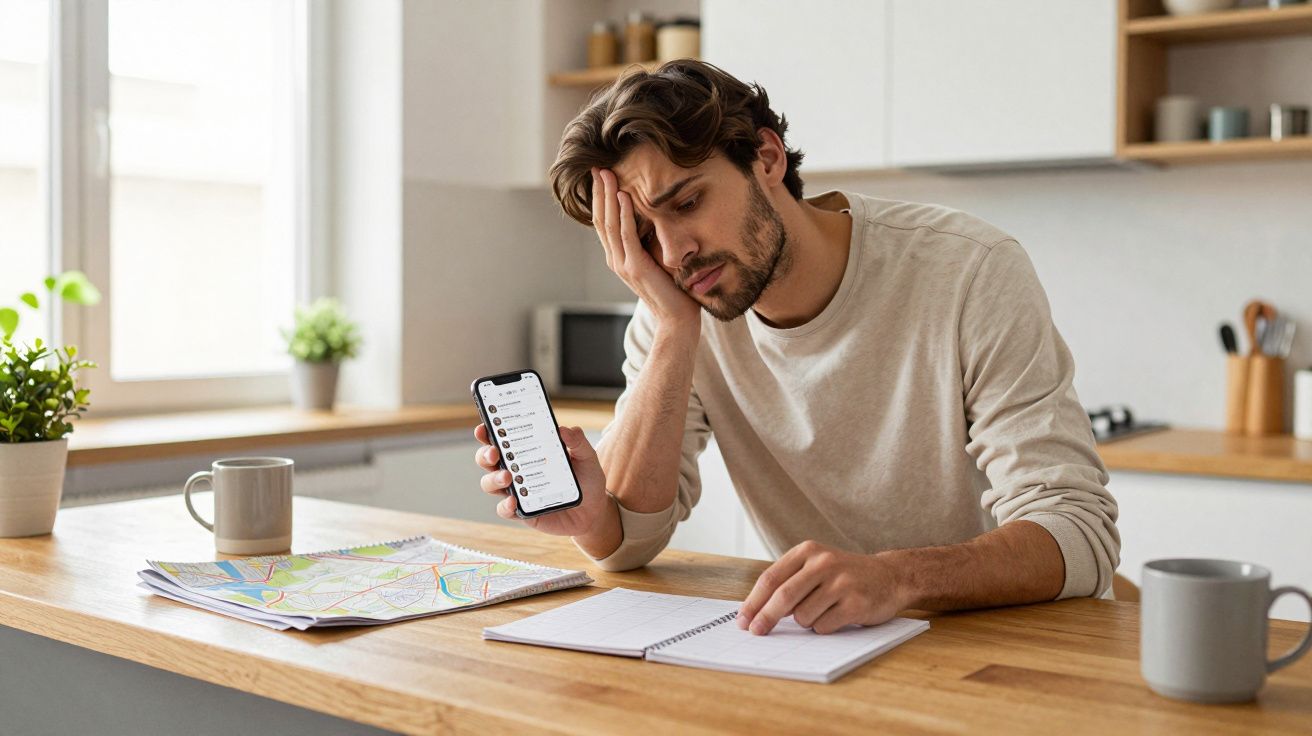
You don’t notice it at first. You’re just trying to keep up with the city - the new coffee place, the “must‑try” neighbourhood, the running club that meets at 6.30am like everyone’s got a spare life. Then you open a message that reads certainly! please provide the text you would like translated. next to of course! please provide the text you would like me to translate to united kingdom english., and suddenly you’re reminded how often urban life turns into polite, endless prompting: tell me what you want, again, in the right format.
That’s why urban trends feel harder than they should. It isn’t that you’re lazy or “behind”. It’s that the city quietly asks you to do more small admin than your brain was built to carry, and it does it all day.
The hidden workload nobody calls “work”
Urban trends aren’t just hairstyles and restaurants. They’re systems: booking apps, waiting lists, rules, etiquette, location pins, dress codes you pretend don’t exist. Each one adds a tiny cognitive toll.
It looks like freedom from the outside - so many options, so much culture, so much “going on”. In practice, it’s a constant low-level decision marathon where the penalty for getting it wrong is social friction and wasted money.
A new pop‑up opens. You try to go. But first you need to know when the queue starts forming, which entrance is “correct”, and what time you’re allowed to order without looking like you’ve never been outside before. None of that is written down. Everyone just somehow knows.
The surprising reason it feels exhausting: you’re doing translation all day
Not language translation. Social translation.
In big cities, every trend arrives wrapped in a different set of assumptions: what to wear, how to behave, how to talk about it online, how much enthusiasm is acceptable, how quickly you’re meant to move on. You spend more time decoding the “vibe” than enjoying the thing.
It’s the same shape as those auto-replies people send when they don’t have enough context. “Certainly! Please provide…” is polite, but it’s also a gate. It says: I can help, but you have to do the work of making this legible first.
Urban trends work like that. The city offers endless experiences, but it often demands you present yourself correctly to access them.
The four tiny frictions that add up
Most people think they’re tired because they’re out too late or spending too much. Often it’s these:
- Micro-coordination: five group chats, three last-minute changes, one friend who “just turns up” and somehow always knows where.
- Interface fatigue: tickets, QR codes, booking windows, apps that update weekly and log you out for sport.
- Status guessing: is this place casual? Is it “smart casual”? Are trainers fine or will you feel like a lost uncle?
- Invisible rules: don’t stand there, don’t order that first, don’t take photos unless everyone else is.
None of it is dramatic. That’s the point. It drains you quietly, like a phone battery with too many background processes.
Why it hits harder in cities than you expect
Cities compress novelty. Trends stack on top of each other, and you’re always one “new thing” behind because something else opened while you were doing laundry.
There’s also a social speed to urban life. People meet more people, belong to more circles, and each circle comes with its own taste language. Even if you’re not trying to be fashionable, you end up performing competence: knowing what’s on, knowing what’s normal, knowing what not to ask.
And if you grew up somewhere smaller, the contrast is brutal. In a village or a quieter town, you don’t have to constantly prove you understand the room. In the city, every room is a different dialect.
A simple way to make trends feel easier (without “quitting the city”)
You don’t need to become a hermit, and you don’t need a new personality. You need fewer translation tasks.
Pick one or two domains where you’ll “keep up”, and let the rest go deliberately. Not in a tragic way. In a practical way, like choosing what you cook on weeknights.
Here’s a routine that works because it reduces decisions, not joy:
- Choose your lanes: e.g. food + galleries, or running + live music. Two is plenty.
- Create defaults: same day for trying new places, same mate to invite, same budget ceiling.
- Use one trusted source: a newsletter, a friend with good taste, a local critic. Not five apps.
- Say no earlier: if you’re already negotiating three details, it’s not “fun plans”, it’s work.
The relief is immediate. Not because you’re doing less, but because you’re not constantly decoding.
The bit nobody says out loud
A lot of “urban cool” is just confidence under uncertainty. People look like they’re thriving because they’ve learned to glide through not knowing, or because they’ve quietly outsourced the admin to one organised friend.
If you’re finding it hard, you’re not failing the city. You’re reacting normally to a place that runs on constant soft prompts - provide the context, choose the option, confirm the booking, prove you belong, do it again tomorrow.
Urban trends feel hard because they come with hidden translation costs, and you pay them in attention.
A quick reality check you can try this week
If your calendar is full but you’re not excited, you’re probably over-translating. Try a tiny experiment:
- Do one “new” thing, but remove every extra variable (same area, same time, same person).
- Do one “old” thing on purpose (your usual café, your usual walk) and treat it as the trend.
- Mute one source of recommendations for seven days and see what cravings are actually yours.
You’re not meant to optimise a city. You’re meant to live in it. The moment you stop treating every plan like a test you have to pass, urban life gets lighter - not because it changes, but because you stop doing all the translating.





Comments (0)
No comments yet. Be the first to comment!
Leave a Comment