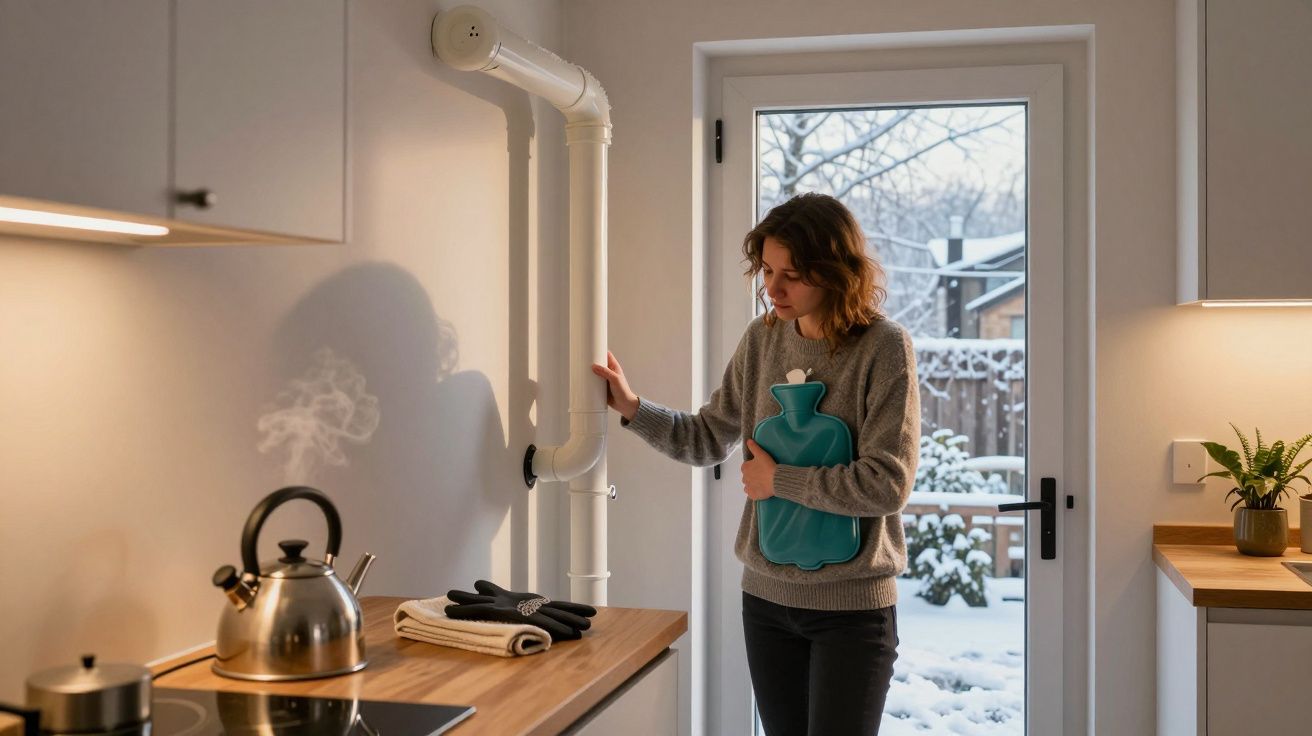
The condensate pipe is the small plastic drain line that carries acidic water away from your condensing boiler, usually out through an outside wall to a gully. When that line becomes a frozen condensate pipe, the boiler often shuts down instantly to protect itself, and a perfectly “healthy” heating system can go cold in minutes. It’s the sort of fault that feels dramatic because it’s fast, not because it’s expensive.
You notice it on the worst mornings: the radiators are stone-cold, the hot tap runs lukewarm, and the boiler display flashes a fault code that doesn’t look like much until you realise the whole house depends on one thin bit of pipework. This isn’t a major breakdown in the cinematic sense. It’s a bottleneck.
Why this tiny pipe stops everything
Condensing boilers produce water as they extract extra heat from flue gases. That water has to go somewhere, and the boiler is designed to refuse to run if it can’t drain safely. If the condensate backs up, internal safety sensors trip, and the system locks out.
Cold weather turns that drain into a weak link because the run outside is often the coldest, most exposed part of the whole installation. A short external section can be enough. Add wind chill, a long horizontal run, or a pipe that’s too narrow, and you’ve built a freezer tube.
The key idea is boring but useful: the boiler isn’t “broken”; it’s protecting itself because it can’t get rid of water.
The signs it’s a frozen condensate pipe (not “the boiler’s gone”)
Most people only discover this issue after trying the reset button three times and watching it fail in the same way. A frozen condensate pipe tends to leave a few clues if you know where to look.
- Boiler shows a lockout/fault code soon after attempting to fire up
- Gurgling from the boiler or visible dripping around the base (backed-up water)
- The external condensate pipe looks iced, bulged, or frosted near the outlet
- It happens during or right after a cold snap, especially overnight
If your boiler is in a loft, garage, or other cold space, the internal section can also be affected. But most UK call-outs in freezing weather are the exposed outside run.
The common setup mistakes that make freezing more likely
Freezing isn’t always “bad luck”. It’s often the predictable result of how the pipe was routed and protected.
Too much pipe outside, too little fall
Condensate should run downhill continuously. If the pipe sags, has a flat section, or rises slightly before dropping, water lingers and chills. A long horizontal run outside is basically an invitation.
Narrow pipework where it matters
Many older installs use 21.5mm overflow pipe outside. In severe cold, that’s easier to freeze than a properly upsized external section. Once ice starts forming, the remaining gap closes quickly.
The outlet is in the wrong place
Ending into a metal grating, a soakaway that clogs, or a spot where wind whips through can speed freezing. Even a perfectly “to code” looking outlet can be a bad microclimate.
A lot of winter boiler “failures” are simply: the pipe froze where it meets the air.
What to do at home (safe, quick, and realistic)
You’re aiming for one thing: thaw the blockage so the boiler can drain again. Then you can reset it and get heat back.
- Find the condensate pipe: usually white/grey plastic leaving the boiler, often 32mm inside then reducing outside.
- Check the outside section first: look for ice at the end, at elbows, or where it runs along a wall.
- Thaw gently:
- Pour warm (not boiling) water over the frozen section, starting near the outlet and working back.
- Use a hot water bottle or warm cloth wrapped around the pipe.
- A hairdryer on low can help if you keep it moving and away from dripping water.
- Reset the boiler once thawed: if it fires and stays running, you’ve likely cleared it.
Avoid kettles of boiling water on plastic pipe: it can soften joints, split fittings, or create leaks that only show up later. And don’t dismantle pipework unless you’re confident you can reseal it properly.
The fix that stops the repeat performance
Getting it going once is a win. Stopping it happening again is what saves you the next shutdown.
Insulate the right bit (and don’t stop at the wall)
Insulating only the indoor section is like wearing a coat but leaving your hands in the snow. The exposed outside run needs proper weatherproof insulation, fitted snugly with taped joints.
Reduce the time outdoors
If you can reroute to an internal drain, soil stack, or internal waste, do it. If it must go outside, keep that section as short and steeply falling as practical.
Upsize the external pipe
A common improvement is 32mm pipe for the external run, which is slower to freeze and less likely to block completely if ice starts forming. This is typically a job for a heating engineer, but it’s a straightforward one.
Consider a trace heater in problem spots
In consistently cold, windy locations, trace heating (a low-watt cable) can be the difference between “fine every winter” and “lockout every week”. It’s not always necessary, but it’s a reliable option for repeat offenders.
A quick “is this urgent?” check
A frozen condensate pipe is urgent in the practical sense-no heat, no hot water-but it’s rarely dangerous if handled sensibly. Still, you should pause and call a professional if you see or smell anything that suggests a different fault.
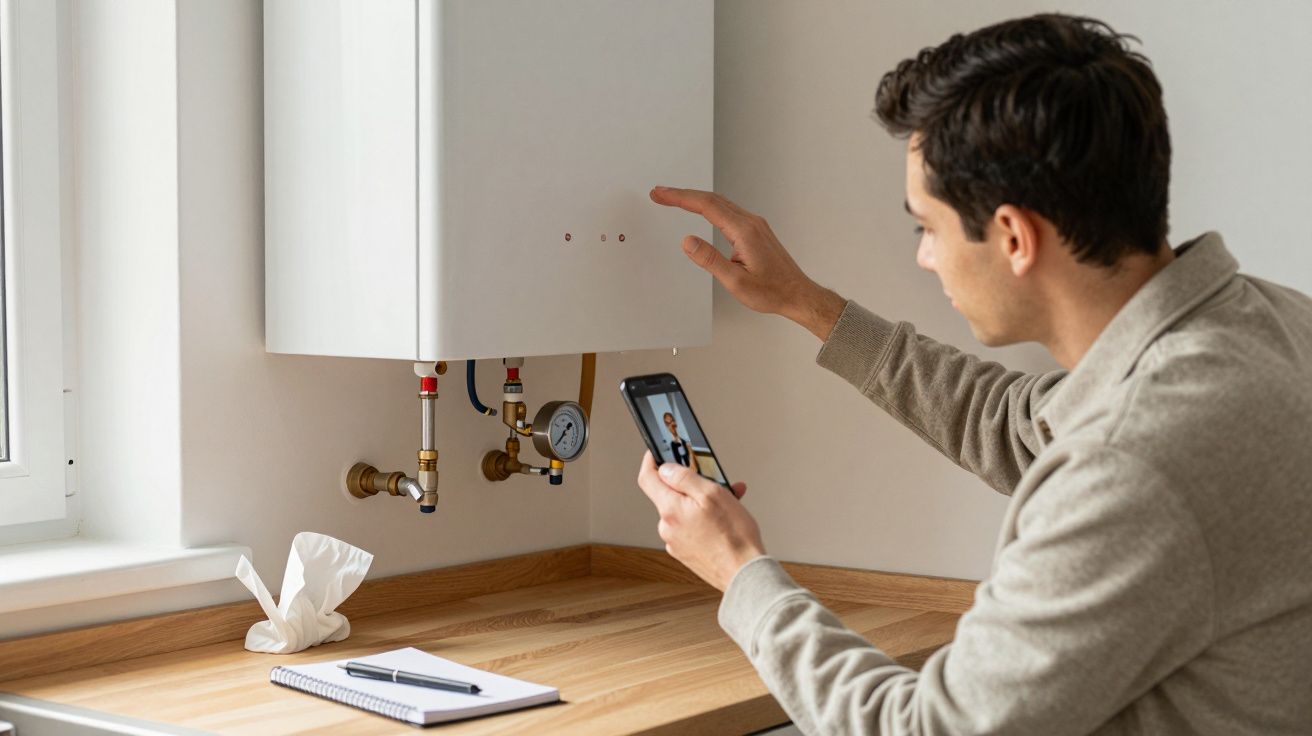
Call for help if you notice: - Gas smell, sooting, scorch marks, or unusual flue issues - Water leaking inside the boiler casing - The boiler won’t restart after thawing and a single reset - Frequent lockouts even in mild weather (could be a fall/routing issue or internal blockage)
A simple winter routine that prevents the “sudden house shutdown”
The best protection is small and dull, which is exactly why it works. Aim for quick checks before the coldest nights.
- Know where your condensate pipe exits the house and where it terminates.
- Check insulation is intact and not split or waterlogged.
- If freezing is forecast, keep the heating on low overnight rather than letting the system go stone cold.
- If you’ve had one freeze-up already, book a reroute/upsizing rather than hoping it won’t repeat.
A major fault usually gives warnings: odd noises, pressure drops, intermittent heat. A frozen condensate pipe just pulls the plug. Treat it like the tiny choke point it is, and you’ll get your mornings back.
FAQ:
- Can I pour boiling water on a frozen condensate pipe? Don’t. Use warm water or a hot water bottle; boiling water can warp plastic and loosen joints.
- Why does the boiler lock out instead of “trying harder”? Because it can’t safely drain condensate; backing up water inside the boiler risks damage, so it shuts down.
- It thawed, but it keeps freezing again-what’s the real fix? Shorten the outside run, increase the fall, insulate properly, and consider upsizing the external section to 32mm (or add trace heating in persistent cold spots).
- Is this something a landlord should fix? If the routing/insulation is inadequate and it’s a recurring loss of heating/hot water, it’s typically a maintenance issue worth reporting and addressing properly.



Comments (0)
No comments yet. Be the first to comment!
Leave a Comment