You can spend all winter blaming draughts, windows and “that one cold corner”, but the culprit is often inside the pipework. Radiators in wet central-heating systems only feel evenly warm when the system has decent hydraulic balance, meaning the hot water is shared fairly across every loop and emitter. When that balance slips, the boiler can be working hard while rooms still feel patchy, slow to heat, or strangely hot-and-cold.
You notice it in the small tells: the bedroom takes ages, the lounge roasts, and one radiator is hot at the top but lukewarm everywhere else. It’s not always a big fault. Sometimes it’s simply water choosing the easiest route.
The hidden imbalance that makes heat “take shortcuts”
Hot water in a heating system behaves like most things under pressure: it follows the path of least resistance. If the nearest radiators have wide-open valves and short pipe runs, they gulp the flow. The farthest radiators-often upstairs, extensions, or the end of a long run-get the leftovers.
That’s hydraulic imbalance in plain terms. Not “no heat”, but unfair heat distribution.
The result is a system that can look fine at a glance (boiler on, pipes warm, some radiators hot) while comfort stays uneven. You then compensate by turning the thermostat up, which often makes the already-warm rooms warmer, not the cold rooms comfortable.
What it looks like in real homes
Most people spot the pattern before they know the name:
- The first radiator off the hall is scorching; the last one upstairs is tepid.
- One room heats quickly, then overshoots, while another never quite gets there.
- Radiators are hot near the valve end but cooler across the panel, even after “bleeding”.
- The boiler cycles on and off more than you’d expect, especially in milder weather.
A common misunderstanding is to treat all of this as trapped air. Air can cause cold spots, but imbalance creates a different feel: consistent underheating at the far end of the system, not a one-off fix that holds after you bleed.
Why it happens (and why it gets worse over time)
Hydraulic balance can drift for boring reasons:
Small changes accumulate
A new radiator, a swapped valve, a half-closed lockshield that got nudged during decorating-tiny tweaks alter resistance and flow. Water then “re-learns” the easiest routes.
Pump and system settings aren’t matched to the house
If the pump is pushing too hard (or not enough), or if a bypass is incorrectly set, the flow can end up circulating where it’s easiest instead of where it’s needed.
Sludge, magnetite and limescale quietly narrow pathways
As pipework and radiators collect debris, some routes become more resistant than others. That alone can unbalance a system that used to feel fine, especially on older installs.
The frustrating bit is that none of these necessarily stop the heating working. They just make it work unevenly and inefficiently.
The simple test that hints at imbalance
On a cold day when the heating has been running for 20–30 minutes, do a quick feel-check (carefully):
- Walk the house and note which radiators are hottest first.
- Compare “near” versus “far” radiators (downstairs near the boiler vs upstairs end rooms).
- Feel the pipes at each radiator: are the first few getting strong flow while the last ones are barely warm?
If the pattern is consistent-same winners, same losers-imbalance is likely. If a radiator is cold at the top and warmer at the bottom, air is more likely. If it’s cold at the bottom, sludge can be a factor. These can overlap, but the flow pattern tells you a lot.
The fix most people skip: balancing radiators
Balancing is not glamorous. It’s basically rationing flow so the early radiators don’t hog it all.
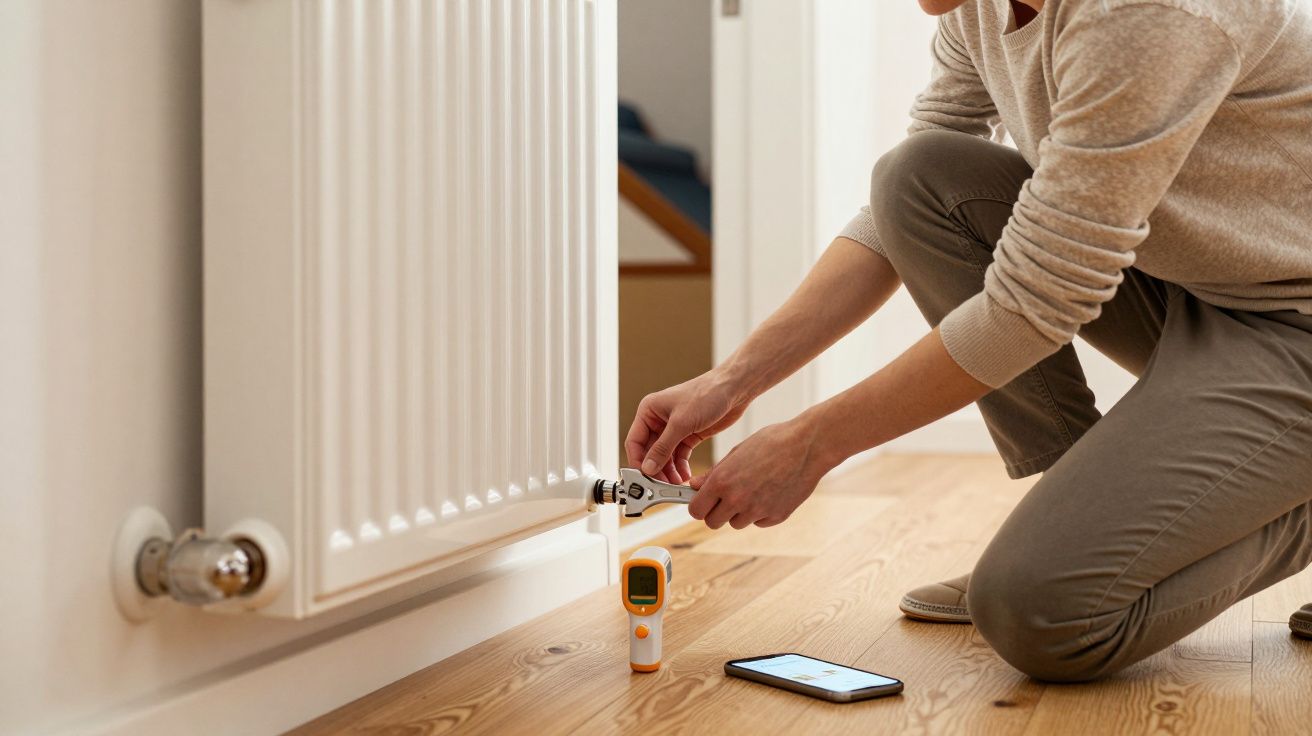
In many UK systems, this is done at the lockshield valve (the usually-capped valve on the opposite end to the TRV). The idea is to slightly restrict the radiators that heat first, nudging more hot water towards the radiators that struggle.
A practical approach homeowners use:
- Open all TRVs fully so they don’t interfere during balancing.
- Start with lockshields open, then gradually close the ones on the hottest/closest radiators in small increments.
- Aim for a steady, even warm-up across the house, not “everything piping hot instantly”.
If you want to be more precise, a heating engineer may measure the temperature drop across each radiator (flow vs return) and set lockshields to achieve a consistent ΔT. It’s fiddly, but when it’s right, the whole system feels calmer: less chasing, less overshoot, more even rooms.
When balancing isn’t enough (and what to check next)
Sometimes imbalance is a symptom, not the whole story. These are the common “next checks” when the house still won’t heat evenly:
- Stuck TRVs or partially closed valves: a pin that doesn’t move freely can starve a radiator.
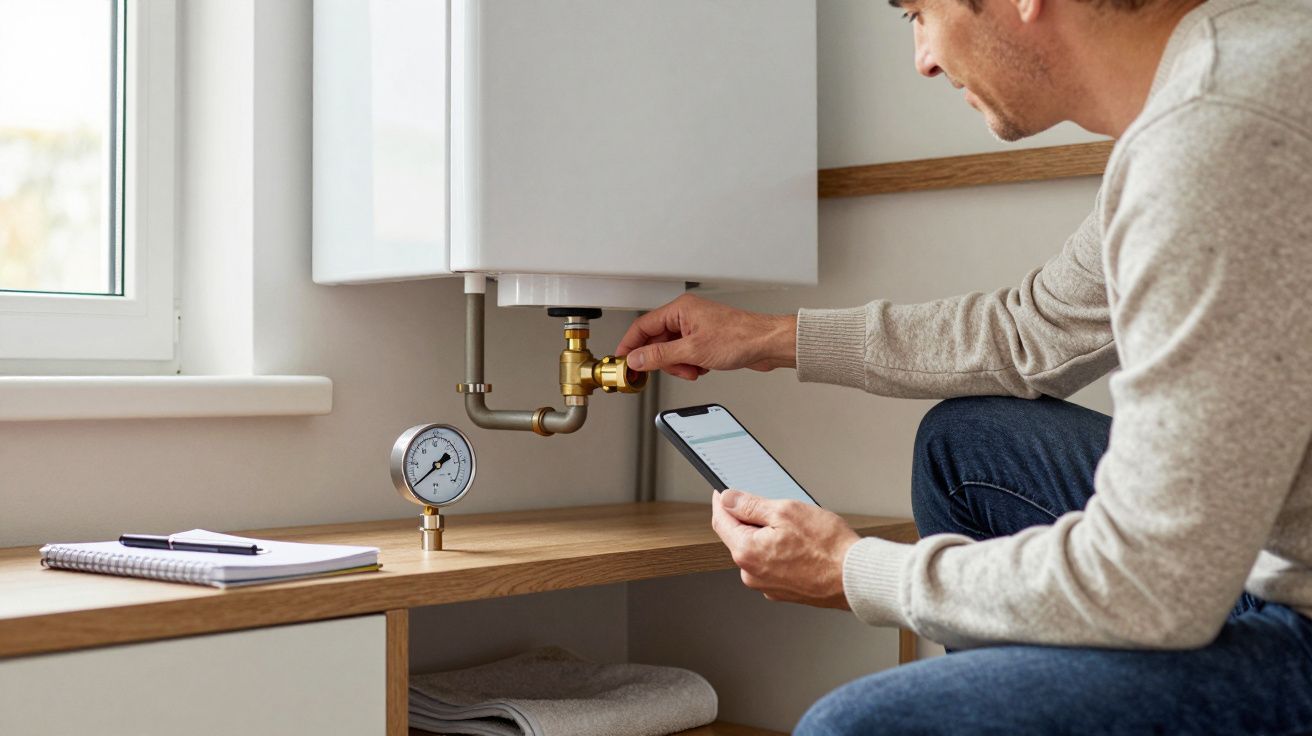
- Pump issues: failing pumps can deliver weak flow to distant circuits.
- Bypass valve set too open: hot water loops back to the boiler instead of travelling to radiators.
- System sludge: recurring cold spots and slow heat-up can mean the radiator needs flushing.
- Poor zoning or control placement: a hallway thermostat can shut the system down while bedrooms are still cold.
If a single radiator is the problem, suspect the radiator/valves. If the whole “end of the house” is the problem, suspect flow distribution and overall balance.
A quiet payoff: comfort, noise reduction, and lower running costs
Hydraulic balance sounds like a technical footnote, but the payoff is practical. Once flow is shared properly, rooms reach temperature more evenly, TRVs behave more predictably, and you stop compensating with a higher thermostat setting “just to make the back rooms liveable”.
It can also reduce the little annoyances: rushing water noises, temperature swings, and that feeling that your boiler is always on yet never quite delivering comfort where you need it.
A quick “do this first” checklist
- Bleed radiators only if you have cold tops or gurgling.
- Make sure all valves are actually open and TRVs aren’t stuck.
- If the same radiators always win and lose, consider a proper balancing session.
- If balancing won’t hold, look at sludge, bypass settings, and pump health.
FAQ:
- Can uneven room temperatures happen even if all radiators get hot eventually? Yes. If some rooms heat fast and overshoot while others lag, that’s a classic sign of poor flow distribution rather than a total fault.
- Is balancing something I can do myself? Many people can, with patience and small adjustments to lockshield valves. If you’re unsure, or the system is complex (multiple zones, underfloor heating, older pipework), it’s often quicker to have a heating engineer do it properly.
- Will bleeding radiators fix hydraulic balance? Not usually. Bleeding removes trapped air; it doesn’t redistribute flow. If the same radiators stay weaker after bleeding, balance is still the likely issue.
- How often should radiators be balanced? There’s no fixed schedule. It’s worth revisiting after system changes (new radiator, new boiler, pump change) or if the heating pattern shifts over time.
- Does balancing help with energy bills? It can. More even heat means less thermostat “chasing” and fewer overheated rooms, which often translates to lower demand for the same comfort level.





Comments (0)
No comments yet. Be the first to comment!
Leave a Comment