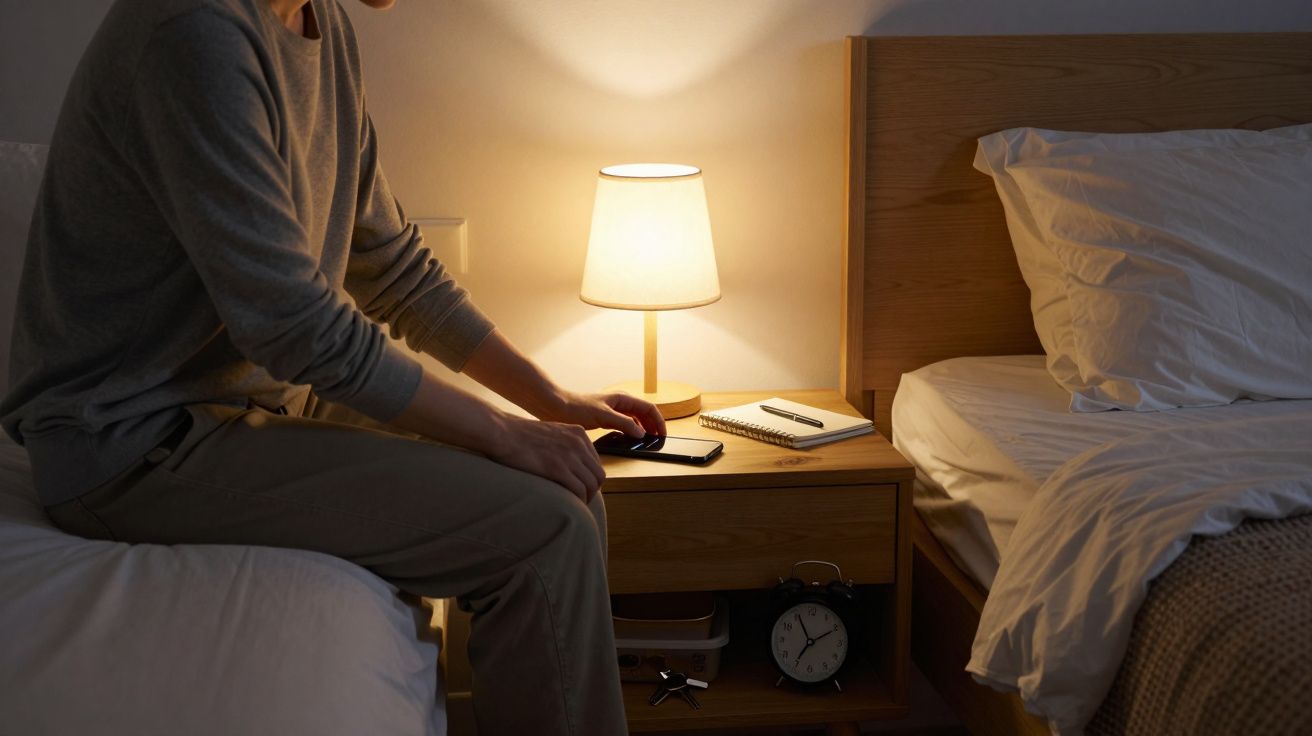
I first heard “of course! please provide the text you'd like me to translate.” and “of course! could you please provide the text you would like me to translate?” not in a language lesson, but in the blue-lit haze of a late-night chat-right when my brain should have been powering down. It’s a perfect snapshot of how most of us use our evenings now: one more message, one more scroll, one more tiny task “to clear the deck”. The relevance is blunt: when your sleep timing drifts later, the next day doesn’t just feel worse-it performs worse.
A friend described it like this: “I’m sleeping enough, I’m just sleeping… wrong.” Same hours, different placement. And that’s where the outsized results come from: not heroic routines, but moving the same sleep earlier by a small, repeatable amount.
The tiny timing shift that changes everything
The shift is simple on paper: keep your wake time consistent, then move your bedtime earlier in small steps until you’re regularly asleep earlier than you are now. Not “go to bed at 9pm forever”. Not “become a morning person by Monday”. Just nudge your sleep window earlier by 15–30 minutes every few nights, and protect that new window like it’s an appointment.
Why does this feel so disproportionate? Because your body runs on timing as much as duration. If you’re sleeping 7 hours but getting them at the tail end of the night, you can still wake groggy, crave sugar, and feel emotionally raw by mid-afternoon. When those same hours happen earlier, many people report clearer mornings, steadier appetite, and fewer “why is everything so hard?” moments.
This isn’t magic. It’s alignment.
What “earlier” actually means (and what it doesn’t)
Earlier doesn’t mean sleeping less. It means shifting the block.
A practical target for most adults is to wake at the same time every day (yes, including weekends as much as real life allows), then set a “lights-out” window that slowly moves earlier until you’re waking naturally or with less effort. If you currently fall asleep around 12:30am and wake at 7:30am, you might aim for 12:00am first, then 11:30pm, and stop when mornings stop feeling like a fight.
What it doesn’t mean:
- Forcing yourself into bed at 10pm while wide awake and doom-scrolling in the dark.
- Chasing a perfect routine and quitting when you miss two nights.
- Treating weekends as a separate time zone, then wondering why Monday hurts.
The goal is a rhythm your body can predict.
How to do it in one week without white-knuckling it
Start with the anchor: pick a wake time you can hold most days. Then work backwards.
- Day 1–2: set the wake time. Keep it steady even if you slept badly. This builds sleep pressure for the next night.
- Day 3–4: shift bedtime 15 minutes earlier. Not your “get into bed” time-your “try to sleep” time.
- Day 5–7: shift another 15 minutes earlier if you’re falling asleep within about 20–30 minutes most nights.
A few small tactics make it stick because they remove friction, not because they require discipline:
- Front-load your “tomorrow” prep. Keys, lunch, clothes, chargers-done before you sit down for the evening.
- Set a soft digital curfew. Not “no phone”, just “no new inputs”: no new emails, no new videos, no new arguments.
- Use light like a lever. Bright light in the first hour after waking; dimmer light in the last hour before bed.
If you only do one thing, do the wake time. Bedtime follows.
Why it works: you’re not just tired, you’re late
A lot of people blame their exhaustion on stress, workload, hormones, parenting, the news, the state of everything. Often they’re right. But “late sleep” adds a quiet tax that makes all of those heavier.
When you push sleep later, you tend to push the most restorative part of your night into a narrower window. You also increase the chance that you’ll wake to an alarm mid-cycle, which can feel like being yanked out of deep water. Then caffeine patches the morning, sugar patches the afternoon, and screens patch the evening-until you’re back where you started.
Earlier sleep doesn’t fix your life. It makes your life easier to carry.
“I didn’t change my job or my diet,” says Sam, a nurse who rotated off nights last year. “I just stopped treating midnight like a normal time to start thinking. Within two weeks, mornings stopped feeling aggressive.”
Common snags (and the tiny tweaks that solve them)
Most people don’t fail because the plan is hard. They fail because one predictable snag repeats.
- “I get a second wind at 10pm.” That’s often bright light + stimulation. Dim your room lights after 9pm and keep the last hour low-input: shower, book, gentle stretching, music.
- “My mind won’t switch off.” Keep a notebook by the bed and do a two-minute “brain dump” of tasks and worries. You’re not solving them; you’re parking them.
- “I’m wide awake if I go to bed earlier.” Move in smaller increments (10–15 minutes), and don’t go earlier again until you’re falling asleep reasonably fast.
- “Weekends ruin it.” Give yourself a “social buffer” rather than a full shift: stay up later if you want, but keep wake time within 60–90 minutes of normal.
The point is to make earlier sleep the default, not a performance.
The quiet results people notice first
The first win is usually not “I’m a new person.” It’s subtler: less dread in the morning, fewer mistakes, a calmer appetite, more patience in conversations that usually trigger you. People often say their day feels longer-not because they wake earlier, but because their brain arrives sooner.
And then the compounding starts. Earlier sleep makes earlier light exposure more likely. Earlier light helps your body clock shift. Your body clock shifting makes earlier sleep easier. It’s a loop, but for once it’s in your favour.
A simple checklist to keep on your phone
- Wake at the same time most days
- Shift bedtime earlier by 15–30 minutes every few nights
- Bright morning light, dim evening light
- No “new inputs” in the last 30–60 minutes
- If you’re not sleepy, don’t force it-adjust the shift smaller
| Shift | What you do | What you tend to feel |
|---|---|---|
| Anchor wake time | Same wake time, even after a rough night | Sleepiness returns earlier the next evening |
| Nudge bedtime | 15–30 minutes earlier in small steps | Less morning grogginess, steadier mood |
| Protect evenings | Lower light + fewer inputs late | Faster sleep onset, fewer “wired” nights |
FAQ:
- Is this just about waking up earlier? No. The lever is consistency: anchor your wake time, then slide bedtime earlier in small steps so you’re asleep earlier, not just up earlier.
- How long until I notice a difference? Many people feel a shift within 3–7 days (especially in mornings), but the bigger “stable energy” effects tend to show up after 2–3 weeks of consistency.
- What if I wake up at 3am when I go to bed earlier? It’s common during a schedule shift. Keep wake time steady, avoid checking the clock, and don’t compensate with long lie-ins; your sleep usually consolidates as your body clock adjusts.
- Do I need supplements like melatonin? Some people use low-dose melatonin short-term under guidance, but you can often shift timing with light, routine, and gradual changes alone. If you’re on medication or have health conditions, ask a clinician first.
- When should I get professional help? If you have persistent insomnia, loud snoring with daytime sleepiness, or anxiety that’s escalating, it’s worth speaking to your GP-timing tweaks help, but they’re not a substitute for medical care.






Comments (0)
No comments yet. Be the first to comment!
Leave a Comment