It’s usually a calm winter evening when it happens: the boiler was fine an hour ago, and then-nothing. Somewhere outside, a condensate pipe is quietly facing the risk of freezing, and your whole heating system can end up held hostage by a thin run of plastic. In the UK, where cold snaps can arrive fast and overnight temperatures drop below zero, that small detail matters more than most people realise.
Condensing boilers are built to be efficient, and part of that efficiency is wringing heat out of flue gases until water vapour turns back into liquid. That liquid (condensate) has to drain away. If it can’t, the boiler protects itself by shutting down, and the house goes cold.
What a condensate pipe actually does (and why it fails in winter)
Condensate isn’t “extra water”; it’s a normal by-product of modern boilers. It flows from the boiler to a drain-sometimes internally, often via an external section of pipe that runs along a wall and into a gully.
The problem is simple physics plus British building habits. Water in a narrow pipe freezes quickly, and many installations include a short outdoor run that’s exposed to wind chill. When that section freezes, condensate backs up, and the boiler typically locks out with an error code to avoid damage.
The boiler isn’t being dramatic. It’s doing the safe thing: stopping before water ends up where it shouldn’t.
The tell-tale signs your boiler has tripped on a frozen pipe
The “mystery breakdown” pattern is surprisingly consistent. If you spot it early, you can often fix it without waiting days for an engineer.
Common clues include:
- The boiler shows a fault code or “lockout” message soon after a cold night.
- No heating and/or no hot water, while electricity to the boiler is still on.
- The outside condensate pipe looks white-frosted or feels rock solid.
- Drips from the pipe stop entirely (it may normally trickle when the boiler runs).
If you’re unsure, check the weather first. A frozen condensate pipe is most common when temperatures hover around or below 0°C, especially after the boiler has been running steadily.
A quick, safe thaw you can do yourself
You don’t need heroics. You need gentle heat, patience, and the right bit of pipe.
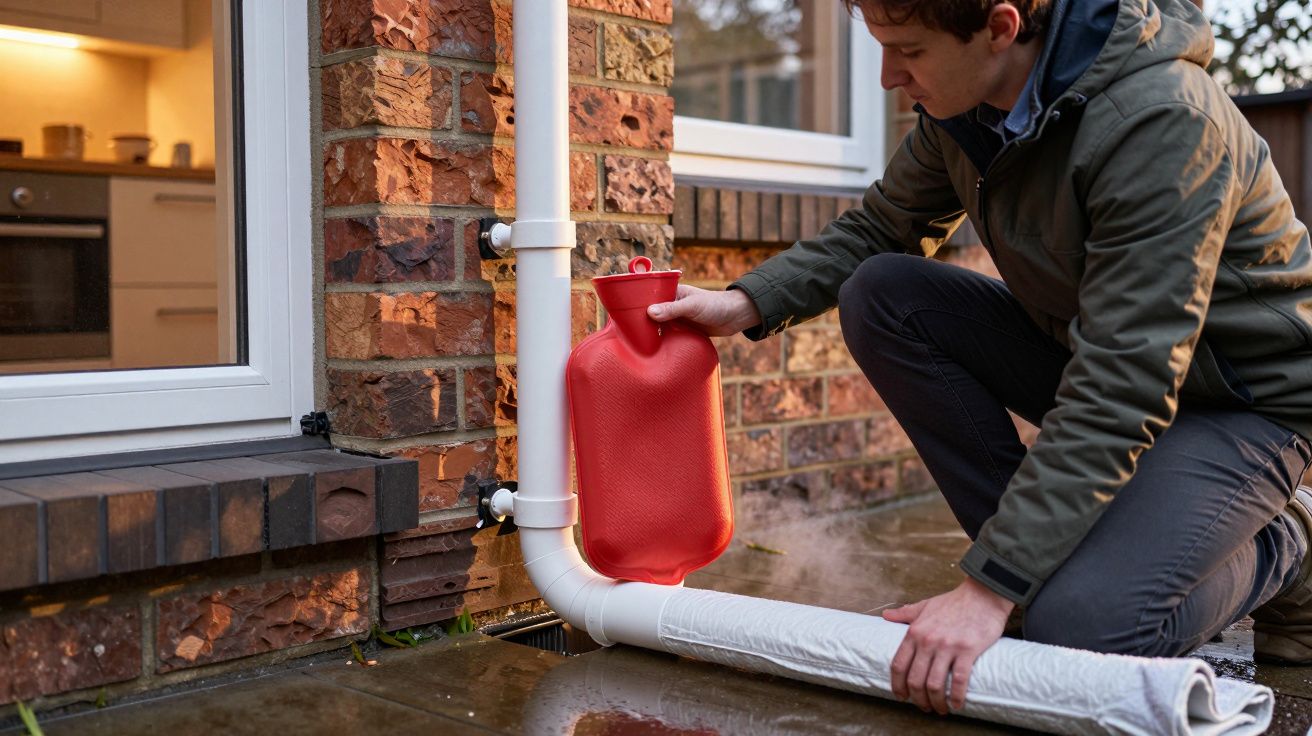
- Find the external section (often a white plastic pipe leaving the house, low down).
- Warm it gradually using one of these:
- A hot water bottle held against the pipe
- Warm (not boiling) water poured over it
- A towel soaked in warm water wrapped around it
- A hot water bottle held against the pipe
- Start near the frozen point (often the end near the drain/gully) and work back towards the wall.
- Reset the boiler once you believe flow has returned.
Avoid direct flame or anything that can melt plastic or damage seals. Kettles of boiling water sound satisfying, but they can crack the pipe or warp joints-then you’ve upgraded your “quick fix” into a leak.
The real fix is boring: reduce exposure, widen margins
Most recurring winter shutdowns happen because the pipework was installed in a way that’s fine in mild weather and fragile in a cold snap. The aim is to make freezing less likely in the first place.
What tends to help:
- Insulate external pipe runs with proper waterproof pipe insulation (not a token foam sleeve that gaps at bends).
- Keep the external run as short as possible. Internal routing to a soil stack or internal drain is usually more resilient.
- Use a wider diameter on external sections (many engineers favour 32mm outside rather than 21.5mm, depending on the setup and guidance).
- Maintain a consistent fall so condensate doesn’t sit and chill in low spots.
- Add trace heating in severe or exposed locations (a small heated cable controlled by temperature).
If you’re renting, this is worth raising early-before the first hard freeze. If you own the property, it’s one of the cheapest “prevent a no-heating emergency” upgrades you can make.
Why some homes get hit every year (and others never do)
Two streets can share the same temperature and still have wildly different outcomes. The difference is usually installation geometry, not boiler brand.
High-risk setups often include:
- A long external run along a north-facing wall
- A pipe exiting into open air before reaching a drain
- Multiple bends that slow flow and create “cold traps”
- A gully that itself freezes or blocks
Meanwhile, a short, well-insulated run into an internal waste pipe can shrug off the same cold spell. The boiler doesn’t know the difference-it just reacts when condensate can’t leave.
A compact “winter-proofing” checklist you can do in 15 minutes
You’re not looking for perfection. You’re looking for obvious weak points.
- Locate where the condensate pipe exits the building and where it terminates.
- Check whether any section is uninsulated, cracked, or loosely fitted.
- Look for sagging sections (they collect water).
- If it runs outside, measure roughly how long and exposed it is.
- Photograph the route-useful if you later speak to an engineer or landlord.
If the pipe is already insulated, inspect the joins. Gaps at elbows and around clips are where wind chill sneaks in and freezing starts.
When to call an engineer (and when not to)
If thawing doesn’t restore function, don’t keep resetting the boiler and hoping. Repeated lockouts can mask other faults, and you’ll lose time.
Call for help if:
- The pipe won’t thaw or refreezes within hours
- You see leaks, split pipework, or damp patches near the boiler
- The boiler shows unusual noises, pressure drops, or repeated error codes after thawing
- You can’t safely access the external section (height, ice, poor lighting)
An engineer can reroute the pipe, upgrade diameter, add trace heating, or correct the fall-changes that turn an annual winter drama into a non-event.
FAQ:
- Why does a condensing boiler produce water at all? It extracts extra heat by condensing water vapour in the flue gases into liquid water (condensate), which must drain away safely.
- Can I pour boiling water on the condensate pipe to thaw it faster? It’s better not to. Very hot water can damage plastic pipework and joints; use warm water, a hot water bottle, or warm towels instead.
- Will insulating the pipe guarantee it won’t freeze? It reduces the chance significantly, but long, exposed runs can still freeze in severe cold. Shortening the outdoor section or adding trace heating offers a stronger fix.
- How do I know it’s the condensate pipe and not “the boiler dying”? If the failure appears after sub-zero nights and you have a lockout with no heating/hot water, a frozen condensate pipe is a common cause-especially if the external pipe feels frozen.




Comments (0)
No comments yet. Be the first to comment!
Leave a Comment