You sign off on heating system upgrades because the house is cold, the bills are high, and you’re done with “it’s just winter”. Then the installer leaves, the new kit hums away, and the same draughty misery shows up at 6 a.m. The frustrating bit is that the upgrade may be fine - it’s the root cause that never got touched.
It’s like repainting a ceiling when the leak is still in the loft. Everything looks improved, yet the problem keeps reappearing in the same place.
The upgrade looked sensible - so why is the house still uncomfortable?
A new boiler, a bigger radiator, a smart thermostat, even underfloor heating: these are all real improvements. But an improvement isn’t automatically a fix. Comfort is an outcome of a whole system working together - heat source, distribution, controls, fabric of the building, and airflow.
Most “it didn’t work” stories come down to one of three things:
- The upgrade addressed the symptom (not enough heat) rather than the reason the heat wasn’t felt.
- The system was installed correctly, but commissioned or balanced poorly.
- The house itself is fighting the heating with heat loss and uncontrolled draughts.
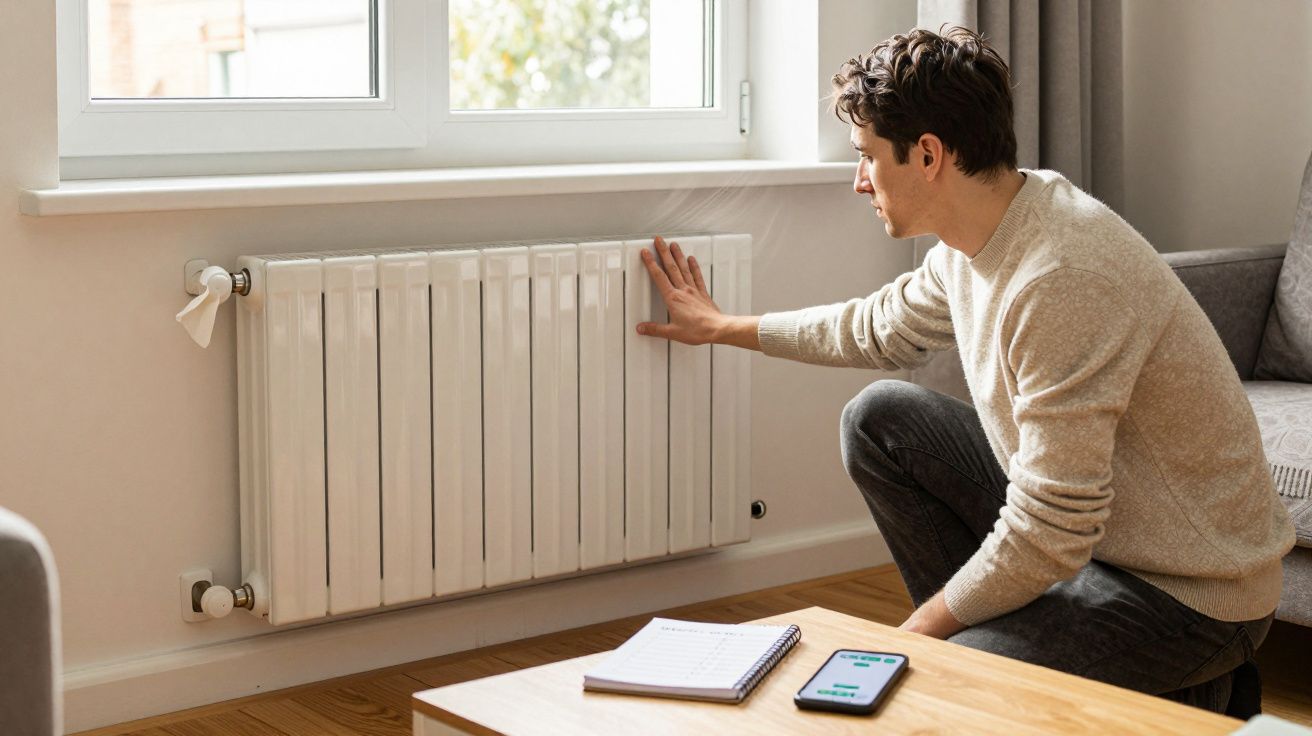
On a wet January evening, this usually looks like someone standing by the new radiator with a hand on it, saying, “It’s hot… so why am I freezing?”
The quiet trap: treating comfort as a boiler problem
Boilers get the blame because they’re visible, expensive, and easy to point at. But comfort complaints often start elsewhere: cold air entering, heat escaping, or hot water not moving where it should.
A few common examples that fool even sensible homeowners:
- Loft insulation is thin or patchy, so the warmest air you paid for rises and disappears.
- Suspended timber floors leak air, especially around skirtings and old vents, making rooms feel “windy-cold”.
- Single cold surface (like an uninsulated wall) drags the whole room down via radiant heat loss, even if the air temperature reads “fine”.
- Oversized or poorly positioned radiators make the thermostat think the room is warm while the seating area stays cold.
This is why two houses with the same boiler can feel completely different. One has a decent fabric and gentle, controlled airflow. The other is basically heating the street.
When the kit is new but the system is old: flow, balance, and controls
Heating is not just “make water hot”. It’s “move the right amount of hot water to the right places at the right time”. If that part is off, upgrades can under-deliver.
Look for these patterns:
- Upstairs roasting, downstairs chilly: often a balancing issue, pump setting, or radiator valves not set correctly.
- Radiators hot near the boiler, lukewarm at the far end: sludge, trapped air, undersized pipework, or poor flow rates.
- Short cycling (boiler firing on/off a lot): controls mismatch, wrong flow temperature, or an oversized appliance for the heat load.
- Smart thermostat installed, but comfort worse: zoning and schedules look clever, but sensors are in the wrong place or the system can’t modulate smoothly.
A competent installer will “commission” the system - set flow temperature, check delta-T, balance radiators, configure controls, and confirm it’s operating as designed. If commissioning is rushed, the hardware may be great and the outcome still disappointing.
The root cause is often heat loss - and it’s boring on purpose
People want an upgrade that feels like progress: shiny box, app control, new cylinders. The boring upgrades - draught proofing, insulation top-ups, sealing gaps - don’t photograph well. They do, however, change the physics of your home.
A useful mental model is: reduce loss before you increase output. If you don’t, the heating system spends its life sprinting just to stand still.
Start with a quick “where would heat escape?” walkthrough:
- Loft hatch, downlights, and eaves gaps
- Chimney flues and unused fireplaces
- Front door and letterbox, especially in older terraces
- Bathroom extractor fans that back-draught
- Floorboards at external walls and bay windows
If you can feel a draught with the heating on, the system is being asked to compensate for a building problem.
What to check this week (before you pay for another upgrade)
Keep it practical. You’re trying to find the fault line between “the system can’t produce heat” and “the house can’t hold it”.
- Compare rooms, not just the thermostat. Note which rooms lag and when (morning warm-up, windy evenings, after showers).
- Check flow temperature settings. Modern boilers often run best with lower flow temperatures, but too low can mean never reaching comfort in leaky homes.
- Feel pipework and radiator patterns. Cold spots can suggest air/sludge; far rads underperforming hints at balancing/flow.
- Look at control placement. If the thermostat sits in a warm hallway or near a radiator, it can “satisfy” early and shut the whole system down.
- Do one draught test. On a windy day, hold tissue near skirtings, door edges, loft hatch. If it flutters, that’s money moving.
If you’re not sure what you’re looking at, ask for measurements, not reassurance: flow temperature, return temperature, differential pressure settings (where relevant), and a clear description of how balancing was done.
“A heating upgrade should come with proof it was set up, not just installed,” a building services engineer once told me. “Most comfort failures are commissioning failures - or heat loss wearing a disguise.”
Make the next change the one that actually shifts comfort
The goal isn’t “buy a better thing”. It’s “remove the constraint”. Sometimes the constraint is a clogged system that needs a proper clean and balance. Sometimes it’s a control strategy that’s fighting the building. Very often, it’s the fabric: insulation, air leakage, and cold surfaces.
A small but effective plan looks like this:
- Do the low-cost checks (draughts, thermostat placement, basic radiator performance).
- Get a proper system assessment (balancing, flow temps, evidence of sludge).
- Only then decide whether further heating system upgrades are needed - and which one matches the actual root cause.
| What you changed | What it should improve | If it didn’t, suspect this |
|---|---|---|
| New boiler / heat pump | Efficiency, steadier heat | Heat loss, poor commissioning, wrong flow temps |
| Smart thermostat / zoning | Control, comfort timing | Sensor location, mismatched schedules, imbalance |
| Bigger radiators | More heat output | Low flow, sludge, undersized pipework, draughts |
FAQ:
- How do I know if my issue is heat loss or a heating fault? If rooms cool down quickly after the heating stops, you feel draughts, or cold walls/floors dominate, suspect heat loss. If radiators are uneven, far rooms never warm, or the boiler cycles constantly, suspect flow, balance, or controls.
- Should I turn the boiler flow temperature up to “fix it”? Sometimes it helps short-term, but it can mask the real issue and raise bills. Better to confirm why heat isn’t reaching rooms (balance/sludge/controls) or why it won’t stay there (draughts/insulation).
- Do smart thermostats actually make homes warmer? They can make heating smarter, not magically stronger. If your home loses heat fast or the system is unbalanced, “smart” control can simply switch off sooner and feel worse.
- Is radiator balancing really that important? Yes. An unbalanced system can leave some rooms over-supplied and others starved, especially in larger or older homes. It’s one of the most common reasons an upgrade disappoints.
- What’s the best first upgrade if I’m on a budget? Often it’s not a heater at all: draught-proofing and targeted insulation (loft hatch, loft top-up, sealing obvious gaps) can make existing heating feel dramatically better for less money.






Comments (0)
No comments yet. Be the first to comment!
Leave a Comment