Most breakdowns start the same way: you come home, the place feels a bit cooler, and you tell yourself the heating will catch up. Then the heating system doesn’t, and suddenly you’re looking up emergency boiler repairs while the radiators sit there, politely doing nothing. It matters because “no warning” often isn’t truly no warning - it’s small signs that are easy to miss until the house goes cold.
I’ve heard people describe it like a switch being flicked. In reality, it’s usually one weak link finally giving up: pressure drifting, a sensor misreading, a fan that’s been noisy for weeks, or a tiny leak that’s been quietly starving the boiler.
Why “sudden” heating failures aren’t actually sudden
Modern boilers are designed to shut down when something looks unsafe or out of range. That protection is good news, but it can feel brutal when it triggers during a cold snap.
Think of it like a chain of small compromises. A bit of air in the system, a bit of sludge in the pipework, a little loss of pressure - and then one day the boiler locks out because it can’t meet the conditions it needs to fire cleanly.
The most common “no warning” breakdown is a safety lockout doing its job, not the boiler being dramatic.
Top reasons a heating system fails without warning
1) Low system pressure (often from a slow leak)
Combi boilers, in particular, are fussy about pressure. If it drops below the minimum, the boiler may refuse to run to protect internal components.
Common causes include a weeping valve, a pinhole leak on a radiator, or a failing expansion vessel. You might not see water; sometimes it evaporates on a warm pipe or collects under floorboards.
What you’ll often notice first:
- Radiators cooler at the top, or taking ages to warm up
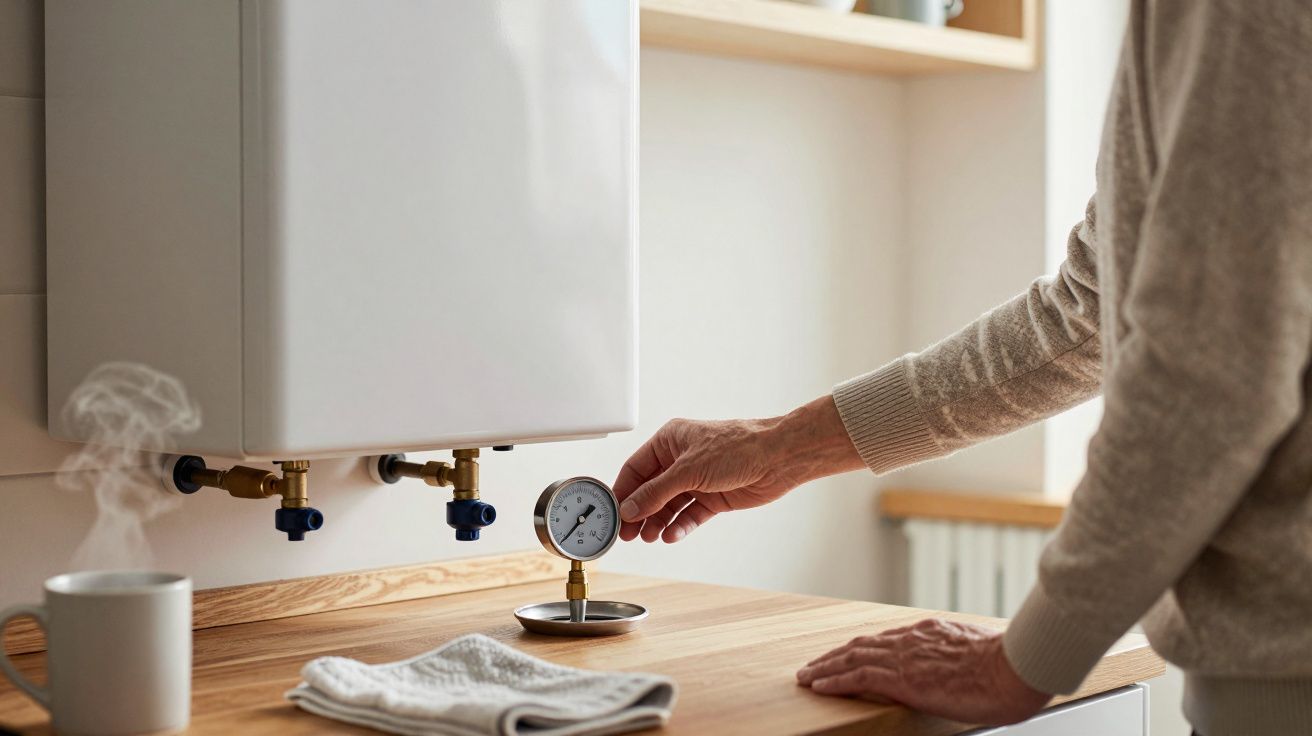
- A pressure gauge reading below the normal range (commonly around 1–1.5 bar when cold)
- Boiler showing a “low pressure” fault code or flashing light
2) Frozen condensate pipe
This one really does arrive like a trapdoor in winter. Condensing boilers produce acidic condensate that drains away through a plastic pipe; if that pipe freezes outside, the boiler can lock out.
It’s common after a cold night, especially if the pipe runs externally, is poorly insulated, or has too many bends. The boiler isn’t broken - it’s refusing to operate until it can drain safely.
Clues it’s this:
- Failure happens after a sharp frost
- Gurgling sounds near the boiler
- A condensate-related fault code (varies by manufacturer)
3) Ignition failure: worn electrodes, weak spark, or gas supply issues
Ignition components wear gradually, then fail decisively. The boiler will try to light, fail, and lock out.
Sometimes it’s the boiler (electrode, ignition lead, burner seal). Sometimes it’s external: gas valve issues, a regulator problem, or even other appliances suggesting a supply fault. Either way, it tends to feel sudden because the “attempt” happens in seconds.
Typical signs beforehand:
- Clicking for longer than usual before it fires
- Intermittent hot water performance (combis)
- Occasional lockouts that “fix themselves” after a reset
4) Flue or fan problems triggering a safety shutdown
The fan and air pressure switch prove that the boiler can move combustion gases safely. If the fan is failing, if the flue is obstructed, or if the pressure switch/hoses are compromised, the boiler may stop instantly.
This can appear random: it works fine, then doesn’t, then works again - until it doesn’t. Windy weather can also expose marginal flue issues, especially with poor terminal positioning.
Often overlooked warning:
- A new whirring, rattling, or “surging” noise when the boiler starts
- Boiler cutting out mid-cycle
- Lockout more frequent in high winds
5) Pump sticking or failing (especially after summer)
After months of little use, pumps can stick. When heating season starts, the boiler may fire but can’t circulate heat, so it shuts down or short-cycles.
You’ll sometimes get lukewarm radiators near the boiler and cold ones elsewhere. It’s not always a pump replacement - sometimes it’s freeing a stuck spindle - but it needs a competent check.
What it looks like in the house:
- Boiler sounds like it’s working, but radiators stay cold
- Radiators heat unevenly across the home
- Frequent cycling on and off
6) Sludge, scale, and blocked filters
A heating system can run “well enough” with dirty water - right up until it can’t. Magnetite sludge restricts flow, overheats the heat exchanger, and can trip overheat stats. Limescale in hard-water areas can do similar damage on the hot water side.
Filters clog slowly, then suddenly tip over the edge. The fault feels abrupt; the cause has been building for months or years.
Common hints:
- Noisy boiler (kettling, rumbling)
- Cold spots on radiators
- One radiator always needing bleeding (often linked with corrosion and air ingress)
7) Electrical and control faults (thermostats, PCB, wiring)
Controls fail in the most unhelpful way: everything looks normal, but nothing responds. A thermostat might stop calling for heat, a diverter valve actuator might fail, or the PCB might develop an intermittent fault that becomes permanent.
Power cuts and voltage spikes can be the final nudge. So can moisture - a tiny drip onto wiring can corrode connectors and create a fault that appears overnight.
Quick reality check:
- If both heating and hot water have failed, suspect the boiler/control side
- If only heating has failed, suspect thermostat/programmer/zone valve (system boilers)
- If hot water is erratic, suspect sensors/diverter (combis)
What to do in the first 10 minutes (before you call)
You don’t need to “fix” it, but you can avoid wasting time - and sometimes avoid a call-out entirely.
- Check the programmer/thermostat is actually calling for heat (batteries, schedule, temperature setpoint).
- Look at the boiler display for a fault code and note it down.
- Check pressure on the gauge (if it’s low, don’t keep resetting the boiler).
- If it’s freezing outside, look for a frozen condensate pipe symptom before pressing reset repeatedly.
- If you smell gas, hear hissing, or feel unwell: leave the property and contact the gas emergency line immediately.
Small habits that prevent big “no warning” moments
Most prevention is dull - which is why it works.
- Service annually to catch combustion, fan, and safety issues early.
- Keep external condensate pipework insulated and as short as practical.
- Bleed radiators and keep an eye on pressure trends (a trend is information).
- Consider a magnetic filter and periodic system flush if sludge symptoms show up.
- Don’t ignore new noises; they’re often the only warning you’ll get.
| Quiet warning | What it often points to | Why it matters |
|---|---|---|
| Pressure drops every few weeks | Slow leak / expansion vessel | Can trigger lockouts and damage components |
| New rattling/whirring on start | Fan / flue proving issues | Boiler may shut down for safety |
| Kettling or rumbling | Scale/sludge restricting flow | Overheats heat exchanger, trips stats |
When emergency boiler repairs are the right call
If the boiler is repeatedly locking out, showing a persistent fault code, or you have no heat in unsafe temperatures (especially with vulnerable occupants), an urgent visit is sensible. The same goes for any sign of combustion or flue problems - these aren’t “wait and see” faults.
The goal isn’t panic; it’s triage. A heating system that fails without warning usually leaves a trail - and the sooner you catch it, the less likely it is to happen again on the coldest night of the year.
FAQ:
- How do I know if it’s the boiler or the thermostat? If hot water still works (combi) but heating doesn’t, suspect thermostat/programmer or a heating-side control. If both are out and there’s a fault code, it’s more likely boiler-side.
- Is it safe to keep resetting the boiler? Occasional resets are fine, but repeated lockouts mean the boiler is detecting a problem. Repeated resets can worsen faults (and mask a safety issue) - log the code and call an engineer.
- What pressure should my boiler be at? Many systems sit around 1–1.5 bar when cold, but check your manual. If it’s frequently low, topping up is a symptom-management step, not a cure.
- Why does it fail only when it’s cold outside? Frozen condensate pipes, marginal fans, and pressure issues often show up in colder weather when demand is higher and components are under more stress.




Comments (0)
No comments yet. Be the first to comment!
Leave a Comment