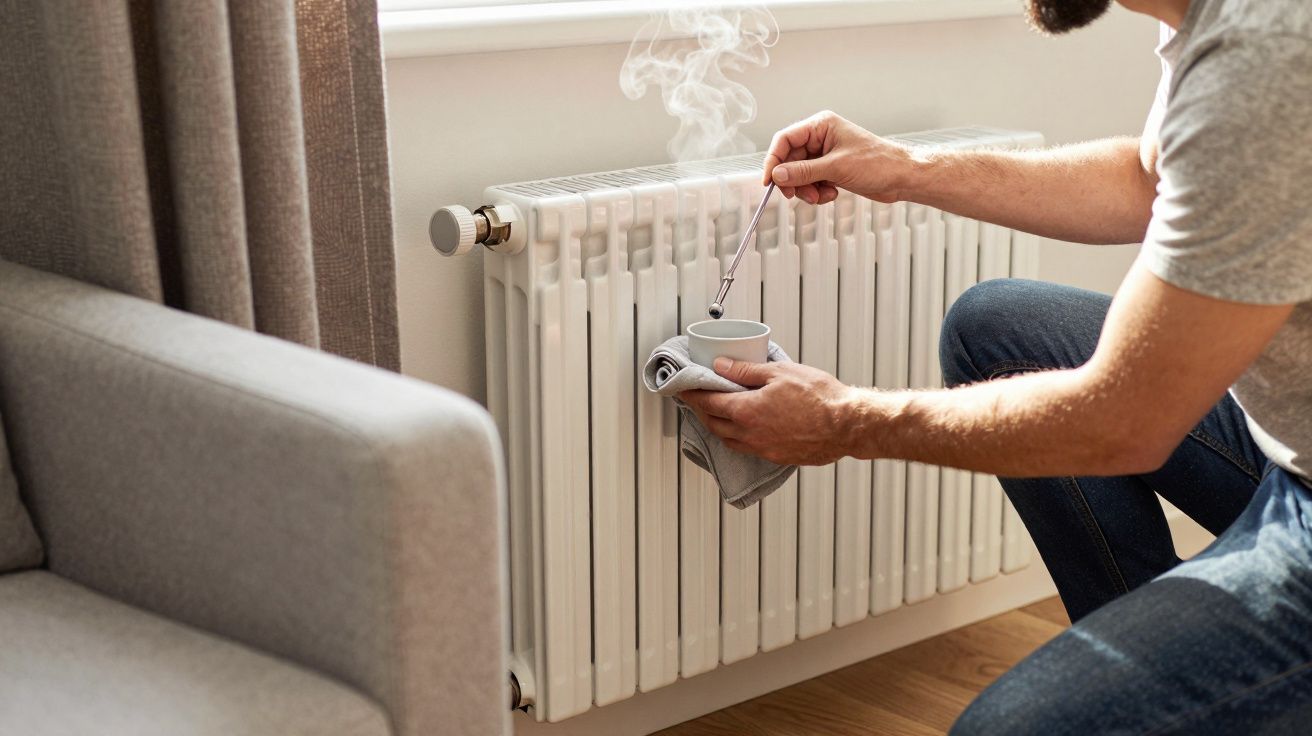
Radiators are meant to turn boiler heat into comfort, but when they underperform the whole house feels “off” - cold corners, hot ceilings, and that stubborn chill by the sofa. Most of the time the issue isn’t the boiler, it’s heat distribution: the heat is being made, but it’s not moving into the room the way you think it is. The good news is the causes are usually boring, fixable, and hiding in plain sight.
You can hear it in the evening routine. The heating’s on, the pipes tick, one radiator is roasting, another is barely lukewarm, and you start turning dials like they’re a safe combination. Before you book a call-out, it helps to know what “underperforming” actually means - and what tends to cause it.
What “underperforming” really looks like
Underperformance is rarely “no heat at all”. It’s more often uneven temperature, slow warm-up, or a radiator that’s hot at the top and cold at the bottom (or vice versa). You might also notice the room never quite reaches thermostat set-point, even though the boiler is running longer than usual.
Those symptoms point to flow problems, trapped air, poor balancing, sludge, or simply the wrong conditions around the radiator for it to do its job.
The top reasons radiators underperform (and what each one does)
Air trapped in the radiator
Air pockets sit at the top and crowd out hot water, so the radiator can’t fill properly. The classic sign is a radiator that’s cold at the top and warmer lower down, sometimes with gurgling or rushing sounds.
Bleeding helps, but frequent re‑bleeding is a clue. If you’re topping up pressure often, you may have a leak or an expansion vessel issue that’s pulling air into the system.
Sludge and debris in the system
Sludge is the slow villain: iron oxide, scale, and general grime settling in low points and radiator bottoms. It reduces internal surface contact and blocks flow, so the radiator feels hot near the inlet but cools quickly across the panel, often cold at the bottom.
If multiple radiators are affected (especially downstairs ones), sludge moves up the suspect list. A powerflush isn’t always necessary, but cleaning and inhibition usually is.
Poor balancing (some radiators hog the flow)
Heating systems follow the path of least resistance. If the nearest radiators are wide open, they drink the flow and heat up fast, while the farthest ones starve and lag.
Balancing is unglamorous but decisive. It’s the difference between “one room tropical, one room arctic” and an even, predictable warm-up across the house.
Thermostatic radiator valves (TRVs) stuck or misbehaving
TRVs can stick closed after summer, or the pin can seize so the valve doesn’t open properly. It looks like a “dead radiator”, but the pipework might still be hot up to the valve.
The fix is often simple: remove the TRV head and gently free the pin. If it keeps happening, the valve body may need replacing.
Low system pressure (sealed systems)
If pressure is too low, circulation suffers, and higher radiators may struggle first. You might see the boiler short-cycling, or the system heating inconsistently.
Topping up through the filling loop can restore performance, but treat it as a diagnostic step, not a lifestyle. If pressure drops again, find out why.
Pump or flow issues (the heat can’t travel)
A failing pump, incorrect pump speed, blocked filter, or stuck zone valve can all mimic “bad radiators”. The boiler may fire, but the system can’t push heat around at the right rate.
This often shows up as multiple underperforming radiators at once, especially after changes like a new boiler, added zone, or recent maintenance.
Radiator sizing and placement don’t match the room
Sometimes the radiator is doing exactly what it can - it’s just too small for the heat loss. Bigger rooms, high ceilings, lots of glazing, or poor insulation can outpace the radiator’s output.
Placement matters too. Tucked behind heavy furniture or boxed into a cover, you’re effectively asking it to heat the room through a duvet.
Incorrect flow temperature or heating controls
Modern condensing boilers often run lower flow temperatures for efficiency. That’s great when the system is designed and balanced for it, but if your home expects hotter flow, radiators can feel “underpowered” even though the system is behaving as configured.
If you’ve recently had a boiler swap, smart thermostat install, or settings changed, this is worth checking. Comfort is a system outcome, not a single dial.
Micro-leaks and air ingress around fittings
You can lose performance without seeing a puddle. Tiny leaks at valves, tails, or older joints can let air in as the system cools and contracts, leading to repeated bleeding and noisy operation.
If one radiator keeps collecting air, don’t just keep bleeding it. Ask why that radiator is the one acting like a balloon.
Quick checks you can do before calling someone
You’re not trying to become a heating engineer. You’re trying to separate “simple” from “specialist” in ten minutes, with minimal fuss.
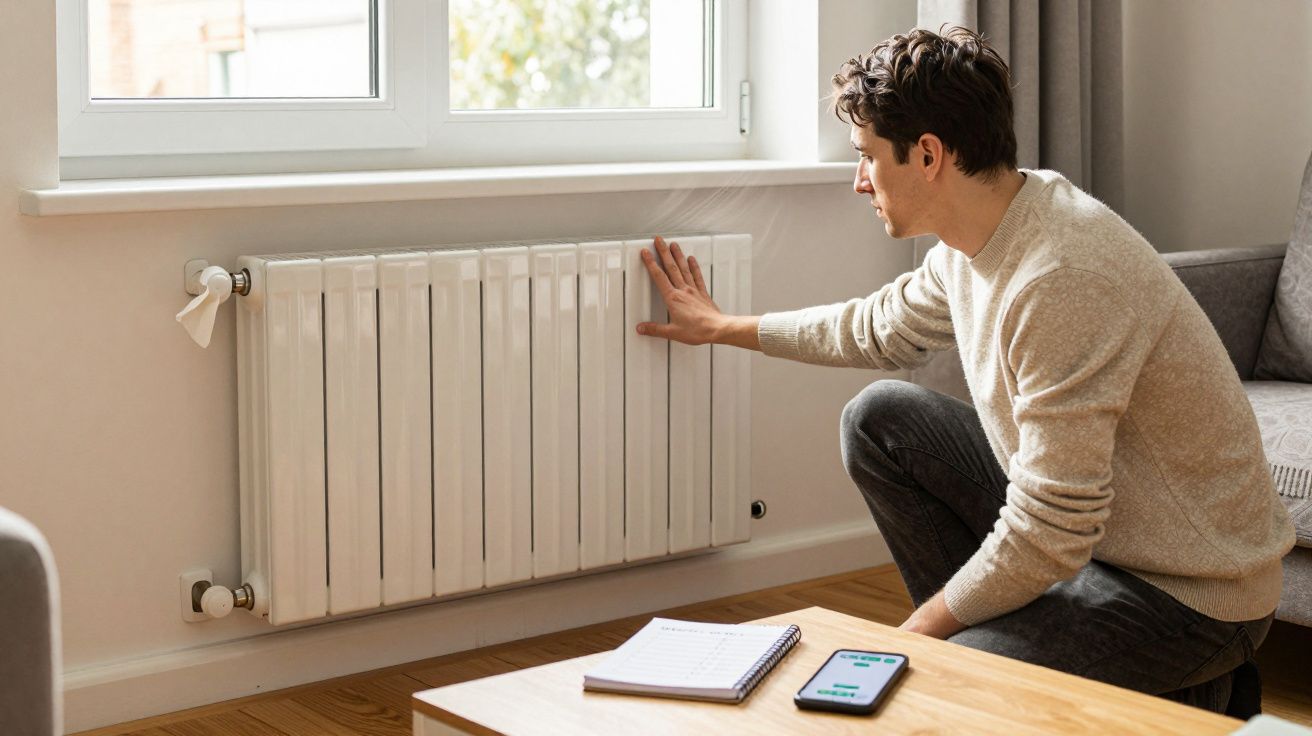
- Feel the radiator: top vs bottom, left vs right, and compare across rooms.
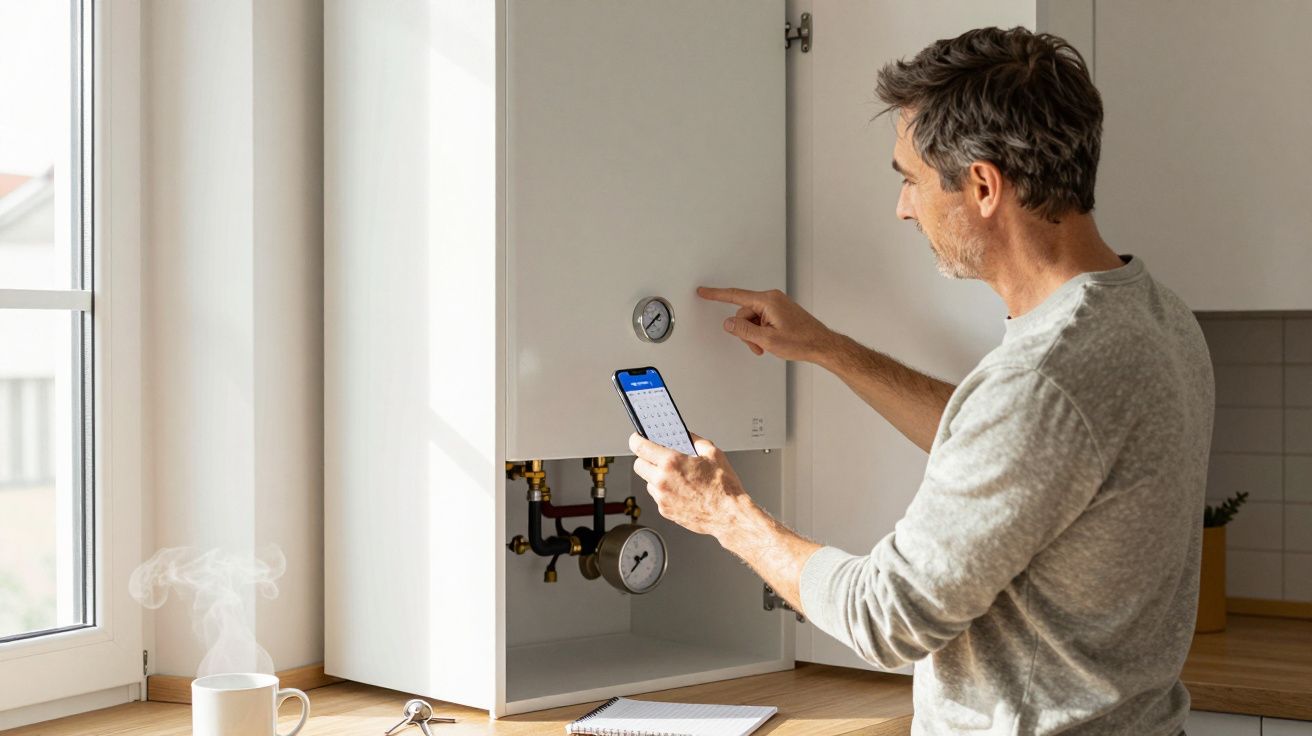
- Check the boiler pressure gauge (sealed systems typically sit around 1.0–1.5 bar cold, but follow your manual).
- Make sure TRVs and lockshields aren’t accidentally closed.
- Listen for gurgling (air) versus a dull “heavy” warmth that never spreads (flow/sludge).
- Note patterns: only the furthest radiator, only upstairs, only one zone, or the whole house.
The heat distribution trap: when the radiator is fine but the room isn’t
A radiator can be hot and still leave you cold if the room doesn’t circulate warmth. Drafts, poor insulation, and blocked convection paths all sabotage heat distribution.
Keep it practical:
- Leave a small gap behind curtains so warm air can rise.
- Don’t push sofas flush against a radiator unless it’s a deliberate design with enough clearance.
- If you use radiator covers, choose breathable designs and expect some output loss.
- Seal obvious draughts; it’s cheaper than “chasing” heat with higher set-points.
A simple map from symptom to likely cause
| What you notice | Likely cause | First move |
|---|---|---|
| Cold top, warm bottom | Air trapped | Bleed radiator, then monitor pressure |
| Warm top, cold bottom | Sludge/debris | Check others, consider clean/inhibitor |
| One radiator slow, others fine | Balancing/TRV issue | Check TRV pin, adjust lockshield |
| Whole house lukewarm | Flow temp/controls/pump | Check settings, pump/filters, call pro |
When to stop DIY and bring in help
If you smell gas, see signs of water damage, or the boiler shows repeated fault codes, stop and get a professional. Likewise, if pressure keeps dropping, or you’ve got multiple radiators underperforming after you’ve bled and checked valves, the system needs diagnosis, not guesswork.
The aim isn’t perfect hot metal. It’s predictable comfort - and once radiators and heat distribution are working together, the house stops feeling like a collection of separate climates.
FAQ:
- Why is my radiator hot at the top but cold at the bottom? This usually points to sludge or debris restricting flow at the bottom of the radiator. Bleeding won’t fix it; cleaning and adding inhibitor often will.
- Why do I have to bleed radiators so often? Frequent air suggests air ingress or repeated pressure loss. Check for small leaks, pressure drops, and whether the system is drawing in air as it cools.
- Can a radiator be “too small” even if it gets hot? Yes. A hot radiator can still be undersized for the room’s heat loss, especially with poor insulation or large glazing.
- Do radiator covers reduce heat output? Generally, yes. They restrict convection and can blunt heat distribution, meaning the radiator works harder to achieve the same room temperature.
- Is low boiler flow temperature always a problem? Not always. Lower temperatures improve efficiency, but if the system isn’t balanced or sized for them, radiators may feel underpowered and rooms may heat slowly.




Comments (0)
No comments yet. Be the first to comment!
Leave a Comment