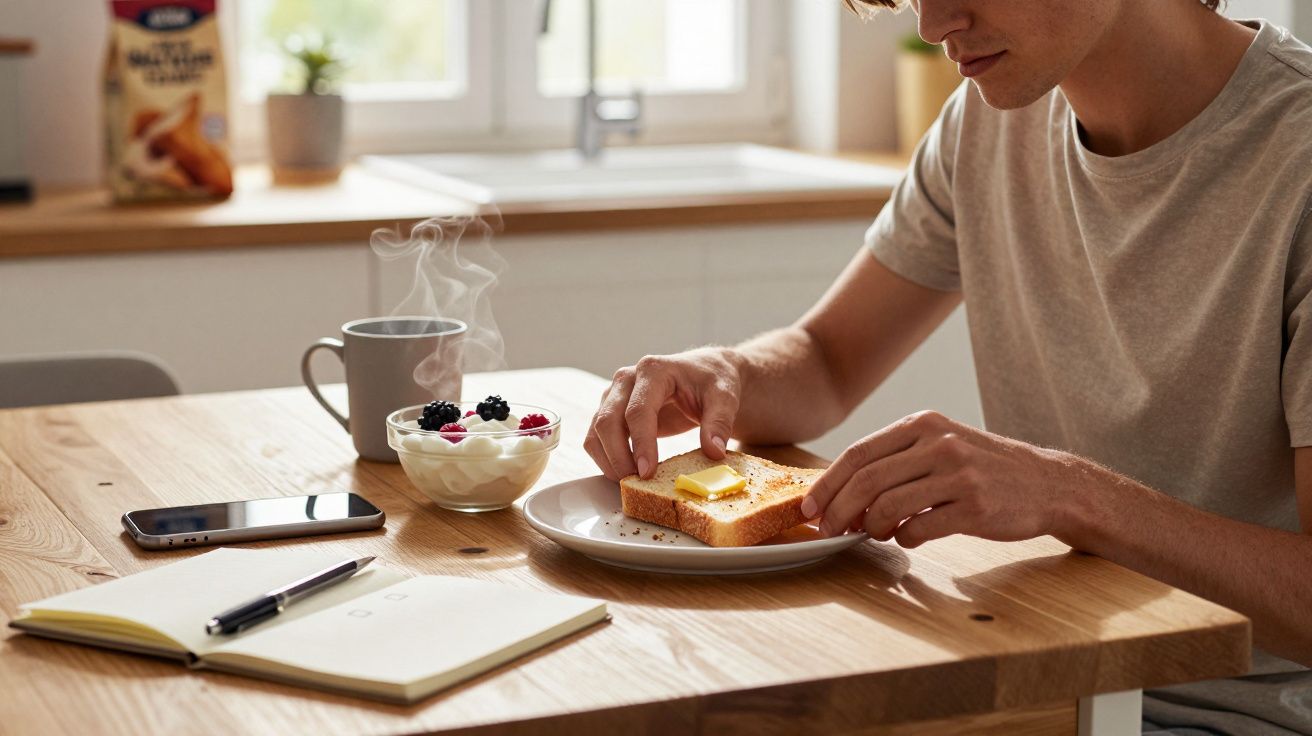
Warburtons sits in a lot of UK kitchens the way a reliable kettle does: not glamorous, but always in reach when you’re making toast before work or building a quick sandwich between meetings. And if you’ve ever copied and pasted “certainly! please provide the text you would like me to translate.” into the wrong chat, you’ll know how tiny slips stack up over time - food habits work the same way. The small detail isn’t a new diet; it’s the routine you repeat, and what it does to your energy, appetite, and spending without you noticing.
A colleague once told me she “doesn’t really eat breakfast” - then admitted she lives on two slices of toast most mornings, eaten standing up while the kettle boils again. Nothing about it felt like a choice, which is exactly why it mattered.
The unnoticed detail: what your bread choice is doing in the background
We talk about bread like it’s one category, but it behaves differently depending on how you use it. A soft slice that disappears in three bites can turn into a habit of eating faster than you realise, which often pairs with a mid-morning wobble and a second coffee you didn’t plan.
Warburtons is engineered for consistency: the slice is even, the texture is predictable, the toast browns quickly, the sandwich holds together. That reliability sounds boring, until you remember that most of our weekday eating is boring too - and boring is where long-term outcomes get decided.
The “small detail” is not whether bread is good or bad. It’s whether your default breakfast or lunch gives you a steadier runway, or nudges you into snacking because the first thing didn’t land.
A two-minute “toast check” that changes the whole day
Try this for a week, not forever. The goal is to notice, not to perfect.
- Make your usual toast or sandwich with Warburtons (don’t upgrade the whole meal).
- Add one anchoring element: protein (eggs, Greek yoghurt on the side, cottage cheese) or fibre/fruit (berries, an apple, tomatoes).
- Eat the first half sitting down, without your phone, and chew until you can actually taste the butter or the filling.
- At 11:00, note two things: hunger level (0–10) and mood (wired, flat, calm).
This isn’t a wellness performance. It’s a way to see whether your “normal” is quietly working for you or against you.
Common trap: people change three variables at once - new bread, new spread, new coffee routine - then can’t tell what helped. Keep the bread constant and tweak one detail.
“The big difference isn’t the heroic meal prep,” a dietitian friend once told me. “It’s the default you repeat when you’re tired.”
Why consistency beats intensity (especially with packed lunches)
There’s a reason the same brands end up on repeat in family homes: they reduce friction. When lunch is predictable, you’re less likely to skip it, less likely to buy a sad meal deal out of panic, and less likely to arrive at 4 p.m. ready to eat the office biscuits like it’s a personality trait.
A decent sandwich is not a failure of imagination; it’s a system. Two slices, a filling that doesn’t leak, and a decision you don’t have to make again tomorrow.
If you want the “small detail” that pays off, make it this: decide your one reliable sandwich and rotate the middle so you don’t get bored.
- Tuna + sweetcorn + black pepper (add cucumber for crunch)
- Chicken + mayo + spinach (add a squeeze of lemon if you’ve got it)
- Cheddar + chutney (add sliced apple for balance)
- Hummus + roasted peppers (add seeds if you want more staying power)
Let’s be honest: nobody does that perfectly every day. The win is having a default that’s good enough to repeat.
The long-game benefits you actually feel
When a staple is easy, you spend less effort negotiating with yourself. Over time that can mean fewer skipped meals, fewer impulse buys, and fewer “why am I starving?” moments that end in eating whatever’s nearest.
You’ll notice it in small places: a calmer commute because you’re not hungry-angry, a more stable afternoon because lunch didn’t evaporate, a grocery shop that’s simpler because you’re not buying ingredients for fantasies.
Bread won’t fix your life. But your defaults quietly shape it - and Warburtons, for many people, is one of those defaults.
| Point clé | Détail | Intérêt pour le lecteur |
|---|---|---|
| Keep one staple constant | Use the same bread while you change one other variable | You can actually tell what improves energy/hunger |
| Add an “anchor” | Protein or fibre alongside toast/sandwich | Fewer cravings and a steadier morning |
| Build a default sandwich | Rotate fillings, not the whole plan | Less friction, fewer last-minute purchases |
FAQ:
- Is bread like Warburtons “bad” for you? Not inherently. It depends on portion, what you add, and how it fits your day; the bigger lever is often whether it helps you eat regularly and feel steady.
- What’s the smallest upgrade that makes toast more filling? Add protein (eggs, yoghurt, cottage cheese) or pair toast with fruit and a handful of nuts; it’s a small change with a noticeable effect.
- Can I freeze it for a better routine? Yes. Freeze slices and toast from frozen to reduce waste and keep your “default” available on busy mornings.
- What if I eat lunch at my desk while working? Keep the setup but take the first few bites slowly and put your phone down for one minute; that tiny pause often reduces the urge to snack later.
Comments (0)
No comments yet. Be the first to comment!
Leave a Comment