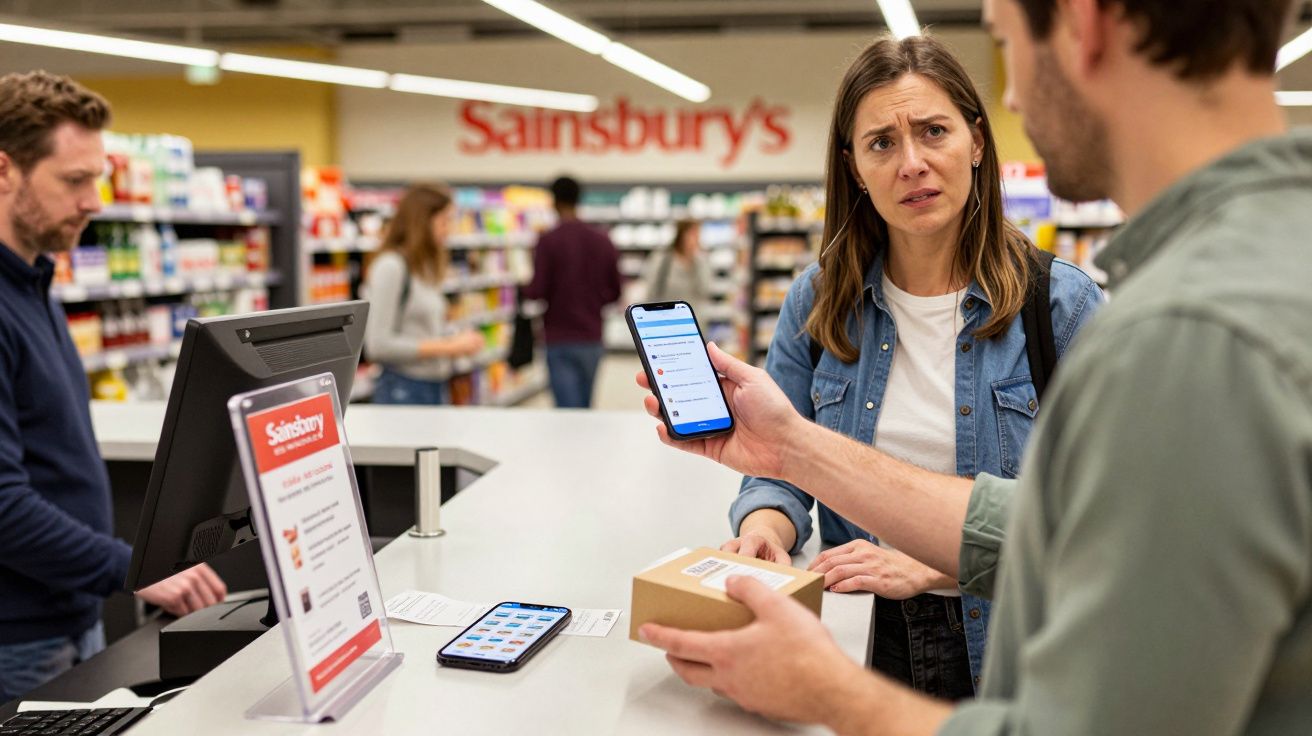
Argos used to be the place you went with a laminated catalogue, a pen, and the quiet confidence that someone in a red shirt would fetch your telly from a mysterious back room. Now it’s also where you end up when your phone coughs up it seems you haven't provided any text to translate. please provide the text you'd like me to translate into united kingdom english. and you realise how many “little” digital changes are steering what you buy. It suddenly matters because Argos hasn’t just modernised - it’s shifted what kind of retailer it is, and how you experience it, whether you notice or not.
You can feel the change in the small moments: the click-and-collect slot that’s either a gift or a trap, the “only 3 left” nudge, the product page that reads like it’s trying to soothe you into pressing Buy. The old Argos was about certainty and stock; the new Argos is about speed, integration, and the quiet pressure of convenience.
The moment Argos stopped being “a shop” and became a system
For years, Argos was a ritual. You browsed, you scribbled a number, you queued, you waited, you carried a box that felt heavier than it should for something called “Bluetooth”.
That ritual’s mostly gone. In its place is a model built around availability now: small-format stores, inside-supermarket counters, fast fulfilment, and a website/app that does the heavy lifting. It’s less about the theatre of retail and more about logistics with a friendly face.
The change isn’t just aesthetic. It alters what you can expect - and what Argos can get away with - when it comes to pricing, stock, delivery promises, and how much patience you’re expected to have.
The big shift: from catalogue culture to Sainsbury’s-era convenience
Argos didn’t simply “go digital”. It became tightly woven into Sainsbury’s, and that brought a different set of priorities: footfall, collection points, delivery routes, and using physical locations as mini distribution hubs.
You see it in three places:
- Where it lives: more Argos inside Sainsbury’s, fewer standalone stores.
- How it fulfils: local stock + rapid delivery options, not just “order and wait”.
- How it sells: the app and website aren’t a side door - they’re the front entrance.
The old catalogue was a single, shared truth. Now the truth is dynamic: your postcode, the time of day, and what’s sitting in a nearby stockroom can change what’s “available”.
Why it suddenly matters (even if you barely shop there)
It matters because Argos sits in the middle of how people in the UK buy everyday tech, toys, small appliances, and last-minute essentials. When that middle changes, the ripple hits your weekend plans.
If Argos leans harder into convenience, you start paying with different currencies:
- Time (collection slots, delivery windows, “come back tomorrow”),
- Flexibility (which branch has stock, whether it’s inside a supermarket),
- Certainty (is it actually in stock, or “available for delivery” in a vague way?).
And if you’re the kind of person who uses Argos for “I need it today” purchases - fans in a heatwave, a charger before a trip, a kid’s birthday present you forgot - the model shift is the whole story.
The quiet changes you feel in your bones: stock, speed, and the new friction
Argos’s promise used to be simple: it’s in the back, we’ll fetch it. Now it’s a matrix: in-store stock, local delivery stock, warehouse stock, third-party supply, and whatever the system thinks it can commit to.
That has upsides. Same-day delivery and quick collection are genuinely brilliant when they work. But it also creates a new kind of friction: you can do everything “right” and still lose to the algorithm.
The new Argos friction points
- You arrive for collection and discover it’s “ready later”, not ready now.
- A product looks available until you enter your postcode, then it vanishes.
- Delivery is cheap until it isn’t - because the best slots are priced like a treat.
- Returns feel easier on paper, but harder in life if your nearest counter is inside a busy supermarket with a queue snaking past the meal deals.
None of this is evil. It’s just what happens when a retailer becomes a network instead of a room with shelves.
What changed about trust: reviews, recommendations, and that “helpful” tone
In catalogue days, Argos didn’t need to persuade you much. The persuasion happened at home on the sofa, with the catalogue open and a highlighter in hand.
Now persuasion is built into the experience. Product pages push bundles, “frequently bought together” prompts, and recommendations that feel oddly specific. Reviews carry more weight because you’re buying faster, with less deliberation. And the site has that gentle insistence: go on, this will do.
A useful rule: if you’re buying in a hurry, you’re more likely to accept the default choice - the promoted model, the “best seller”, the one with the big green tick. Argos’s new setup is designed for that moment.
The practical bit: how to shop Argos without getting nudged around
You don’t need to turn it into a research project. You just need a few small habits that put you back in charge.
Do this before you press Buy
- Check stock in two nearby locations, not just your closest. A “not available” can flip a mile down the road.
- Look at delivery and collection together. Sometimes delivery is faster than collection, which feels wrong until you remember it’s a logistics game.
- Screenshot the price if it looks unusually good. Prices can shift quickly, and it helps if you need to query it.
- Scan the reviews for repeats, not for vibes. One-star rants are noise; repeated mentions of “battery dies” are signal.
- Avoid bundles unless you’d buy each item anyway. Bundles are where convenience quietly becomes overspend.
This is the modern version of writing down the catalogue number: a tiny pause that saves money and annoyance.
The bit people miss: Argos is now a last-mile player
When Argos leans into fast fulfilment, it competes in a different arena - not with department stores, but with Amazon-style expectations. That’s why the changes feel sharper recently. Everyone’s patience has shrunk, and delivery has become part of the product.
So when Argos changes its store footprint, collection model, or delivery promises, it isn’t just “retail news”. It’s a shift in how quickly you can solve small emergencies without paying premium prices or waiting days.
Argos suddenly matters because it has become part of the UK’s practical infrastructure: the place you go when life needs a quick fix.
The house-rule for 2025: treat Argos like a service, not a shop
If you treat Argos like a shop, you’ll get annoyed when it doesn’t behave like one. If you treat it like a service - a network that moves boxes to where you are - the new version makes more sense.
The trick is to use it on purpose. Let it win on speed when speed is the point, and step back when you’re being rushed into a “good enough” choice you’ll resent in three weeks. Convenience is brilliant, but it’s never free - it just charges you in ways that don’t look like money until they do.
FAQ:
- Why are there fewer standalone Argos shops now? Because Argos has been integrated into Sainsbury’s more tightly, with more collection points inside supermarkets and a bigger focus on fulfilment rather than traditional shop floors.
- Is Argos more expensive than it used to be? It can feel that way because convenience features (fast delivery, premium slots) add cost, and prices can be more dynamic online. Comparing nearby stock and delivery options helps.
- What’s the best way to avoid wasted trips for collection? Don’t rely on “available today” alone-wait for the “ready to collect” confirmation, and consider checking a second nearby location before travelling.




Comments (0)
No comments yet. Be the first to comment!
Leave a Comment