
Heating engineers don’t wait for the first hard frost to find out what’s wrong. They use heating system diagnostics to spot the quiet faults that only show up under seasonal risk: higher demand, colder water coming in, and longer boiler run-times that expose weaknesses fast.
You see it every winter in the same pattern. The boiler “was fine yesterday”, then the house won’t get past 17°C, the radiators are half-warm, and the pressure drops overnight like a slow leak you can’t catch. In most homes, the breakdown isn’t dramatic - it’s cumulative. A small restriction, a tired component, one setting out of place.
And because winter doesn’t forgive delays, engineers tend to check the same core things first: safety, water flow, combustion, controls, and how the system behaves when it’s actually asked to work.
The first winter test: can the system run hard without falling over?
Before anyone gets into clever tweaks, an engineer wants to know whether the system can run steadily for an hour on a cold day without tripping, short-cycling, or losing pressure. That’s the difference between “it fires” and “it heats a home”.
They’ll often start with the boring questions that turn out to be the important ones: how old is the boiler, when was it last serviced, have you had to top up pressure, do any radiators stay cold, has the hot water changed, has anything been renovated or boxed in. Homeowners mention them casually. Engineers hear them like symptoms.
A typical pre-winter visit is less “one big fix” and more “remove the hidden friction”. The goal is to get rid of the small failures-in-waiting that become expensive when the temperature drops.
What engineers actually check (and what it tells them)
Most checks fall into a handful of buckets. They’re not glamorous, but each one points to a very specific type of failure that winter tends to amplify.
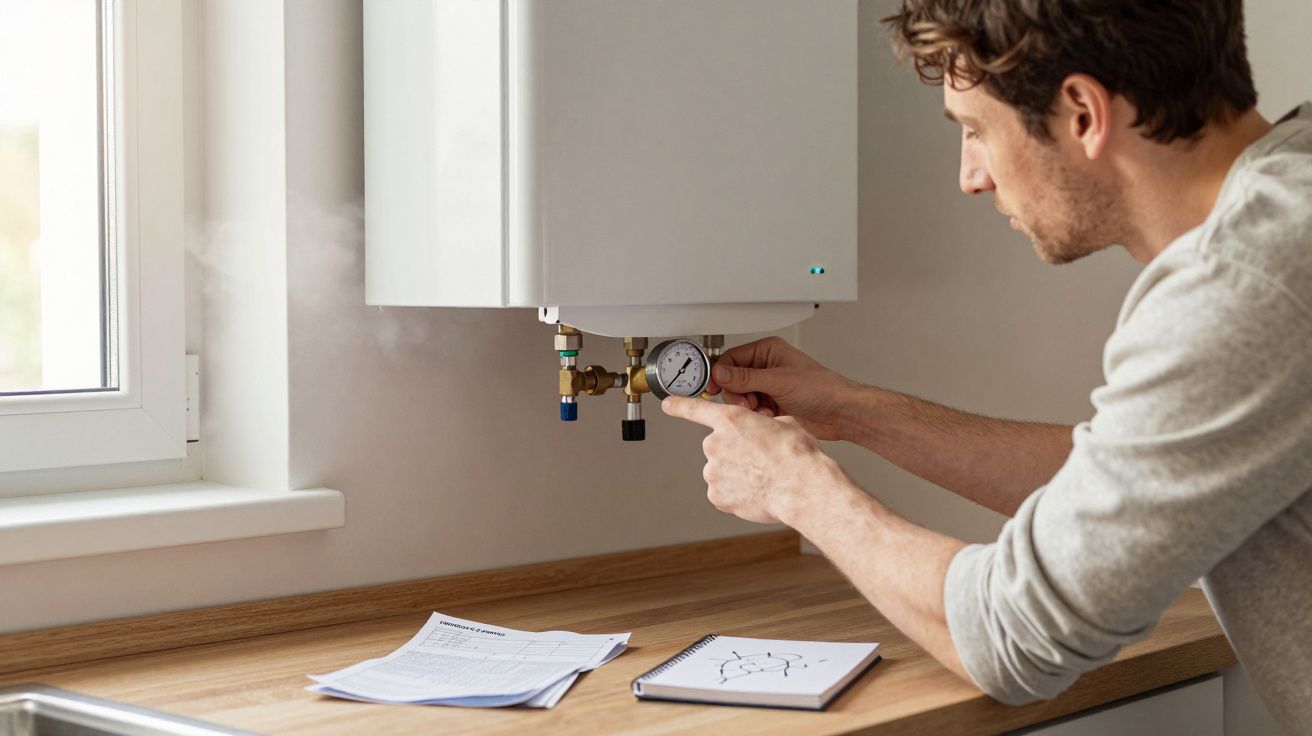
- Boiler pressure and signs of leaks: A system that needs frequent topping up is rarely “just one of those things”. It can point to weeping valves, failing expansion vessels, or a pressure relief valve that’s been venting.
- Expansion vessel and pressure relief operation: When the vessel is flat or undersized, pressure spikes as the system heats. That’s when you see discharge outside and wake up to a boiler lockout.
- Radiator performance and balancing: Half-cold radiators often mean trapped air, poor balancing, sludge restriction, or a pump struggling. Balancing isn’t a gimmick; it’s how you stop one room stealing heat from another.
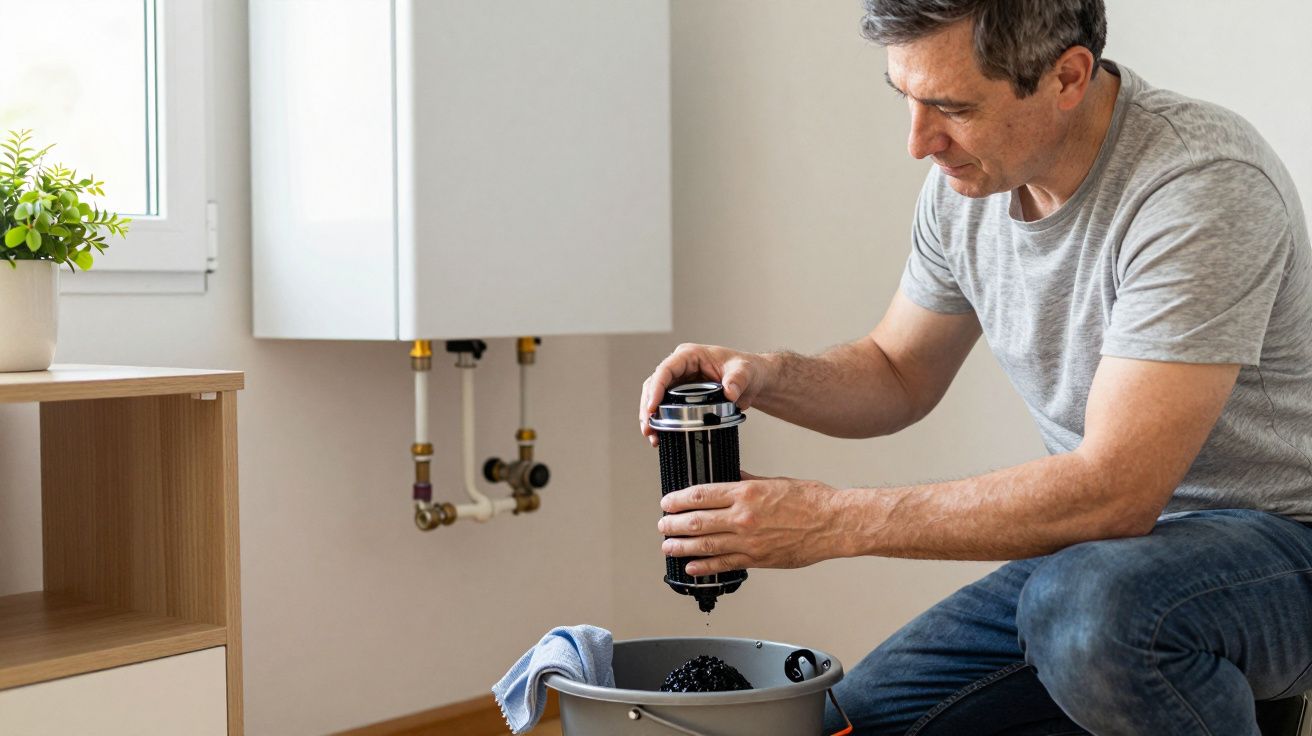
- Magnetic filter condition (if fitted): A filter packed with black magnetite tells you the system is corroding internally. Left alone, that debris can choke heat exchangers and valves.
- Pump behaviour: Noisy, weak, or intermittent pumps show up most when the system is running longer. Winter exposes marginal pumps because there’s no “off time” to hide in.
- Controls and thermostats: Engineers check whether the thermostat is actually reading accurately, whether schedules make sense, and whether the boiler is cycling too fast because controls are fighting the system.
If you’re in a typical UK home with radiators and a combi boiler, these checks are usually the difference between “warm enough” and “constantly fiddling with the thermostat and still cold”.
Combustion and safety checks: the bits you can’t DIY
When engineers talk about heating system diagnostics, a big part is verifying that the boiler is burning fuel correctly and venting safely. That’s not just efficiency - it’s safety.
On a service, they’ll commonly inspect the flue route and termination, look for signs of staining or recirculation issues, and check the integrity of seals. They may run analyser readings (depending on the appliance and service scope) to confirm combustion is within spec. If something’s drifting, winter is when it drifts further, because the boiler is on for longer.
They’ll also look for the simple hazards people accidentally create: stored items blocking ventilation, a new kitchen cupboard boxing in air supply, a flue terminal too close to a new extension detail. None of these feel urgent until the system is under sustained load.
The water-side problems winter makes obvious
Winter doesn’t create sludge, scale, or airlocks - it reveals them. The system might limp through autumn with short heating bursts, then collapse when it has to maintain temperature all day.
Engineers will often focus on:
- Cold spots and slow warm-up: points to sludge, poor circulation, or balancing issues.
- Kettling or whistling: can suggest scale on the heat exchanger or restricted flow.
- Constant bleeding of radiators: suggests air ingress, corrosion, or a failing component drawing air in.
- Hot water fluctuation (combi boilers): can indicate flow sensor issues, plate heat exchanger restriction, or low incoming mains flow being pushed past its limit.
If you’ve noticed you’re topping up pressure more in winter, or the boiler sounds “harsher” when it’s cold outside, that’s exactly the seasonal risk in action: demand is higher, and the system has less tolerance for small faults.
The quick wins engineers recommend before the first frost
There’s a reason the advice is repetitive: it works, and it prevents the common failures that land people without heat in December.
- Bleed radiators and check pressure once the system is cold, then again after it’s been running. Sudden pressure spikes or drops tell a story.
- Make sure thermostats and TRVs aren’t stuck (especially in spare rooms). A stuck valve can make a room “never heat” and throw off the whole balance.
- Check the heating schedule now, not in the first cold snap. A stable routine usually beats panic boosts.
- Clear the area around the boiler and flue terminal so nothing blocks ventilation or access.
- If you have a magnetic filter, ask for it to be cleaned at service. It’s a small job that can prevent bigger ones.
Let’s be honest: most people only think about their boiler when it stops. A one-hour check in October is cheaper than an emergency call-out on the coldest weekend of the year.
| Check engineers prioritise | What it prevents | Why winter makes it worse |
|---|---|---|
| Pressure, expansion vessel, PRV | Lockouts, discharge, repeated topping up | Longer run-times amplify pressure swings |
| Circulation (pump, balancing, sludge) | Half-warm radiators, noisy boiler, inefficiency | Higher demand exposes weak flow fast |
| Controls, schedules, thermostat accuracy | Short-cycling, overheating, high bills | Constant heating highlights bad settings |
FAQ:
- Do I need a service every year if the boiler “seems fine”? Usually yes, especially before winter. A boiler can fire and still be inefficient, unsafe, or close to failing under sustained load.
- Why are some radiators hot at the top and cold at the bottom? Often sludge restriction or poor circulation. Bleeding helps when the top is cold (air), but a cold bottom usually needs cleaning/balancing attention.
- Is topping up pressure occasionally normal? A small seasonal change can happen, but frequent topping up is a red flag for leaks, expansion vessel issues, or a pressure relief valve problem.
- Will turning the thermostat higher heat the house faster? No - it typically just makes the system run longer towards a higher target temperature. Better scheduling and steady settings are usually more comfortable and cheaper.
- What’s the one pre-winter check I can do today? Look at your pressure gauge (when cold), run the heating for 20–30 minutes, then check again. Big changes or repeated drops are worth investigating before the cold sets in.



Comments (0)
No comments yet. Be the first to comment!
Leave a Comment