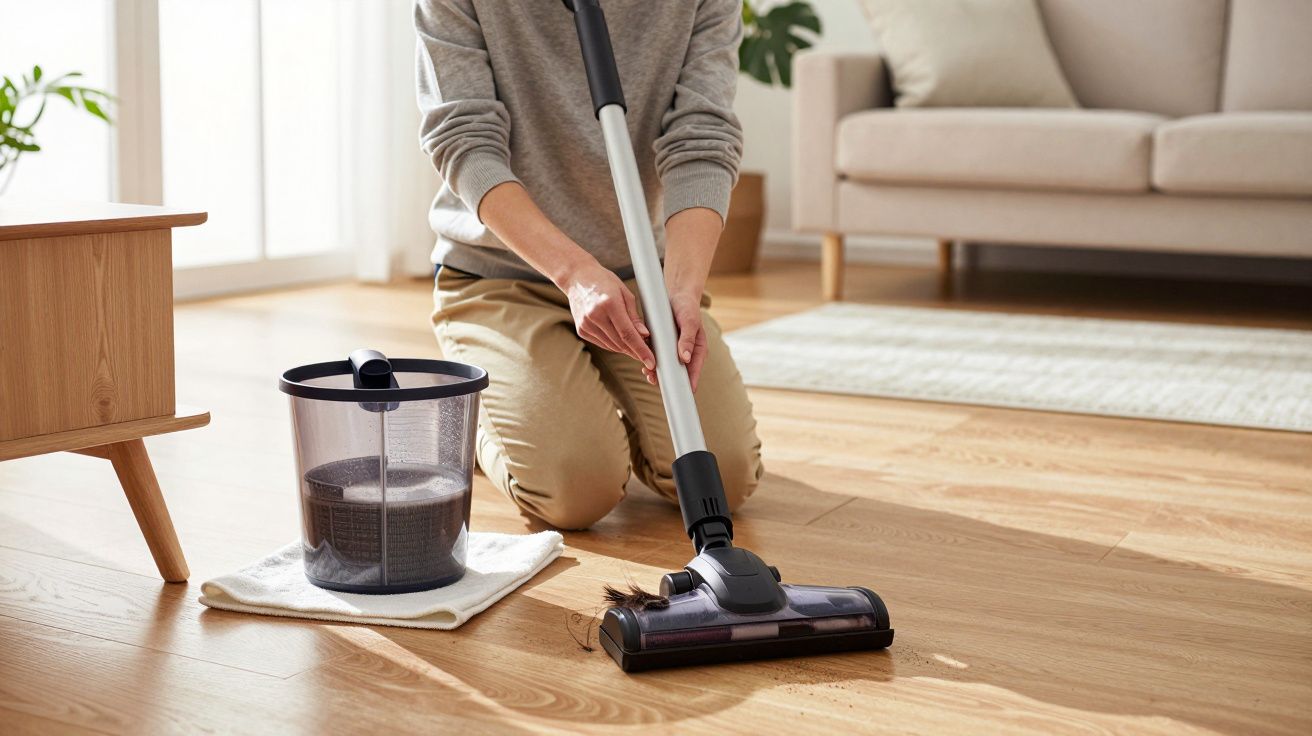
People buy it like they’re buying time: a cleaner flat, fewer allergens, less faff. Then they unbox dyson, open the manual, and hit the same odd wall of confusion-right next to the familiar pop-up line, “of course! please provide the text you would like me to translate.” It matters because most complaints about performance, battery life, and “it’s not picking up properly” are usually misunderstandings about how these machines are designed to work.
The irony is that Dyson kit is often doing exactly what it promised. The user expectation is what’s off.
Why Dyson divides opinion so fast
Ask a technician or a vacuum repair specialist what they see most, and the answer is rarely “faulty motor”. It’s clogged filters, the wrong floor head, or a bin that’s been emptied but not cleaned. Dyson’s design makes it look effortless, so people treat it like it requires zero upkeep.
That’s the first misunderstanding: “premium” doesn’t mean “maintenance-free”. It means high airflow, tight tolerances, and parts that need to stay clean to hit their numbers.
The common pattern: performance drops slowly, you adapt without noticing, and then one day it feels like it “suddenly got worse”.
Misunderstanding #1: “More suction” is the whole story
Suction sells, but cleaning is a system. Airflow, agitation (the brush bar), sealing, and the match between head and flooring matter just as much. A high-suction machine with the wrong head on thick carpet can look impressive on paper and underperform in real life.
Experts tend to explain it in plain terms: the head does the lifting; suction does the transporting. If the head can’t get debris out of the pile, the airflow can’t carry what isn’t moving.
What to check before blaming the motor
- Make sure you’re using the correct head for the surface (soft roller for hard floors, a proper beater bar for carpet).
- Look for hair or thread wrapped around the brush bar ends (it adds drag and reduces agitation).
- Check for a blockage in the wand or elbow joints, not just the visible tube.
Misunderstanding #2: Filters are “optional” until they smell
On many Dyson models, filter condition is the difference between “wow” and “why is it wheezing?”. A partially blocked filter cuts airflow, increases heat, and can trigger protective throttling. Users often interpret that as battery degradation or a failing motor.
Washing is simple, but the timing and drying are where people go wrong. Cleaning too rarely reduces performance; reinstalling a damp filter risks odours and, in the worst case, internal moisture issues.
The filter rule experts repeat
- Wash when the manual recommends (or earlier if you have pets, renovation dust, or a busy household).
- Rinse thoroughly until water runs clear.
- Dry completely before refitting-think a full day, not “it feels sort of dry”.
Misunderstanding #3: “Max mode” is the normal mode
Max exists for short, stubborn jobs: ground-in grit, heavy debris, awkward edges. Many owners run Max constantly, then feel cheated when runtime collapses. Specialists will tell you that’s like driving everywhere in first gear and calling it a fuel-economy scandal.
Dyson batteries are sized around typical use: normal or auto mode, mixed flooring, and short bursts of boost. Continuous boost turns a cordless into a short-session tool.
If you only ever use Max, you’ll experience the worst runtime the machine is capable of delivering-by design.
Misunderstanding #4: The bin is “empty” when it looks empty
Fine dust clings to the shroud, cyclone inlets, and seals. Over time it narrows passages and creates that flat, tired feel: it still runs, but it doesn’t move dirt with the same ease. This is also where the “it smells” complaints often begin, especially in homes with pets.
Emptying isn’t the same as cleaning. Experts usually recommend occasional deeper cleaning of the bin and shroud (following the manual-some parts are not meant to be washed).
Quick diagnostic signs of a dirty system
- The bin empties but dust puffs out around seals.
- You notice a sour or “warm dust” smell when it runs.
- The machine sounds higher-pitched, like it’s straining for air.
Misunderstanding #5: A Dyson is “one vacuum for everything”
Dyson is often bought as a do-it-all replacement: deep carpet clean, hard floors, sofa, car, stairs, and fine dust. In reality, no single setup excels at every surface without changing tools and settings.
A soft roller head can be brilliant on hard floors and mediocre on rugs. A stiff brush bar can lift carpet beautifully and scatter larger debris on tiles. The misunderstanding isn’t that Dyson can’t do multiple jobs-it’s that it can do them without changing anything.
The expert checklist: fix 80% of “Dyson problems” in 10 minutes
Before you book a repair or swear it’s “lost suction”, run this simple sequence:
- Fully charge the battery, then test on normal/auto (not Max).
- Empty the bin and inspect seals for debris.
- Check for blockages section by section: tool → wand → inlet.
- Inspect and clean the brush bar (including the ends).
- Wash the filter if it’s due, and only refit when fully dry.
If performance improves after step 3 or 4, it was airflow or agitation-not a mysterious electronics failure.
What people also get wrong about Dyson’s “smart” features
Auto modes and particle sensors aren’t there to show off. They aim to balance runtime and cleaning by ramping power only when resistance or dust load rises. If you override that constantly, you remove the point of the system and experience the downsides (noise, heat, short runtime) without the benefits.
Similarly, laser illumination on some heads isn’t proof your floor is “filthy”-it’s a visibility tool. People often over-clean because they can suddenly see what was always there.
When it’s genuinely time to call a pro
Not every issue is user error. Experts generally advise professional support if you see:
- Burning smells, sparking, or repeated shutdowns even after cleaning and filter care.
- A brush bar that won’t spin despite being clear and correctly fitted.
- Cracked seals, warped bins, or damaged cyclones causing persistent air leaks.
- Battery swelling or a pack that cuts out abruptly under light load.
Those are mechanical or electrical faults-not maintenance.
FAQ:
- Is Dyson “overpriced for what it is”? Often you’re paying for airflow efficiency, tooling, and design features that work well when maintained. If you want true zero-maintenance, bagged vacuums can feel simpler day to day.
- Why does my Dyson smell even after I empty it? Smell usually comes from the filter, bin residue, or hair/debris trapped around the brush bar. Emptying alone doesn’t remove the fine dust and oils that cause odours.
- Should I always use Max for carpets? No. Use the correct head and normal/auto first, then use Max in short bursts for problem areas. Continuous Max is the fastest route to disappointing runtime.
- Can I wash every part to “deep clean” it? Not safely. Some parts are washable, others aren’t. Follow the manual for your exact model to avoid damaging seals, bearings, or electronics.





Comments (0)
No comments yet. Be the first to comment!
Leave a Comment