Limes show up everywhere - squeezed into a G&T, stirred into a curry, zested over a tart - yet most of us use them on autopilot and miss what they’re actually doing. I only noticed how many myths we carry around after a cook friend answered a message with “of course! please provide the text you would like me to translate.” and then proceeded to “translate” my vague complaint (“my lime tastes bitter”) into the real issue: how I’d cut it, stored it, and mixed it.
The misunderstanding isn’t small. Get limes right and you can lift a whole dish, balance sweetness without extra sugar, and make a drink taste cleaner rather than sharper.
The biggest myth: “A lime is just a small lemon”
They’re cousins, not twins, and treating them as interchangeable is how you end up chasing flavour with more salt, more syrup, more chilli. Limes tend to read as greener and more aromatic, with a different balance of acids and volatile oils in the peel. In practice, that means lime can smell louder than it tastes - and it can turn “bitter” fast if you pull the wrong compounds into the mix.
Chefs and bartenders often say it this way: lemon brightens; lime defines. It’s not a rule, but it’s a useful starting point when you’re choosing which citrus to reach for.
Where the bitterness really comes from (and it’s usually not the juice)
People blame the fruit when the culprit is technique. The bitter edge is most often from peel and pith oils being crushed into the drink or dressing, or from overworking the fruit once it’s been cut.
Common ways bitterness sneaks in:
- Squeezing hard so the peel folds inside-out and sprays oil into the juice.
- Juicing limes that have been sitting halved in the fridge, drying and oxidising.
- Blending whole wedges (pith and all) into sauces, salsas, and marinades.
- Letting lime sit in dairy for too long, where it can tip from fresh to “sharp and metallic”.
If you want clean acidity, juice gently and strain. If you want perfume, use zest - but do it intentionally.
Zest isn’t decoration. It’s the “lime” most people are actually craving
That fresh, almost floral lime hit in Thai food or a great margarita isn’t coming from the sour part alone. It’s coming from aromatic oils in the outer skin. Juice gives structure (acid); zest gives identity (aroma). When people say, “This doesn’t taste limey,” they often mean it’s missing those oils.
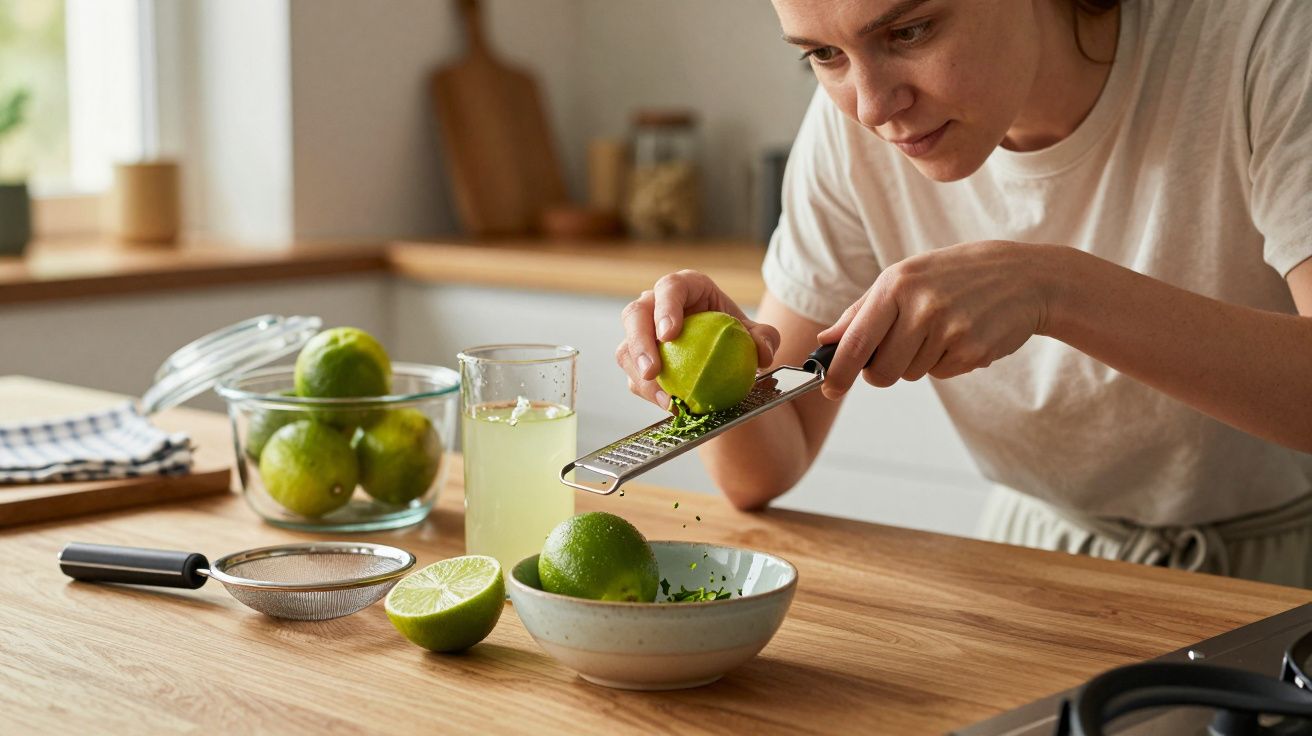
A simple fix: zest first, juice second. Once you cut a lime, zesting gets messier, and you tend to press harder and drag pith along with it.
The quick method that keeps it bright
- Zest with a microplane or fine grater, stopping as soon as the peel turns pale.
- Juice with a hand reamer, keeping the peel facing up so it doesn’t invert.
- Add zest at the end of cooking, not at the start, so the aroma doesn’t evaporate.
“If you can smell it before you taste it, you’ve used lime properly,” a bartender once told me, sliding a glass over like proof.
“Room temperature or fridge?” The storage mistake that quietly ruins limes
Whole limes are tougher than they look, but they’re not immortal. Left on the counter, they’ll often lose moisture and aroma faster, especially in a warm kitchen. In the fridge, they keep longer - but only if you stop them from drying out.
A practical rule used in many kitchens: keep whole limes chilled in a sealed bag or container, then bring what you need to room temp for juicing. You get more juice, and it tastes less flat.
What not to do is leave cut limes exposed. A halved lime is basically a slow leak of flavour.
The “one lime = one amount of juice” assumption will wreck your ratios
Recipes that call for “the juice of 1 lime” are trying to be friendly, but it’s a gamble. Limes vary wildly by size, age, and variety. For drinks and baking, small differences matter: too little and it tastes sweet; too much and it tastes thin and aggressive.
If you make the same things often (dressings, margaritas, key lime pie), measure once and you’ll stop fighting your own recipes.
Useful kitchen numbers (as a guide, not gospel)
- 1 average lime: roughly 1–2 tablespoons of juice
- 1 teaspoon zest: can perfume an entire sauce or dessert
If you’re aiming for consistency, taste and adjust rather than trusting the fruit to behave.
When lime “cooks” food - and when it just pretends to
Ceviche has convinced a lot of people that lime juice “cooks” fish the way heat does. What it actually does is denature proteins, changing texture and opacity. It can make seafood feel firm and “done”, but it won’t reliably kill pathogens, and it won’t fix poor-quality fish.
The expert approach is cautious and specific: very fresh fish, kept cold, cut evenly, salted properly, and marinated for a controlled time. Lime is part of the process, not a safety net.
A small cheat sheet: what to use, and when
| You want… | Use | Timing |
|---|---|---|
| Clean sourness | Juice | Add early, then taste |
| Big lime aroma | Zest | Add late/off heat |
| Less bitterness | Gentle juicing + straining | Immediately after cutting |
The simplest way to make limes taste better tonight
Choose heavier limes (they’re usually juicier), zest before you cut, and don’t bully the peel when you squeeze. If you’re making a drink, add a pinch of salt before you add more sugar - it rounds the acidity without turning it into lemonade.
Lime is loud, but it’s also easy to smudge. Treat it like an ingredient with two parts - juice and aroma - and it stops being unpredictable.
FAQ:
- Is bottled lime juice ever OK? Yes for marinades and some cooking, but it’s usually flatter and can taste “cooked”. For drinks, use fresh if you can.
- Why do my limes go dry in the fridge? They dehydrate. Store whole limes in a sealed bag/container, and avoid leaving them uncovered in the crisper.
- Can I freeze lime juice? Yes. Freeze in ice-cube trays for quick portions; the aroma will soften, but the acidity holds up well.
- Does microwaving a lime help? Brief warming can increase juice yield, but don’t overdo it; you’re trading a little aroma for volume if it gets too warm.





Comments (0)
No comments yet. Be the first to comment!
Leave a Comment