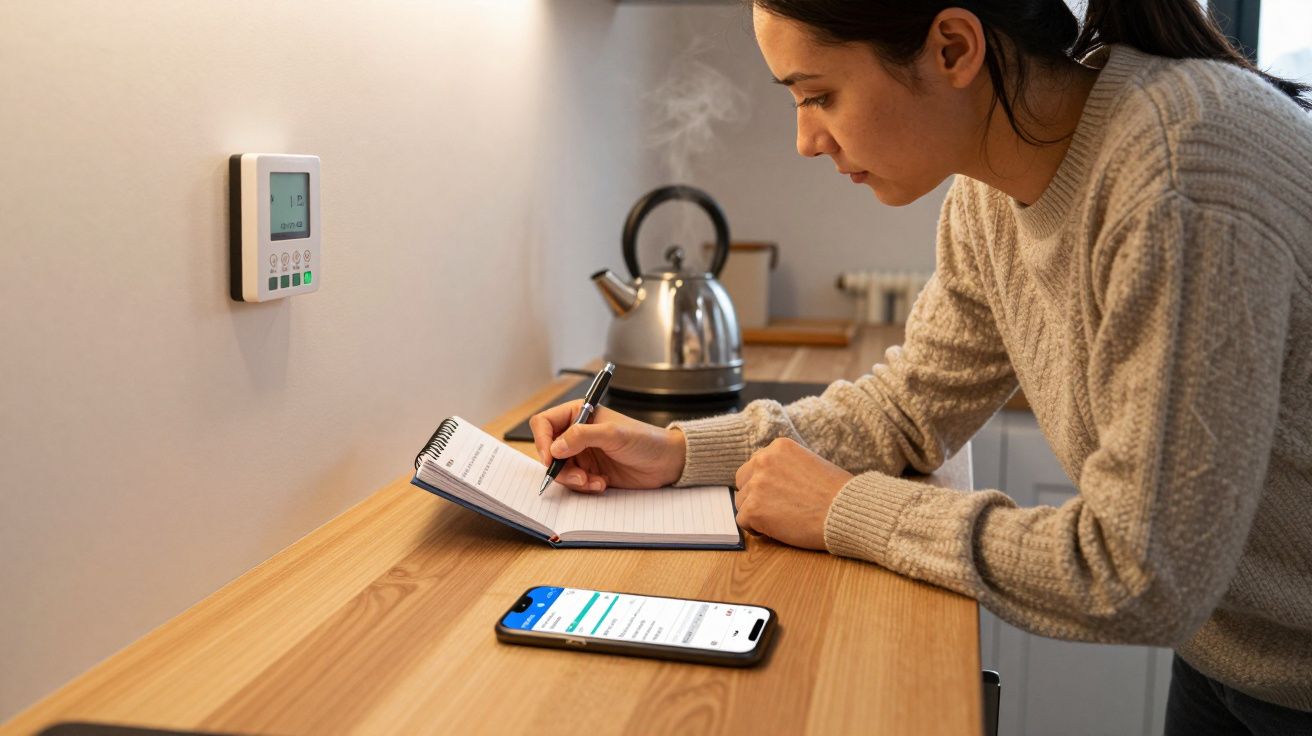
I first noticed it on a cold Tuesday evening, when the thermostat said one thing and my bank app said another. Energy efficient heating is sold as the sensible upgrade for British homes, but in practical usage it can feel like a quiet price hike dressed up as progress. If you’re budgeting month to month, that gap between “should save” and “costs more” matters.
The promise is simple: better kit, less waste, lower bills. The reality is often messier: higher standing charges, pricier electricity, awkward controls, and a house that doesn’t behave like the brochure. You don’t need to be anti‑green to admit the numbers sometimes don’t land.
What “energy efficient” actually means - and why your bills don’t always follow
Energy efficiency measures output versus input. A heat pump can deliver more heat energy than the electrical energy it uses, which is why it’s hailed as the grown‑up answer to gas boilers. But households don’t pay in theory; they pay in tariffs, time, and comfort compromises.
The catch is that efficiency is not the same thing as cheap. If the unit of electricity costs far more than the unit of gas, “using less energy” can still mean “spending more money”. Add in standing charges and the fact that many systems work best when left running gently, and your old habit-blast the heating for an hour, then off-stops fitting.
There’s also a second, quieter gap: performance depends on the whole home. Insulation, draughts, radiator sizing, pipework, controls, and how you actually live in the space all decide what “efficient” looks like on a wet February morning.
The moment it turns expensive: the hidden costs no one puts on the quote
Some costs are upfront and obvious. Others arrive as a drip feed of “small” decisions that add up.
- Installation reality: A system can be efficient but still require upgrades-bigger radiators, a hot water cylinder, improved insulation, or electrical work.
- Tariff mismatch: Even a high-performing heat pump can struggle to beat a cheap gas unit if you’re on a standard electricity tariff and gas remains relatively low.
- Comfort costs: If your house loses heat fast, you may run the system longer to maintain comfort, and “steady low heat” can feel like it’s always on.
- Maintenance and optimisation: Not necessarily expensive every year, but the system often needs a proper set-up: flow temperatures, weather compensation, and balancing.
The bill shock tends to come when the household keeps the same behaviours but the technology expects new ones. You don’t “drive” a heat pump like a boiler. You steer it.
The painful bit isn’t that the tech doesn’t work. It’s that it works best in a different rhythm than most of us learned.
Practical usage: small habits that decide whether it saves money
This is where the conversation gets useful. Practical usage isn’t about becoming a heating engineer; it’s about matching daily habits to how the system is designed to run.
The three behaviour traps that push costs up
- Chasing quick warmth: Turning the thermostat up high doesn’t always heat a room faster; it can just keep the system running longer.
- On/off cycling: Heat pumps (and well‑tuned modern systems generally) prefer steady operation. Repeatedly switching off then demanding a rapid warm-up can be inefficient.
- One setting for every day: Outside temperature changes fast in the UK. If your controls are fixed and blunt, the system can overwork on mild days and underdeliver on cold snaps.
What tends to help in real homes
- Lower the flow temperature where possible: Cheaper running often comes from lower water temperatures delivered for longer, especially with heat pumps.
- Use zoning carefully: Heating only used rooms can help, but over‑aggressive zoning can force the system to work harder. Balance matters.
- Learn the control once: Weather compensation and schedules sound fiddly, but they’re usually where the savings live.
- Pick the right tariff (if you can): Off‑peak or heat‑pump friendly tariffs can shift the maths significantly, but only if your household can use them.
None of this is glamorous. It’s the domestic version of “read the manual”, except the manual is your own routine.
A quick way to sanity-check the promise before you spend again
If you’re already on an “efficient” system and costs feel wrong, you don’t have to guess. Do a short, boring audit-one evening, one notebook, no heroics.
- Note the indoor temperature you actually find comfortable.
- Check the outside temperature (your phone is fine).
- Record your thermostat setting, schedule, and whether the system ran steadily or in bursts.
- Look at your unit rate and standing charge for electricity (and gas, if you still use it).
- If you have a heat pump, ask your installer (or check the controller) what flow temperature it’s using on a cold day.
If your comfort is low and your running time is high, that points to fabric issues (insulation/draughts) or system set-up. If comfort is fine but costs are high, that points to tariff and pricing-something efficiency alone can’t fix.
The bigger picture: efficiency is a tool, not a guarantee
We’re in a period where the country needs cleaner heat, and households need bills they can live with. Those goals can align, but they don’t automatically. Energy efficient heating can be the right move and still feel punishing if the home isn’t ready, the system isn’t tuned, or the tariff landscape makes electricity disproportionately expensive.
The most honest version of the sales pitch is this: it’s not just a product swap. It’s a change in how your home produces comfort. If you plan for that-fabric first, proper design, realistic running habits-the promise starts to look like reality.
| Where costs creep in | What to check | A practical fix |
|---|---|---|
| Tariffs and unit prices | Electricity unit rate vs gas | Compare tariffs; consider off-peak if suitable |
| Controls and set-up | Flow temperature, schedules, zoning | Optimise settings; get system balanced |
| Heat loss in the home | Draughts, insulation, glazing | Low-regret upgrades before major kit |
FAQ:
- Why can an efficient system cost more to run? Because “efficient” measures energy in versus heat out, but your bill depends on unit prices, standing charges, and how long the system runs in your home.
- Do heat pumps need to be left on all the time? Often they work best running steadily rather than in short bursts, but the right schedule depends on insulation, occupancy, and controls.
- What’s the biggest practical usage change that saves money? Learning the controls properly-especially flow temperature and weather compensation-so the system delivers gentle heat efficiently rather than chasing quick warm-ups.
- Should I upgrade radiators if I switch heating systems? Sometimes, yes. Lower-temperature heating may need larger radiators (or better insulation) to deliver the same comfort.
- Is “fabric first” really that important? Yes. Insulation and draught-proofing reduce heat loss, making any heating system cheaper to run-efficient or not.






Comments (0)
No comments yet. Be the first to comment!
Leave a Comment