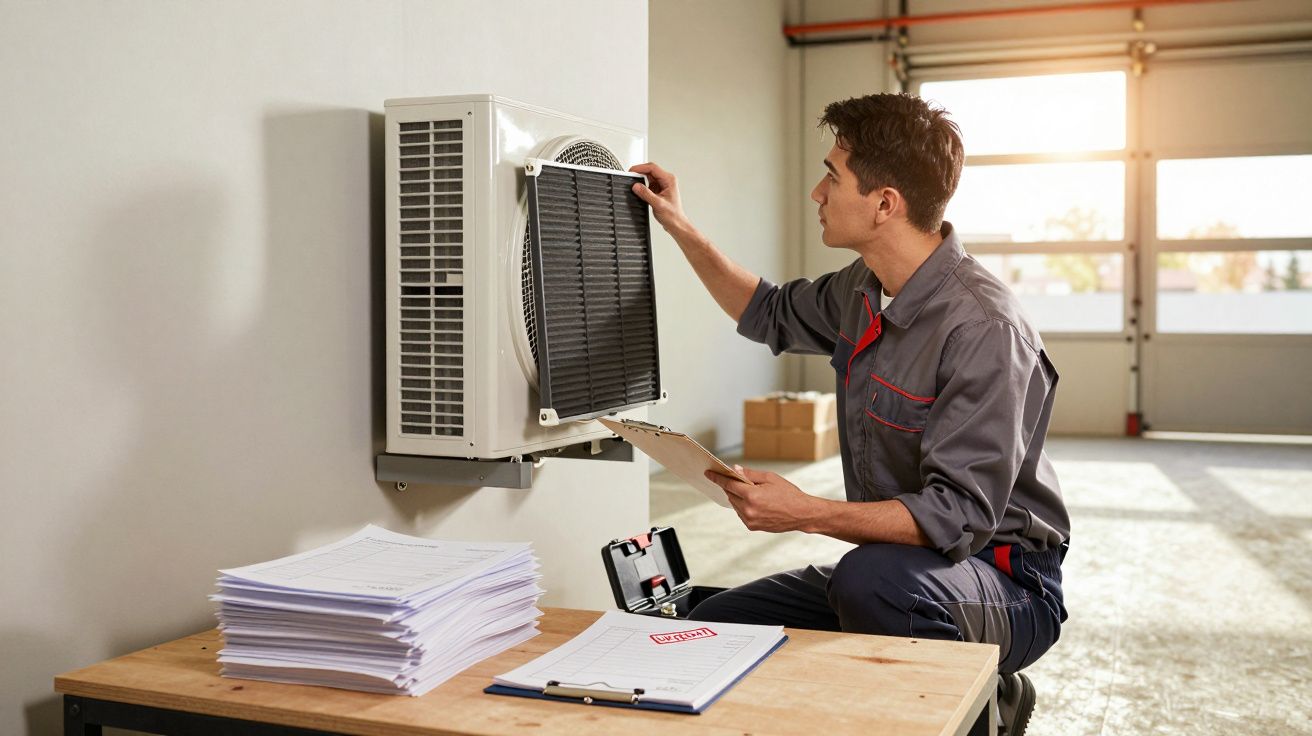
At some point, every business and household learns the expensive way that “it’s working fine” is not the same as “it’s healthy”. Planned maintenance is the boring, scheduled work that keeps assets-boilers, HVAC, lifts, vehicles, production lines-running safely and efficiently, with a reduced risk of breakdown baked in. It matters because the most painful costs aren’t the invoices you can see coming; they’re the ones that arrive with a bang on a Tuesday afternoon.
Picture a small warehouse on the edge of town. The heating’s been rattling for weeks, but nobody wants the disruption, so it becomes background noise. Then it fails on the coldest week of the year, the stock area drops below temperature, a few orders go late, and suddenly the “saved” service call has turned into overtime, refunds, and an apologetic email thread nobody enjoys.
You can’t insure your way out of that feeling. You can only reduce how often it happens.
The moment you realise “reactive” isn’t cheaper
Breakdowns have a special talent: they never break when you’ve got time. They fail when you’re short-staffed, when a delivery is due, when the site is full, when the weather is awful. And the cost isn’t just the part. It’s the whole chain reaction around it.
Most people only count the obvious bit:
- engineer call-out
- replacement parts
- emergency hire equipment
The money leak is usually elsewhere:
- downtime and lost output
- spoilage (especially chilled or controlled stock)
- safety incidents and near-misses
- reputation damage (“we’ll get it to you tomorrow”)
- the quiet admin tax of rescheduling everything
Planned maintenance doesn’t eliminate failure. It changes the shape of it-from “sudden and chaotic” to “caught early and contained”.
Where planned maintenance saves money (and where it doesn’t)
Planned work saves money when failure is costly, slow to fix, or disruptive. It’s less convincing when failure is cheap, quick, and genuinely low consequence. The trick is knowing which is which, rather than servicing everything on principle.
It tends to pay for itself when:
- The asset is a bottleneck. If one machine stops the whole line, every hour matters.
- Lead times are brutal. If a part takes two weeks to arrive, you want to spot wear two months earlier.
- Access is hard. Rooftop plant, confined spaces, shutdown-only work-do it on your terms, not at 2am.
- Compliance is real. Lifts, fire systems, pressure systems, certain electrical testing: the paperwork is part of the protection.
- Failure creates secondary damage. A seized bearing that destroys a shaft; a clogged filter that kills a compressor.
It’s less likely to be worth a heavy schedule when:
- the equipment is cheap and modular (swap-and-go)
- redundancy exists (you can run on the backup without pain)
- usage is low and predictable, so condition doesn’t change much
The goal isn’t “more maintenance”. It’s the right maintenance in the right places.
The quiet maths: small defects turn into big invoices
Most failures don’t start as failures. They start as friction, heat, vibration, contamination, misalignment-tiny, ignorable things that are basically the body language of a machine.
A simple service visit often catches the unglamorous culprits:
- filters blocked earlier than expected
- belts losing tension
- oil contaminated or running low
- loose terminals, hot spots, minor leaks
- fans running out of balance, bearings getting noisy
None of that looks like “saving money” in the moment. It looks like someone fiddling with a unit that’s still running.
Then you remember what happens if you don’t. The small defect becomes a bigger defect. The bigger defect becomes a breakdown. The breakdown becomes collateral damage.
That’s the real financial logic: you pay little while the problem is small, or you pay a lot once it’s had time to grow teeth.
How to build a plan that doesn’t waste cash
A maintenance plan that saves money feels oddly restrained. It doesn’t try to polish everything. It focuses on risk, impact, and patterns.
Start with a simple triage:
- Critical: stops operations, safety risk, high cost to recover
- Important: degrades service/quality, annoying but manageable
- Non-critical: convenience items, low consequence if down
Then match the method to the asset:
- Time-based (every 3/6/12 months): good for predictable wear and compliance items.
- Condition-based (inspect and act): good where wear varies with use-vehicles, pumps, fans, conveyors.
- Run-to-failure (accept it): fine for low-impact kit, if spares and swap time are genuinely small.
A common mistake is treating everything like “critical”, then wondering why the maintenance budget feels like a second rent payment. Another is treating everything like “non-critical”, then being surprised when a small failure takes the whole site with it.
The reduced risk of breakdown is only part of the win
People talk about reliability as if it’s just avoiding drama. The quieter benefits are often more valuable.
With planned maintenance, you also tend to get:
- Better energy efficiency (clean coils, correct pressures, lubricated components)
- Longer asset life (less strain, fewer catastrophic events)
- Predictable cash flow (planned spend beats panic spend)
- Safer sites (faults found before they become incidents)
- Cleaner decision-making (you can replace on evidence, not on fear)
There’s a psychological shift too. When your kit is maintained, you stop managing your week around “what might break”. That mental space is worth more than it sounds.
What it looks like in real life (not a spreadsheet)
A facilities manager I once met described it perfectly: “The best month is the one where nothing happens, and nobody notices me.”
That’s the paradox. When planned maintenance is working, it looks like you’re paying for… nothing. No heroics. No urgent quotes. No frantic calls to the only engineer who can get there today.
But compare two years side by side-one reactive, one planned-and the story changes. Fewer emergency call-outs. Fewer write-offs. Fewer “temporary” workarounds that become permanent. More control.
Not perfection. Just fewer nasty surprises.
A simple checklist before you commit to a schedule
Before you sign up for a maintenance contract or expand your internal plan, ask:
- If this fails, what’s the true cost (downtime, safety, customers), not just the repair?
- What are the top three failure modes for this asset, and do we inspect for those specifically?
- Do we have spares for common faults, or are we gambling on lead times?
- Are we recording findings, or just “ticking a visit happened”?
- Could we reduce visits by switching some items to condition-based checks?
If the answers are vague, the plan will be vague too-and vague maintenance is where money disappears.
The point isn’t to spend less. It’s to spend earlier.
Reactive maintenance feels cheaper because you’re postponing a bill. Planned maintenance feels expensive because you’re paying while things still seem fine.
Then the breakdown happens, and you pay anyway-just with interest, stress, and disruption added on top.
A good plan won’t make machinery immortal. It will make your costs calmer, your operations steadier, and your “we didn’t see that coming” moments rarer. That’s what saving money often looks like: less drama, more control, and work done before it becomes an emergency.
| Point clé | Détail | Intérêt pour le lecteur |
|---|---|---|
| Fix small issues early | Inspections catch wear before it escalates | Avoids big repair bills and collateral damage |
| Match method to risk | Time-based, condition-based, or run-to-failure | Stops overspending on low-impact kit |
| Fewer emergency disruptions | Reduced risk of breakdown plus smoother scheduling | Protects output, safety, and reputation |
FAQ:
- Is planned maintenance always cheaper than reactive? No. It’s cheapest where failure is high-impact or slow to recover from; low-impact, easy-swap items can be run-to-failure.
- How often should we service equipment? Start with manufacturer guidance, then adjust using your own fault history, usage patterns, and the asset’s criticality.
- What’s the biggest mistake people make? Treating maintenance as a tick-box visit rather than targeting known failure modes and recording findings you can act on.
- Can planned maintenance reduce energy costs? Often, yes-cleaning, calibration and replacing clogged filters can reduce strain and improve efficiency.
- Do small businesses need formal maintenance plans? They benefit from simple ones: a short asset list, criticality ranking, and a calendar of basic checks is often enough to prevent expensive surprises.






Comments (0)
No comments yet. Be the first to comment!
Leave a Comment