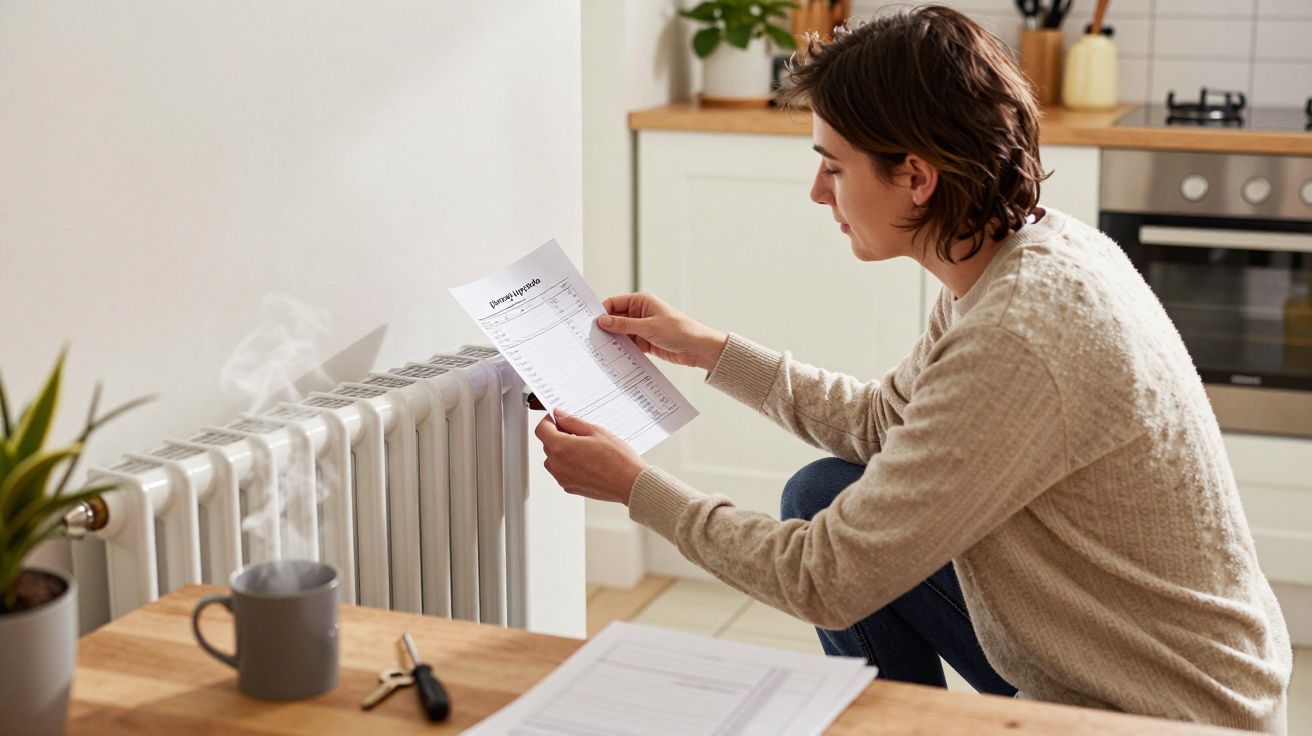
A friend stood in my hallway last winter, shoes still on, staring at the radiator like it had personally offended her. She’d just heard the phrase energy efficient heating in the context of a quote for a new heat pump, and the leap from “old boiler that works” to “net zero heating” sounded like a lifestyle change rather than a home upgrade. Then the bill landed, the fixed deal ended, and suddenly it wasn’t abstract. It was the living room, the draught by the skirting board, and the question of what you’ll do next.
The odd thing is how quickly the conversation is changing. Not in ten-year plans and policy speeches, but in kitchen chats and WhatsApp threads: “Have you got a smart tariff?” “Are you doing underfloor?” “Is your boiler on borrowed time?” 2026 is when those threads start to tie together into something that looks like a new normal.
Why 2026 feels like a turning point (and not just another year)
Home heating shifts slowly, until it doesn’t. Most people replace systems at the point of failure, under time pressure, in the coldest week of the year, with one eye on the bank balance. That’s why small changes in rules, incentives, and prices can suddenly feel huge: they land exactly when you’re least able to browse and compare.
By 2026, three pressures are likely to be louder in ordinary households than they’ve been before: energy costs that still reward lower demand, a stronger push for cleaner heat, and better mainstream availability of low-temperature systems. The result isn’t that everyone will switch at once. It’s that the “default replacement” decision begins to look different.
Think of it like frost in a freezer: you don’t notice it day to day, then one evening the drawer won’t close and you’re forced to deal with it. Heating is the same. The moment arrives, and you either repeat the old choice or use the moment to step up.
The quiet truth: the best heating upgrade isn’t a single gadget
Most marketing makes it sound like there’s one hero product. In practice, energy efficient heating is a stack of boring wins that add up: lower heat loss, lower flow temperatures, better controls, and a system that matches how you actually live in the space. If one layer is missing, the whole thing feels disappointing.
Here’s the simplest way to hold it in your head: you’re not “buying a heat pump” or “keeping a boiler”. You’re designing comfort, then paying for it over time.
- Reduce heat loss first (loft, draughts, windows where sensible).
- Improve delivery (radiator sizing, balancing, underfloor where it fits).
- Add control you’ll actually use (weather compensation, zoning, smart schedules).
- Choose the heat source that suits the upgraded home (heat pump, hybrid, or high-efficiency boiler while you plan).
That’s the calm path. It’s also the one that stops upgrades feeling like a gamble.
What will actually change in 2026: choices, timing, and expectations
By 2026, more households will be shopping with a different set of assumptions. People will expect quotes to mention running costs, not just install costs. They’ll expect to see flow temperatures and radiator checks. And they’ll increasingly want a plan that can evolve: “We’ll do insulation this year, then the system next year, then solar later.”
The bigger shift is confidence. Installers are getting better at design and commissioning because they have to; consumers are learning what good looks like. The phrase “low-temperature heating” will stop sounding niche, and start sounding like the thing your neighbour did in a normal semi.
You’ll also see a clearer split between two approaches:
- The emergency replacement: fast decisions, limited options, higher risk of regret.
- The planned upgrade: staged improvements, better performance, fewer surprises.
2026 is when the planned approach becomes the sensible default for more people-not because everyone loves planning, but because the numbers and the advice make it harder to ignore.
A real-world picture: the 1930s semi that stops “needing to be hot”
Picture a 1930s semi in Sheffield. One adult works from home in the box room, the other does school run, and the kitchen is always the cold spot where you put on a jumper. They start with draught-proofing and 300 mm of loft insulation, then add TRVs and get the system balanced properly. It’s not glamorous, but it changes the feel of the place within a week.
A year later, when the boiler starts short-cycling, they’re not choosing in panic. The house now holds heat, the radiators can run cooler, and the controls make sense. Whether they fit a heat pump, a hybrid system, or a like-for-like boiler while they wait, the upgrade is happening in a home that’s ready for it. That’s the difference between “new kit” and net zero heating that actually works.
The punchline is comfort. Not the blast-heat comfort of a system fighting a leaky house, but the steadier comfort of a home that doesn’t lose what you just paid for.
The method that wins: make heat demand smaller, then make heat cleaner
If you want one practical rhythm to follow, borrow it from any job that becomes easy once you stop forcing it. Don’t fight the building. Set it up so the physics helps you.
- Do the quick fabric fixes first: loft insulation, obvious draughts, basic sealing around doors and loft hatches.
- Check your heat emitters: are the radiators sized for lower temperatures, or will some rooms lag behind?
- Sort controls and setup: timers that match your routine, room-by-room control where it helps, sensible setpoints.
- Only then choose the heat source: because the right answer changes when demand drops.
If that sounds too neat for real life, that’s fine. The point is order, not perfection. You can stage it and still win.
“You’re not building a monument; you’re lowering the work your house asks your heating system to do.”
What to watch for when you get quotes (so you don’t buy disappointment)
A good quote is specific. It talks about your home, not a generic brochure system. And it makes the trade-offs clear: upfront cost, running cost, disruption, and what happens if your habits change.
Look for these tell-tales:
- A heat loss calculation that covers each room, not a guess based on floor area.
- A discussion of flow temperature (and whether your radiators can cope).
- A plan for commissioning: balancing, settings, handover, and follow-up.
- Honest running cost estimates based on your tariff and your usage.
- Options that show staging, not pressure: “here’s what you can do now, and what can wait”.
If the installer can’t explain how the system will be comfortable on a cold day without cranking temperatures, pause. Comfort is the whole point.
| Upgrade step | What it changes | Why it matters |
|---|---|---|
| Reduce heat loss | Less energy needed to stay warm | Lower bills, smaller system stress |
| Lower flow temperature | Heat delivered gently, for longer | Suits heat pumps, boosts efficiency |
| Better controls & setup | Heat matches your routine | Comfort without constant fiddling |
FAQ:
- Will I “have to” rip out my boiler in 2026? Not overnight. Most changes in heating happen at replacement time; the bigger shift is that planning ahead becomes more worthwhile, and low-carbon options become more mainstream.
- Is a heat pump always the best option for energy efficient heating? Not always. It’s often excellent in a home with low heat loss and suitable emitters, but the best outcome depends on your property, your budget, and how far you’ve reduced demand first.
- What’s the quickest step towards net zero heating without a full system swap? Cut heat loss and improve controls. Loft insulation, draught-proofing, and proper system balancing can reduce demand immediately and make future upgrades perform better.
- Do I need underfloor heating? No. Many homes run low-temperature systems with correctly sized radiators. Underfloor can help in extensions or renovations, but it’s not mandatory.
- How do I avoid an expensive mistake? Don’t buy on brand name alone. Ask for heat loss calculations, flow temperature assumptions, and a commissioning plan. The design and setup matter as much as the equipment.





Comments (0)
No comments yet. Be the first to comment!
Leave a Comment