
Central heating systems can tick every box on inspection day - safe combustion, correct flue readings, tidy pipework - and still leave you cold by November. The awkward truth is that a pass certificate doesn’t erase long-term system risk; it mostly confirms what was true for a brief window, under decent conditions, with the system behaving itself. If you rely on your boiler for hot water, warmth, and a quiet winter, that gap between “passed” and “failed” matters.
Because the failure you feel months later is rarely one dramatic, obvious fault. It’s usually a small weakness that was always there, waiting for a pressure swing, a cold snap, a stuck valve, or one more cycle to push it over the edge.
What an inspection proves - and what it quietly doesn’t
An inspection is a snapshot, not a prediction. It checks that key safety and performance parameters are within acceptable limits at that moment: gas soundness, flue integrity, combustion analysis (where applicable), basic controls, and obvious leaks. If the engineer is conscientious, they’ll also look for corrosion, sludge symptoms, and signs of overheating or poor circulation.
But a lot of the system’s future depends on what isn’t easily measurable in one visit. Wear, intermittent faults, marginal components, and underlying design issues can sit there politely until the weather turns and the demand becomes relentless.
A boiler can burn cleanly at low load in October and still struggle when it’s asked to sprint all day in January.
The “it was fine yesterday” failures that inspections miss
Some faults only show up when the system is under stress. Others come and go, like a dodgy car that behaves perfectly on the test drive, then coughs on the motorway.
Common examples that pass the eye test and then bite later:
- A pump that starts… until it’s hot. Bearings wear, debris catches, or a weak capacitor finally gives up.
- A diverter valve that moves… sometimes. It can switch neatly during the service, then stick halfway after weeks of inactivity.
- A fan or pressure switch that’s just about coping. On calm days it’s fine; on windy days the boiler locks out.
- A condensate trap that’s “okay” in mild weather. In freezing conditions a marginal route or partial blockage turns into a shutdown.
- A system pressure that holds… until the first proper heat cycle. Micro-leaks expand and contract, then suddenly become obvious.
None of this means the inspection was pointless. It means the system’s weak links weren’t provoked on cue.
The slow stuff: long-term system risk that builds behind the scenes
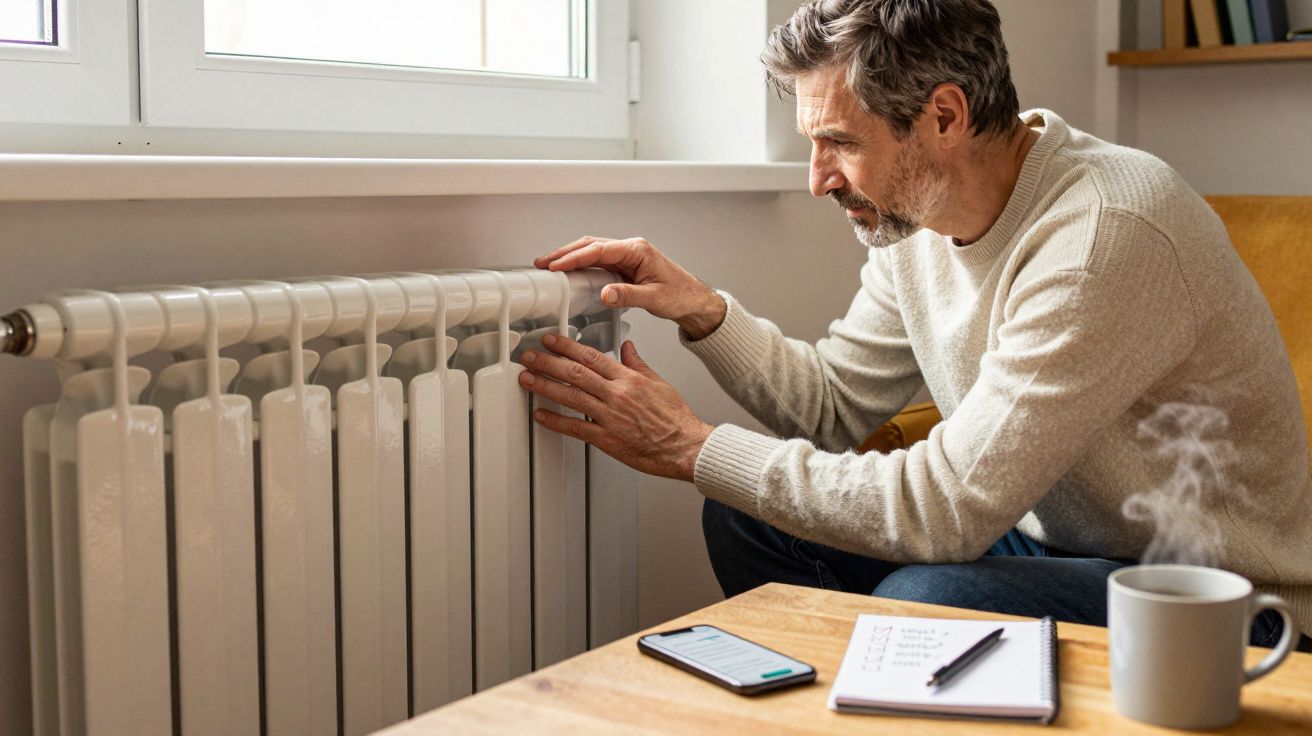
The most expensive problems often develop quietly: corrosion, sludge, scaling, and repeated overheating. They don’t always announce themselves with a leak on the day of the visit; they show up as short-cycling, noisy pipes, radiators that never quite get hot at the bottom, and parts that keep failing “for no reason”.
Here’s what tends to be happening physically:
- Magnetite sludge (black, fine particles) circulates and settles in radiators and heat exchangers, reducing flow and heat transfer.
- Limescale builds where water is hottest, forcing components to run hotter to achieve the same output.
- Oxygen ingress (often via poor topping-up habits, certain pipe materials, or small leaks) accelerates corrosion.
- Dirty system water eats away at pumps, valves, and narrow passages in modern boilers.
A clean combustion reading doesn’t cancel out dirty water. They’re different sides of the same system, and the “water side” is where many delayed failures are born.
When the installation is technically “right” but practically fragile
Some heating systems are built like a robust old bike: simple, forgiving, easy to bleed and balance. Others are tuned like a race car: efficient, but intolerant of minor issues.
Fragility often comes from small compromises:
- Undersized pipework that can’t deliver enough flow when all radiators call for heat.
- Poor balancing that leaves some radiators starved, increasing boiler cycling and wear.
- Inadequate bypass arrangements, so flow drops too low when thermostatic valves close.
- No magnetic filter, or one fitted but never cleaned, so sludge keeps circulating.
- Controls that fight each other, causing constant on/off behaviour rather than steady, efficient running.
The system can still pass inspection, because nothing is immediately unsafe. Yet the day-to-day operating pattern grinds components down.
The human factor: what changes after the engineer leaves
Most “sudden” heating failures have a small story attached. Someone topped up the pressure twice a week and didn’t mention it. A radiator was removed and refitted, introducing air and debris. The thermostat schedule was changed, pushing longer, harder cycles. The loft hatch got left ajar and a condensate run started freezing.
A few habits that quietly increase risk:
- Frequent pressure top-ups without finding the cause.
- Bleeding radiators repeatedly (often a symptom of air ingress, not a solution).
- Ignoring new noises: kettling, whining pumps, clicking pipes that weren’t clicking last year.
- “Set and forget” filters that are never serviced.
Let’s be honest: most of us only pay attention when the house goes cold.
How to reduce the odds of a delayed breakdown
You don’t need to become your own heating engineer. You do need to treat the system like something that lives through seasons, not a one-off event.
A practical, low-drama checklist:
- Ask what was not tested during the inspection (system water quality, balancing, filter condition, pressure stability over time).
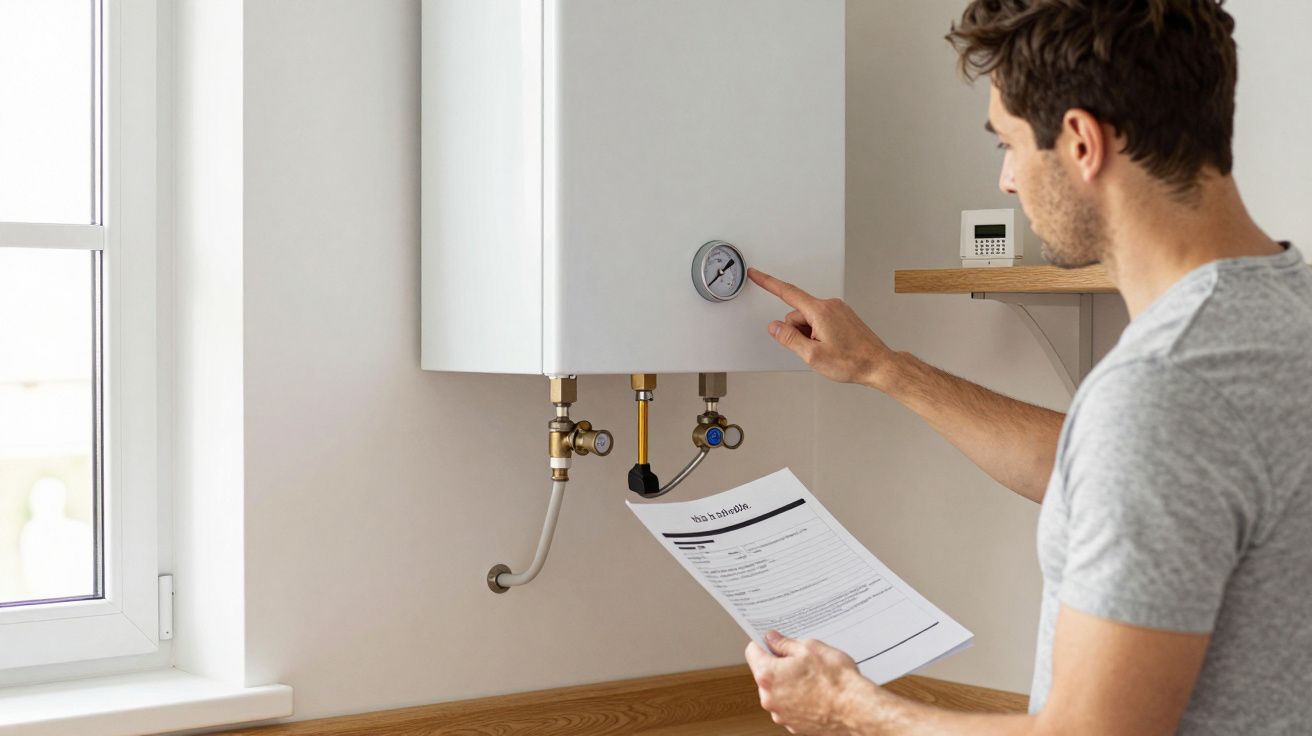
- Track boiler pressure weekly for a month after service; a slow drift is a clue.
- Have the magnetic filter cleaned (and fitted if you don’t have one).
- Consider a system flush or chemical clean if you have cold spots, repeated bleeding, or multiple component failures.
- Check condensate routing before winter: proper fall, insulation where needed, no unnecessary external runs.
If you’re planning upgrades, aim for resilience: good controls, proper commissioning, and clean water will beat fancy hardware every time.
| What passes today | What fails later | What to do next |
|---|---|---|
| Combustion readings | Sludge restricting flow | Clean filter, test water, consider flush |
| Flue/vent checks | Wind-related lockouts | Check terminal position, fan/APS health |
| Leak check | Slow pressure loss | Monitor pressure, find leak, check vessel |
FAQ:
- Why would a boiler pass inspection if it’s about to fail? Because inspections are snapshots. Many faults are intermittent or only appear under sustained load, colder weather, or after repeated cycling.
- Is a “service” the same as a full system health check? Not always. A service often focuses on the boiler’s safety and operation; system water quality, balancing, and emitter performance may need separate attention.
- What’s the biggest hidden cause of long-term system risk? Dirty system water (sludge/corrosion by-products) and oxygen ingress. Both shorten the life of pumps, valves, and heat exchangers.
- How do I know if sludge is an issue? Cold radiator bottoms, frequent bleeding, noisy circulation, repeated part failures, and very dark water when a radiator is drained are common signs.
- Should I top up the pressure whenever it drops? Occasionally, yes - but repeated top-ups are a warning. They can also add fresh oxygenated water, which accelerates corrosion.




Comments (0)
No comments yet. Be the first to comment!
Leave a Comment